• Why Study the Smallest Designs?

    Why Study the Smallest Designs?

    Open the Archive

    One of the things that originally drew me to tiny hose design was the puzzle of it—the challenge of packing maximum utility into the smallest possible footprint. I once challenged myself to design a house just 9 square feet to test the absolute limits of human habitation. This was in 2008.

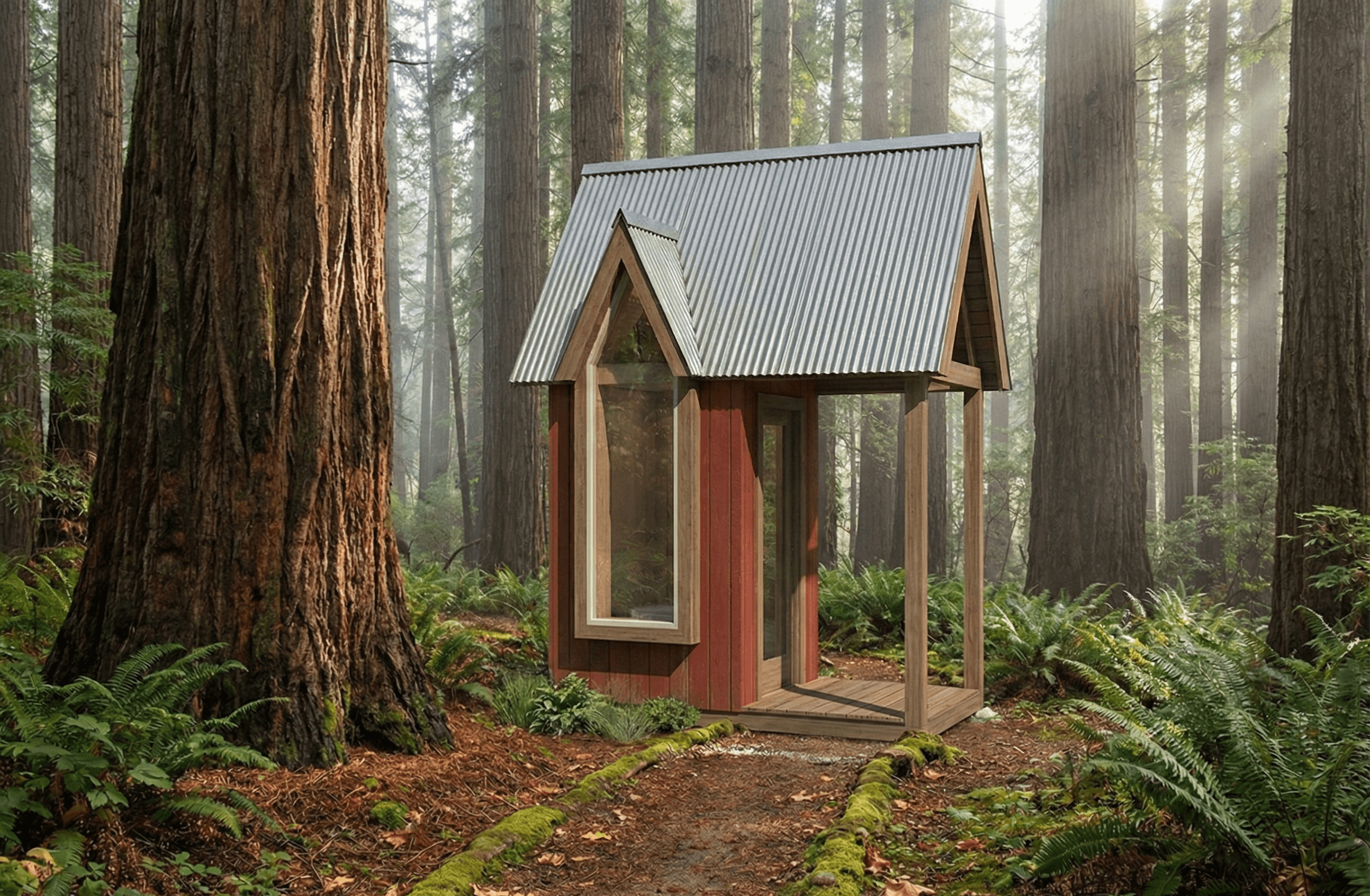
    I called it “Nine Tiny Feet.” I never built it, wish I had. The floor space was 3’x3′ and it included a kitchen, desk, seating, toilet, and shower. The sleeping loft, (not included in the square footage due to ceiling height), extended over the porch. My design is pictured on the left and faithfully rendered by Gemini. The plans for this no longer exist, I can’t find them anywhere. If there is interest, I will redraw them from memory.

    Even if you never intend to live in a micro home, there is immense value in studying how they work. Designs like these demonstrate extreme space optimization and multimodal living—concepts that apply to homes of any size.

    Perhaps most importantly, I designed the house plans for regular people to build. Unlike standard architectural blueprints, which can be cryptic to the untrained eye, these are presented more like assembly instructions. My goal was to demystify the construction process—showing you exactly how a complex roof is framed, how a dormer is attached, and how a bay window comes together step by step.

    It’s early February 2026, and I’ve cracked open the archive one last time.

    Open the Archive

  • Clearing the Studio: Why I’m Retiring My 2008–2019 Design Archive

    Clearing the Studio: Why I’m Retiring My 2008–2019 Design Archive

    View the Archive: Full Tiny House Plan Set

    If you’ve been following my work since the early days (2008–2012), you know that I spent over a decade obsessed with solving the puzzle of tiny homes. I drew hundreds of concepts, thousands of blog posts, published books on tiny house design, and spent years arguing that 120 square feet was enough.

    Then, in 2019, I stopped.

    I stepped away from drawing in pubic to focus on my job in tech. It was a necessary break. But now it’s 2026, and I’ve felt a pull to the light.

    However, before I can move forward, I need to clear the way.

    The “Smashing Pots” Philosophy

    Back in the 90s, when I was living in Redwood Valley in Mendocino County and working as a potter, I sometimes used a traditional “potter’s” method of clearing the studio and mind. I smashed pots. It’s not a violent thing; it’s actually fun. It literally and mentally gives one a fresh start and a clear head.

    That is what this post is about.

    I am officially returning to tiny house design in 2026 with a focus on new designs and a new direction—structures that prioritize livability over the strict 8.5′ road limit. But to fully commit to that future, I need to let go of the past.

    The Final Send-Off

    I recently found my full archive of designs from an old computer that I thought had been lost. Rather than letting them sit in digital purgatory, I’ve decided to bundle them all together for one last “send-off.”

    This isn’t just a sale; it’s a closure of the first era of my work.

    Inside the Archive Bundle, you’ll find the work that defined my contributions to the first decade in the tiny house movement:

    • The “Mendocino” Series: Plans like the Anchor Bay, Potter Valley, Boonville, and Philo—named after the tiny Northern California communities that were a strong influence in my youth and where my grandmother’s cabin stood in Redwood Valley.
    • The Experiments: Designs like the Carrack and the Westport that tested the limits of scale.
    • The Library: All four of my design books, including the Tiny House Design System and the 1st Edition of Tiny House Floor Plans (no longer available in print).

    What Happens Next?

    I am keeping this bundle available for a short time only. Once I feel the “shelves are clear,” I will be permanently retiring these plans to focus entirely on the new 2026 concepts.

    If you are a builder, a dreamer, or someone who wants to better understand how a tiny house is assembled, I hope these serve you well. They were a joy to create, and I’m glad they are finding new homes before I turn the page.

    View the Archive: Full Tiny House Plan Set

  • The Rise of Tiny Houses: A Sustainable Solution to Affordable Housing

    The Rise of Tiny Houses: A Sustainable Solution to Affordable Housing

    The Tiny House Movement: A History of Affordable Housing Solutions

    The tiny house movement is a growing trend in the United States that has gained popularity as an alternative solution for affordable housing. Tiny houses are typically defined as 400 square feet or less, with some as small as 80 square feet. They offer a minimalist lifestyle with the potential for mobility and a reduced environmental footprint. This article explores the history of the tiny house movement in the United States, its key milestones, influential figures, and current trends and challenges.

    The Origins of the Tiny House Movement

    The tiny house movement can be traced back to the early 2000s when influential figures like Jay Shafer, Dee Williams, and Michael Janzen began promoting living in smaller, more sustainable spaces. Shafer founded Tumbleweed Tiny House Company, which offered plans and workshops for building tiny houses. Williams wrote a book, The Big Tiny, about her experience building and living in an 84-square-foot house. Janzen started publishing plans and books for tiny houses, which sparked interest and discussion.

    Key Milestones in the Development of the Movement

    The 2008 financial crisis was a primary catalyst for the growth of the tiny house movement, as many people were looking for affordable housing options. Additionally, in 2018, the International Residential Code Appendix Q was introduced, providing a pathway for legally constructing tiny houses on foundations.

    Reasons Behind the Movement’s Popularity

    The tiny house movement has gained popularity as an affordable housing solution due to its relatively low cost of construction, reduced energy costs, and the ability to place tiny houses on cheaper, more accessible land. According to the Tiny House Industry Association, tiny houses have an average cost to build between $20,000 and $50,000, compared to the median home price in the United States of $347,500 in 2022. Tiny houses also have a smaller environmental footprint, requiring less energy to heat and cool.

    Statistics on Tiny Houses in the United States

    According to the U.S. Census Bureau, there were approximately 1,500 tiny houses in the United States in 2018. However, this number is likely much higher, as many tiny house owners still need to register their homes as permanent residences. Google Trends data shows that the search term “tiny house” has steadily increased in popularity since 2012, with a peak in 2019.

    Progress in Changing Government Zoning and Building Codes

    Changing government zoning and building codes has significantly challenged the tiny house movement. However, there have been some successes. Locations such as Spur, Texas, and Fresno, California, have changed zoning laws for tiny houses. Additionally, the International Code Council released the International Residential Code Appendix Q in 2018, providing a pathway to legally construct tiny houses on foundations.

    Legal Challenges Facing Tiny Houses

    Zoning laws, building codes, and regulations are significant legal challenges facing the tiny house movement. Many areas have minimum square footage requirements for homes, which makes it difficult for tiny houses to be legally constructed. Additionally, tiny houses on wheels are often classified as recreational vehicles, subject to different regulations than permanent residences.

    Conclusion

    The tiny house movement offers an affordable housing solution with reduced environmental impact. While there have been challenges in changing zoning and building codes and navigating legal regulations, progress has been made in some areas. As the search term “tiny house” continues to gain popularity, it is clear that the movement is here to stay.

  • Deep Porch and Hip Roof Tiny House Design Study

    Deep Porch and Hip Roof Tiny House Design Study

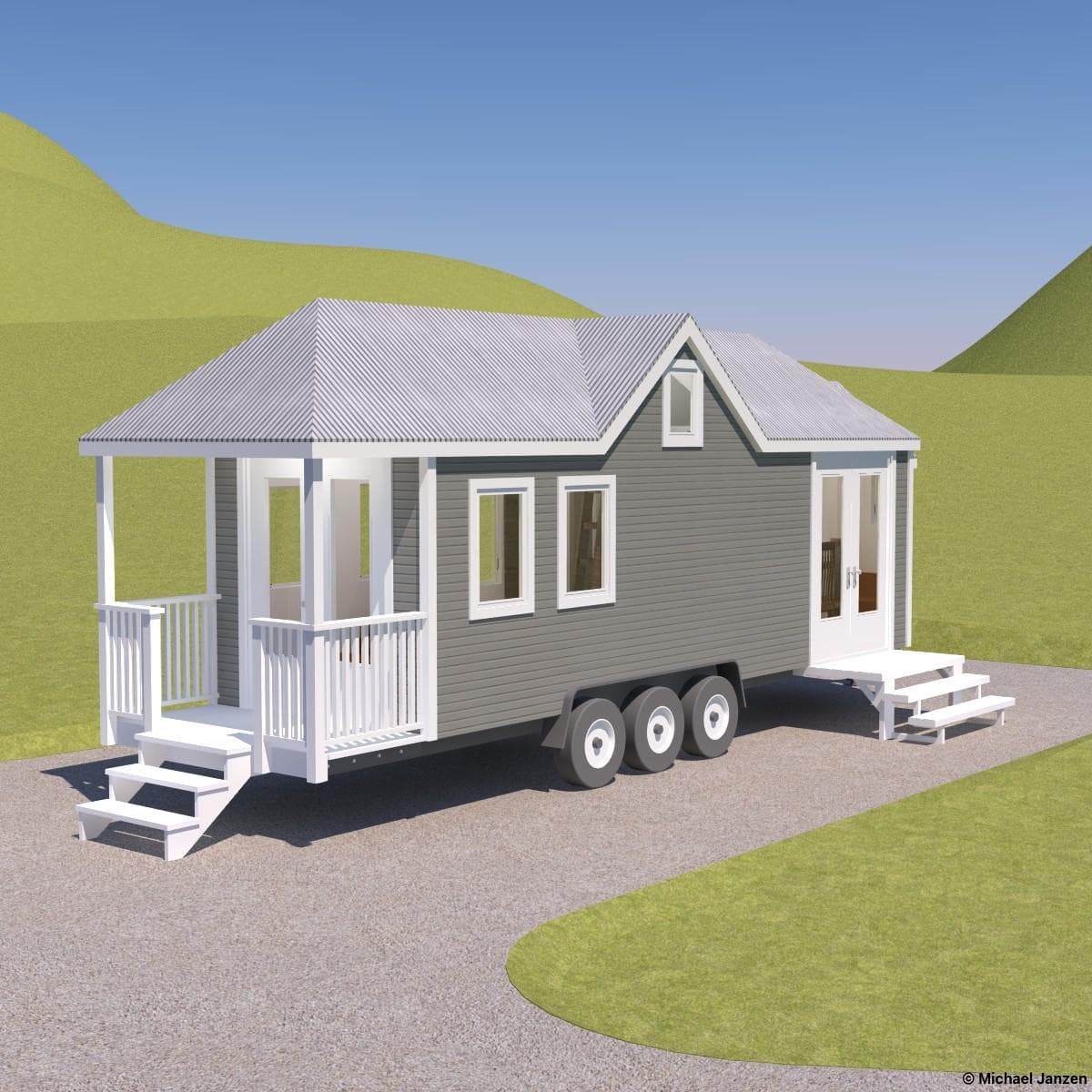
    This 28-foot tiny house has a hip roof, a cross gable, and a deep front porch with french doors. At the center of this tiny house are a kitchen and bathroom. Over the kitchen and bathroom is a loft with a queen bed. The front room has two comfy chairs, each with its ottoman. The back room shows a table for four and a sofa tucked into a bump-out extension. A second fold-down porch extends from french doors to the side of the house.

  • Gambrel Roof Tiny House Design Study

    Gambrel Roof Tiny House Design Study

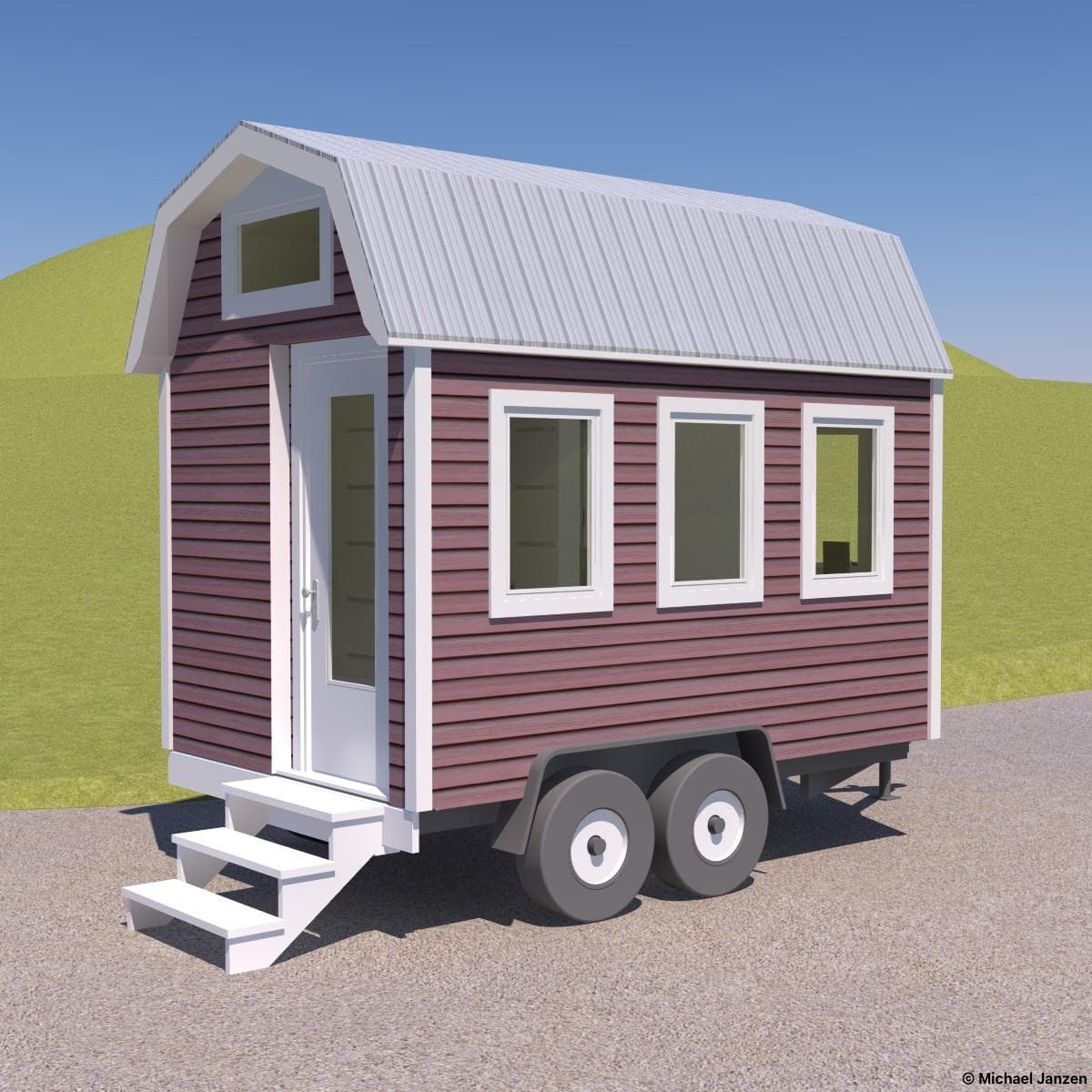
    Here’s a gambrel-roofed tiny house with plenty of windows. The front corner entry has fold-up steps. Inside is a wet bathroom with a shower, toilet, and small wall-mounted sink. The tiny kitchen has a sink with a cabinet drain rack, a small refrigerator, a small cooktop, and a microwave. The house also has a long and shallow set of cabinets along the right wall below the windows… so there is quite a bit of storage. On the back wall is a desk that fits neatly in a bay window. The loft is small, but thanks to the gambrel roof it has ample headroom.

  • Clerestory Tiny House Design Study

    Clerestory Tiny House Design Study

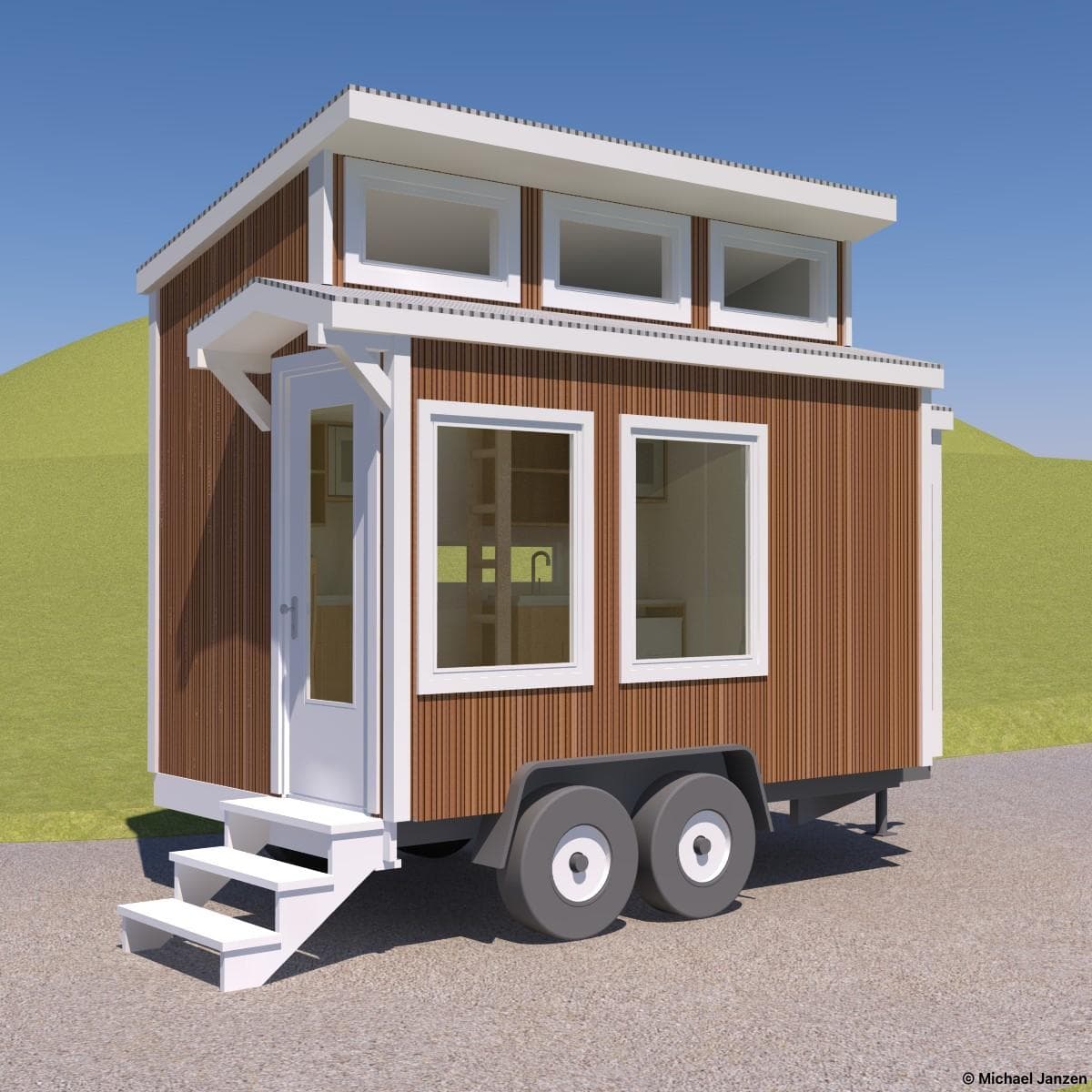
    This tiny house design study eplores a 3/12 shed roof with plenty of windows in a clerestory. The front corner entry has fold-up steps. Inside is a small bathroom with a shower, toilet, and generous vanity in a bump-out extension over the trailer tongue. The tiny kitchen has a sink with a cabinet drain rack, a small refrigerator, a small cooktop, a microwave, and storage. There’s also space for a small chair, ottoman, and table/desk. The loft has room for a queen bed accessed by a fixed ladder. The window over the trailer tongue is shown with shutters that would help prevent damage from rocks & debris while on the road.

  • Shed Dormer Tiny House Design Study

    Shed Dormer Tiny House Design Study

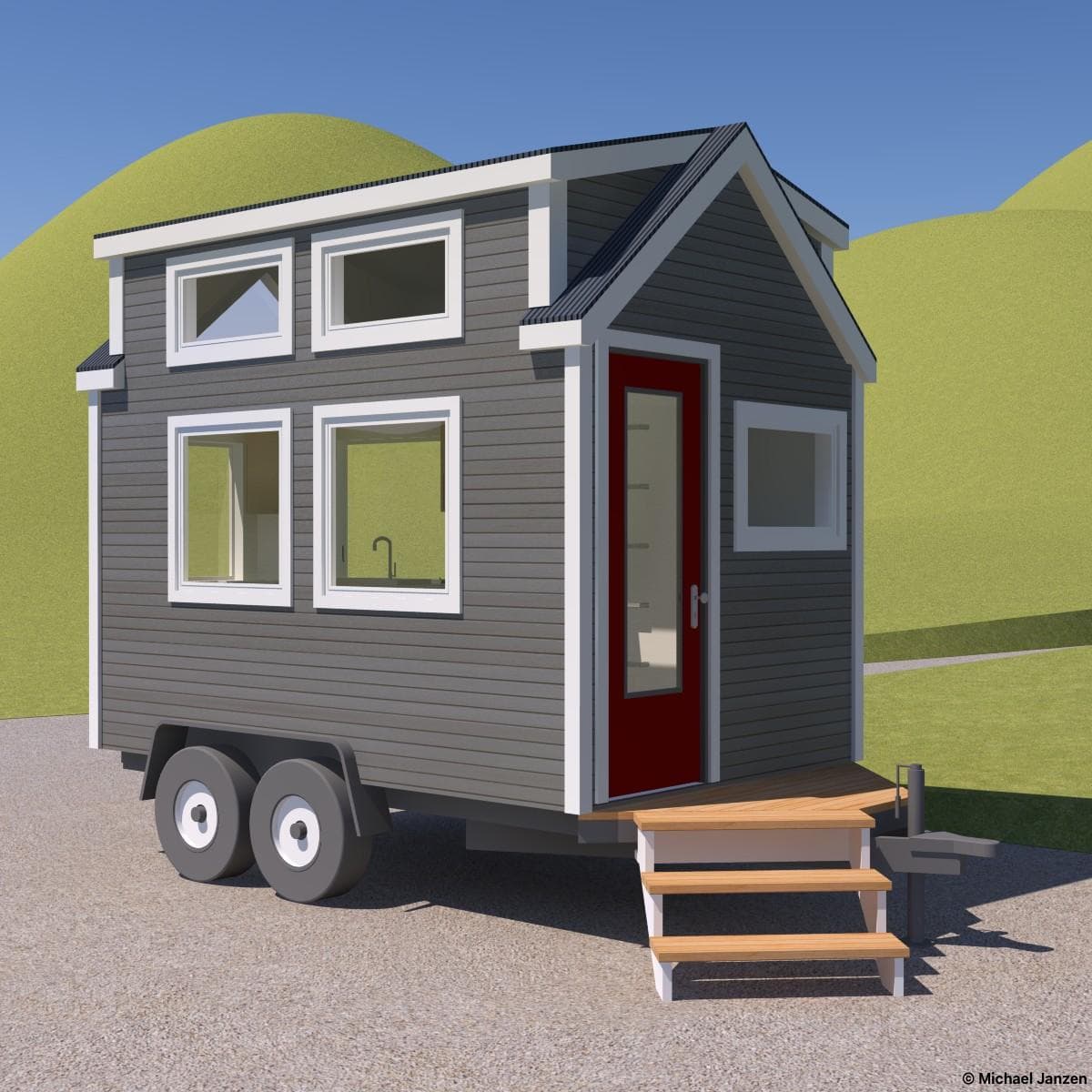
    This tiny house has a 10/12 gable roof with large 3/12 shed dormers. The entry is over the trailer tongue and has fold-up steps. Inside the entry are a small wet bathroom with a shower, toilet, and tiny wall-mounted sink. The kitchen has the basics: a sink, a small refrigerator, a small cooktop, and storage. Also, space for a small chair and table is on the lower level. The loft has space for a queen bed and is accessed by wall-mounted ladder rungs inside the entry.

  • Cross-Gable Tiny House Design Study

    Cross-Gable Tiny House Design Study

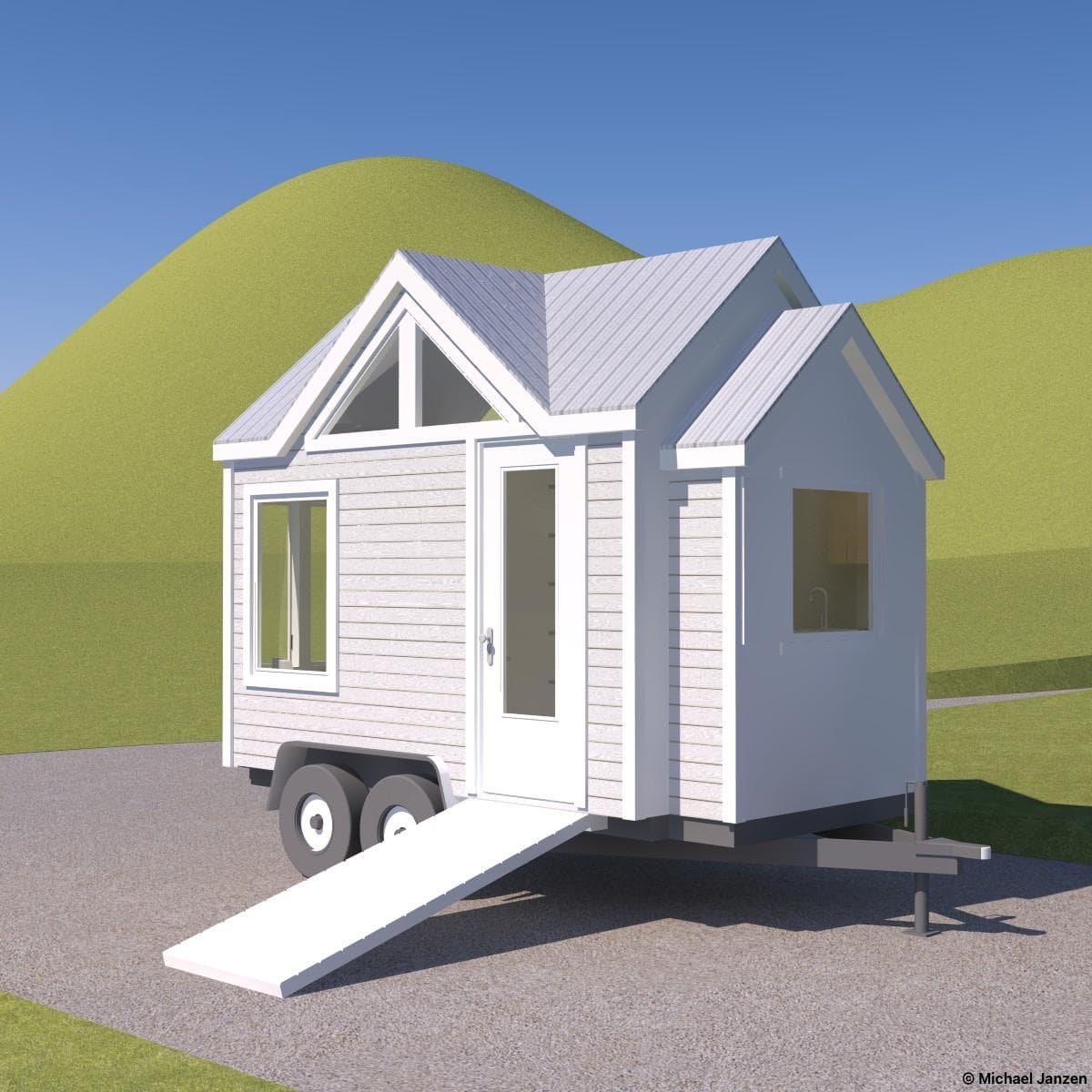
    A 10/12 cross-gable roof with large windows and a side entry. A fold-up ramp would provide easy access. Inside is a tiny wet bathroom with a shower, toilet, and tiny wall-mounted sink. The kitchen extends over the trailer tongue in a bump-out and has the basics: a sink, a small refrigerator, a small cooktop, and storage. Also, space for a small chair, a loveseat, and a desk is on the lower level. The loft has room for a queen bed and is accessed by wall-mounted ladder rungs.

  • Wedge Tiny House Design Study

    Wedge Tiny House Design Study

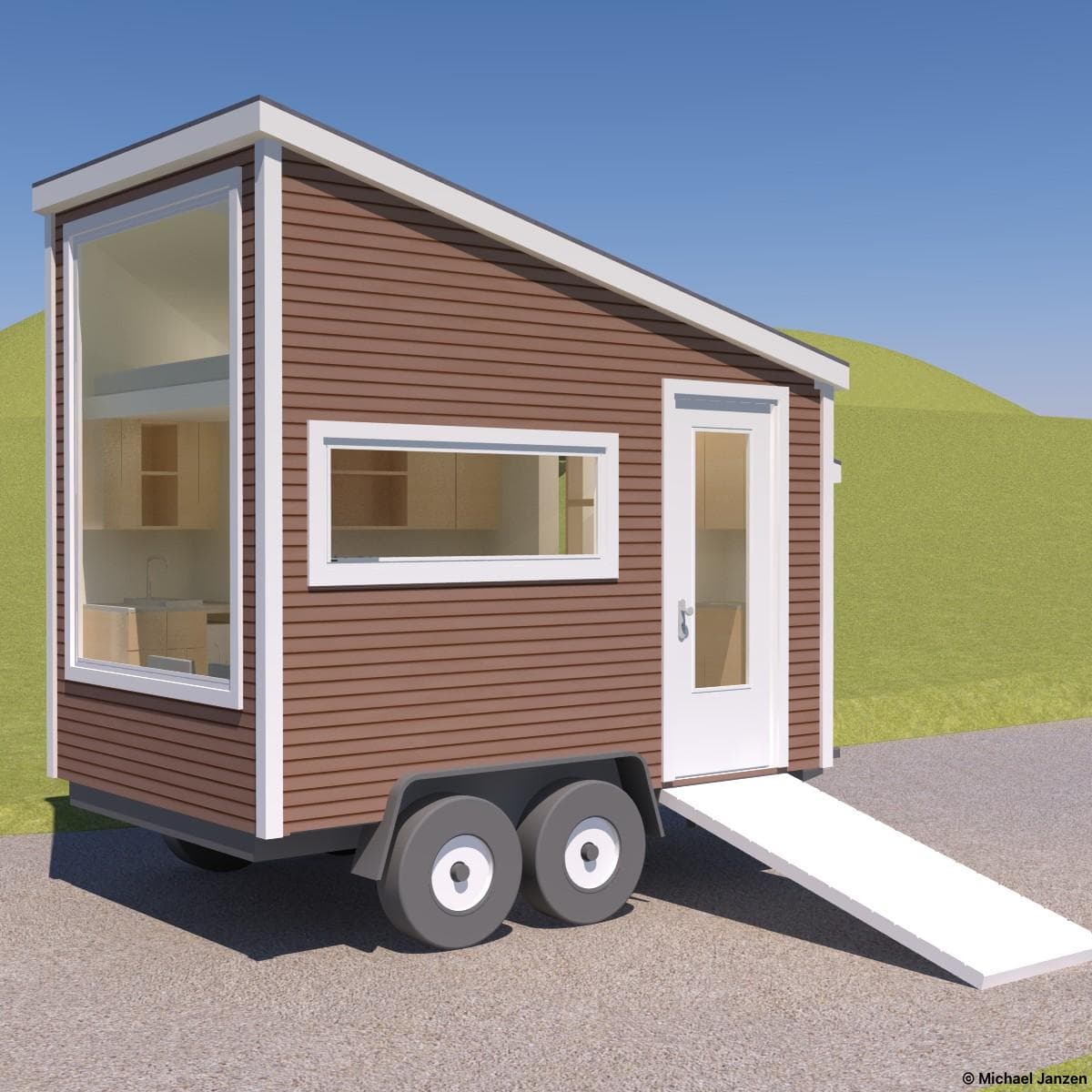
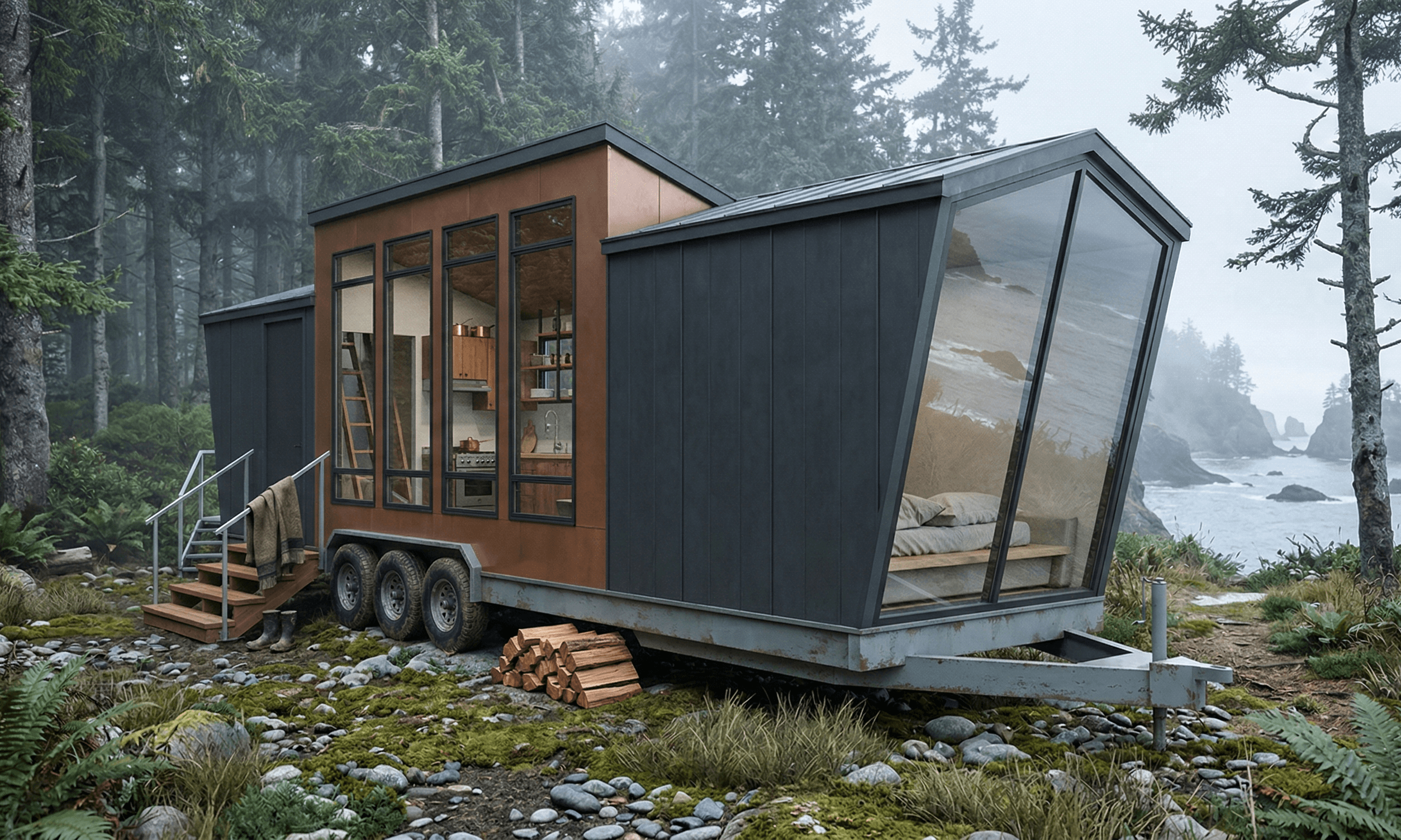
    The wedge shape of this tiny house would make it more aerodynamic than most tiny homes. A fold-up ramp on the side would provide easy access. The most notable feature after the geometric shape is the giant picture window. Inside you’ll find a tiny wet bathroom with a shower, toilet, and tiny wall-mounted sink. The kitchen has the basics: a sink with a drain rack cabinet above, a small refrigerator, a small cooktop, and storage. Also, on the lower level is space for two small comfy chairs and a desk. The loft has room for a queen bed and is accessed by a fixed vertical ladder inside the entry.

    Wedge Tiny House Design Study Giant Window
    Wedge Tiny House Design Study Utility Shed
  • Tiny House with Dormers Design Study

    Tiny House with Dormers Design Study

    A classic 8×12 tiny house with a 10/12 gable pitched roof, small gable dormers, and a French door entry. Inside is a bathroom with a bay window, 32-inch square shower, toilet, and generous vanity. The kitchen has the basics: a sink, a small refrigerator, a small cooktop, and storage. Also, on the lower level is space for two small chairs. The loft has room for a queen bed and is accessed by a movable ladder.