Tag: sketchup

  • Road Trip Tiny House and Review of SketchUp AI Rendering

    Road Trip Tiny House and Review of SketchUp AI Rendering

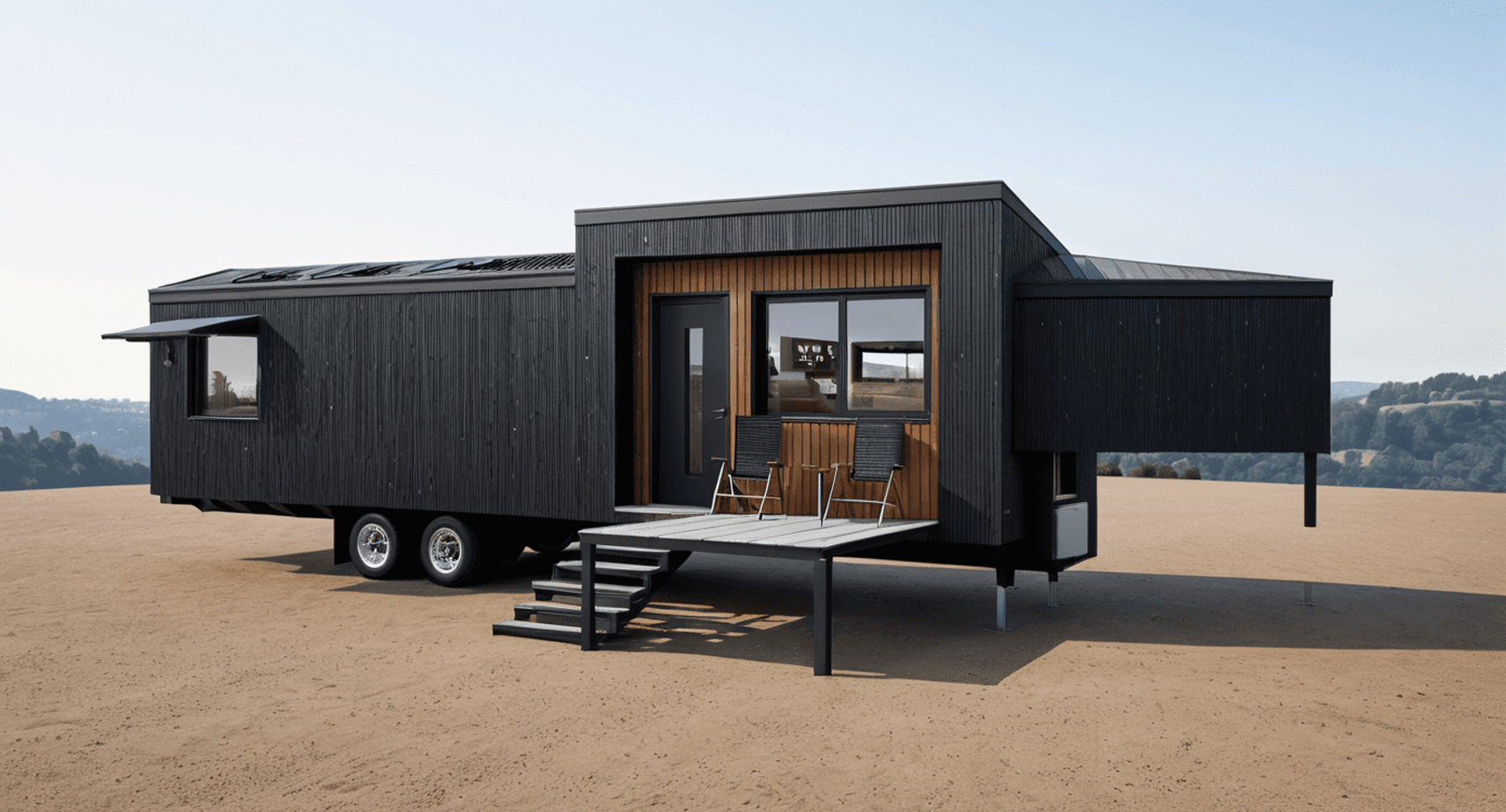
    This is a tiny house concept I created a few years ago, long before Generative AI was a thing. I also just renewed my SketchUp Pro license and downloaded the latest version which came with a built-in AI rendering feature. So I thought I’d share both the tiny house design and my review of the new SketchUp AI rendering feature.

    In the images you’ll see three versions, the native SketchUp export, the new SketchUp AI rendering output, and for quality comparison a rendering by Gemini Pro (a.k.a. Nano Banana Pro). You can spot the Gemini renderings because they are watermarked with a little four-pointed star in the right bottom corner. I used the simplest prompts to create these , so this is not rigorous testing, just what you get on the first pass.

    I find it useful to invent “stories” in my mind when drawing design concepts, (like we do in app design with use cases or user personas), because it simulates a real project and makes it more challenging (i.e., more fun). I pictured a family of four traveling through North America, hitting all lower 48 states and ending up in Alaska.

    To make a road trip of that scale possible while towing a tiny house, which is usually not a fun task, I imagined it would be built on a stout trailer with duel axle duallies, making it easier for travel using a heavy duty pickup. It’s like a big gooseneck travel trailer, but heavier.

    To save weight, the structure would be made from lightweight steel framing (e.g. Volstrukt framing) but finished like a comfortable tiny house on wheels so that once it arrived in Alaska it would still be comfy to live in it all year long. (I know, I know, the Alaskans are laughing at me right now – four seasons, tiny house, yeah right.)

    The house has just a few strategically located large windows. The windows all have sturdy shutters that lower into place protecting and locking up the house securely when closed. When open they provide shade and function like awnings.

    The house features a living room that had three modes: dining living, bedroom. The slat wall hides cabinets that open to reveal storage but also a fold-down table. The two long sofas provide storage and can be pushed together to form a queen size bed. I pictured this being the parents bedroom with all night access to the kitchen and bathroom down the hall. The bunk room in the back would be for the kids.

    The kitchen is small but adequate for a full-time family of four.

    Past the kitchen is a storage lined hall and a bathroom with bunk room in the back.

    There is no loft to keep the house shorter and travel friendly. In many ways this combines the best of a travel trailer with a tiny house but doesn’t introduce complexities like slide-outs which would reduce the weather tightness and four season capabilities.

    This is purely a design concept and I have no plans to create house plans for this design. But tell me in the comments what you think and if you’d like to see more designs like this.

    The images were all drawn by me using SketchUp Pro but the renderings were just created today.

    So the design is 100% human, hand drawn in SketchUp, and the rendering is faithfully executed by AI without much distortion. I’m including both the SketchUp native export, the SketchUp AI rendering, and a rendering by Gemini Pro for comparison.

    My initial opinion of this new AI feature for SketchUp is that the cost is not worth the result. Every time is generates an image it costs credits. It also makes three at a time, which seems odd, although it does give the user a quick way to pick the preferred output. So I guess that could be a time saver. The UI also feels clunnky, kind of old-school, and not in a good way.

    Trimble (maker of SketchUp) gave me, a paid Pro user, 150 AI credits to play with but at 5 credits per rendering you run out of free credits fast.

    I pay $20 a month for Gemini Pro, use it all day long for other work, and it could create a ton of renderings like these in a day by converting native SketchUp images without hitting daily limits. From the results shown here, I prefer the Gemini Pro output.

    So while the built-in AI rendering in SketchUp is a nice addition, I don’t think they have it priced right to compete with the alternatives, including the old-school plugins like Podium which is what I used before generative AI was an option. At this point I htink I’d just use Gemini instead of plugins or the SketchUp AI.

    For those of you wondering… I also wrote this post by hand, no AI. In my experience with AI, I’ve found that simple posts like this turn out much better (i.e., quick and authentic) if I just write them myself.

    AI is great for churning out business documents, rendering images, and doing deep research, but a quick post like this would take longer to draft and edit with AI than to just writing it myself. It would also sound a lot different, yes less sloppy, but less real too.

    Have you tried SketchUp’s new AI rendering? Am I being fair about saying it feels clunky and overpriced? Keep me honest, leave a comment.

  • Deep Porch and Hip Roof Tiny House Design Study

    Deep Porch and Hip Roof Tiny House Design Study

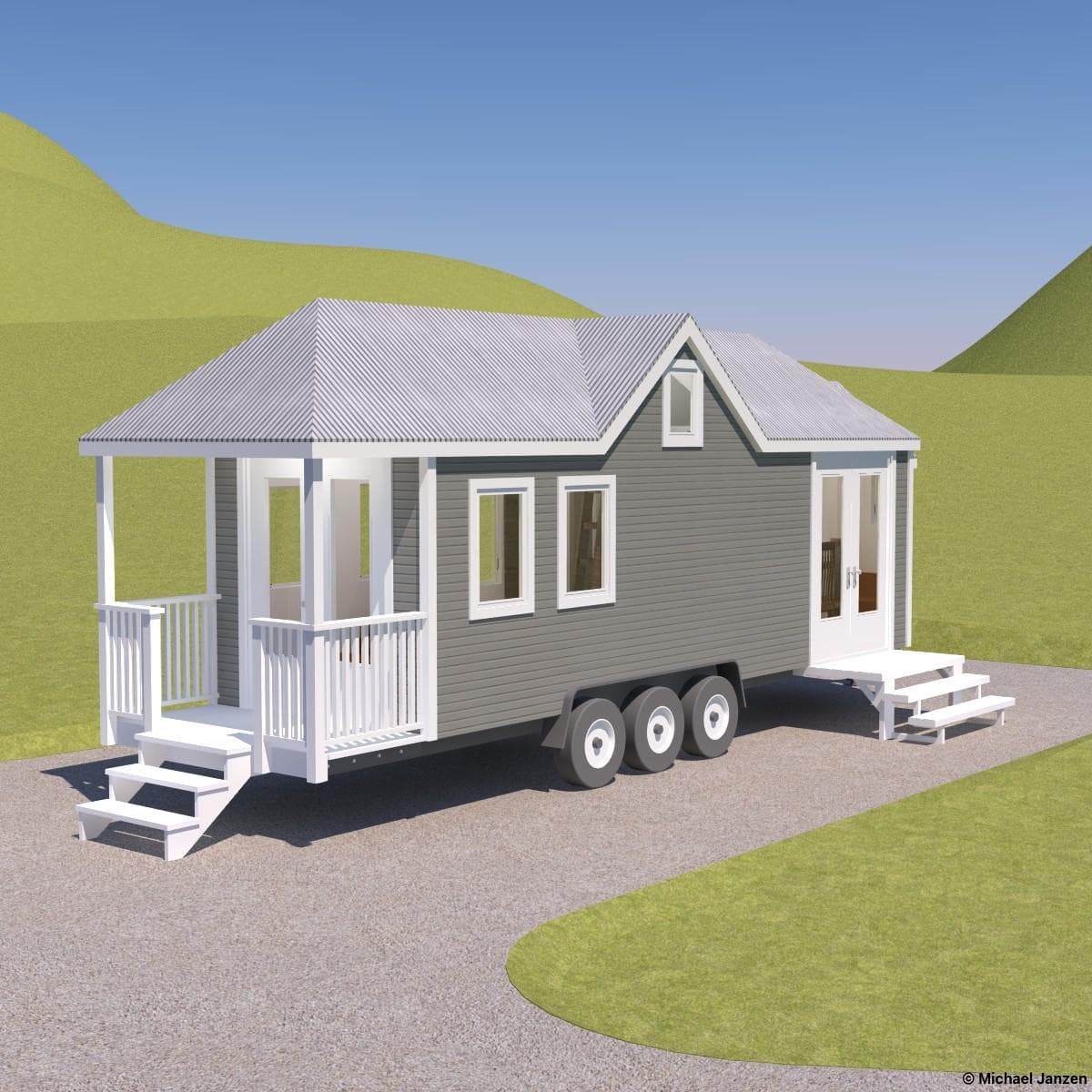
    This 28-foot tiny house has a hip roof, a cross gable, and a deep front porch with french doors. At the center of this tiny house are a kitchen and bathroom. Over the kitchen and bathroom is a loft with a queen bed. The front room has two comfy chairs, each with its ottoman. The back room shows a table for four and a sofa tucked into a bump-out extension. A second fold-down porch extends from french doors to the side of the house.

  • Gambrel Roof Tiny House Design Study

    Gambrel Roof Tiny House Design Study

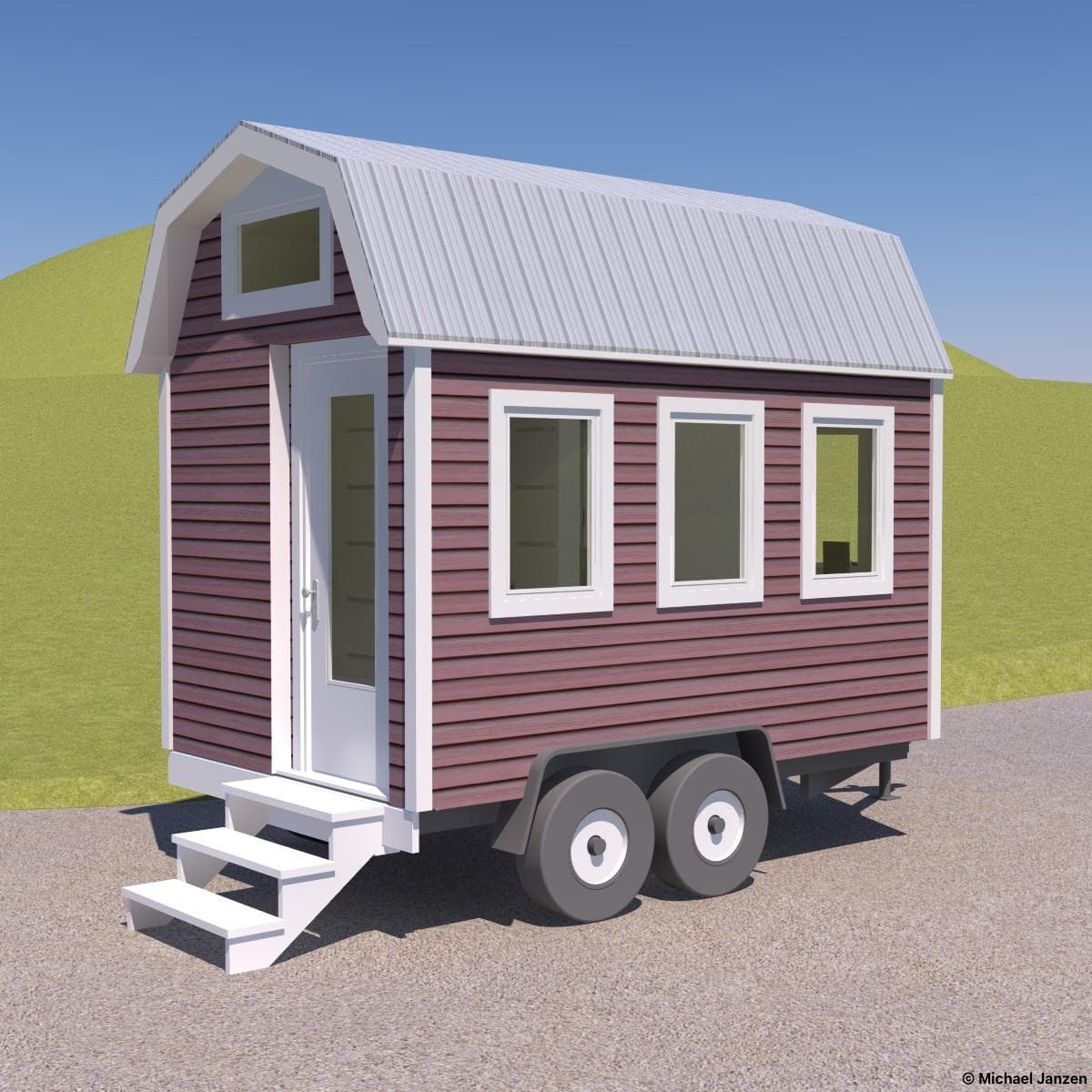
    Here’s a gambrel-roofed tiny house with plenty of windows. The front corner entry has fold-up steps. Inside is a wet bathroom with a shower, toilet, and small wall-mounted sink. The tiny kitchen has a sink with a cabinet drain rack, a small refrigerator, a small cooktop, and a microwave. The house also has a long and shallow set of cabinets along the right wall below the windows… so there is quite a bit of storage. On the back wall is a desk that fits neatly in a bay window. The loft is small, but thanks to the gambrel roof it has ample headroom.

  • Clerestory Tiny House Design Study

    Clerestory Tiny House Design Study

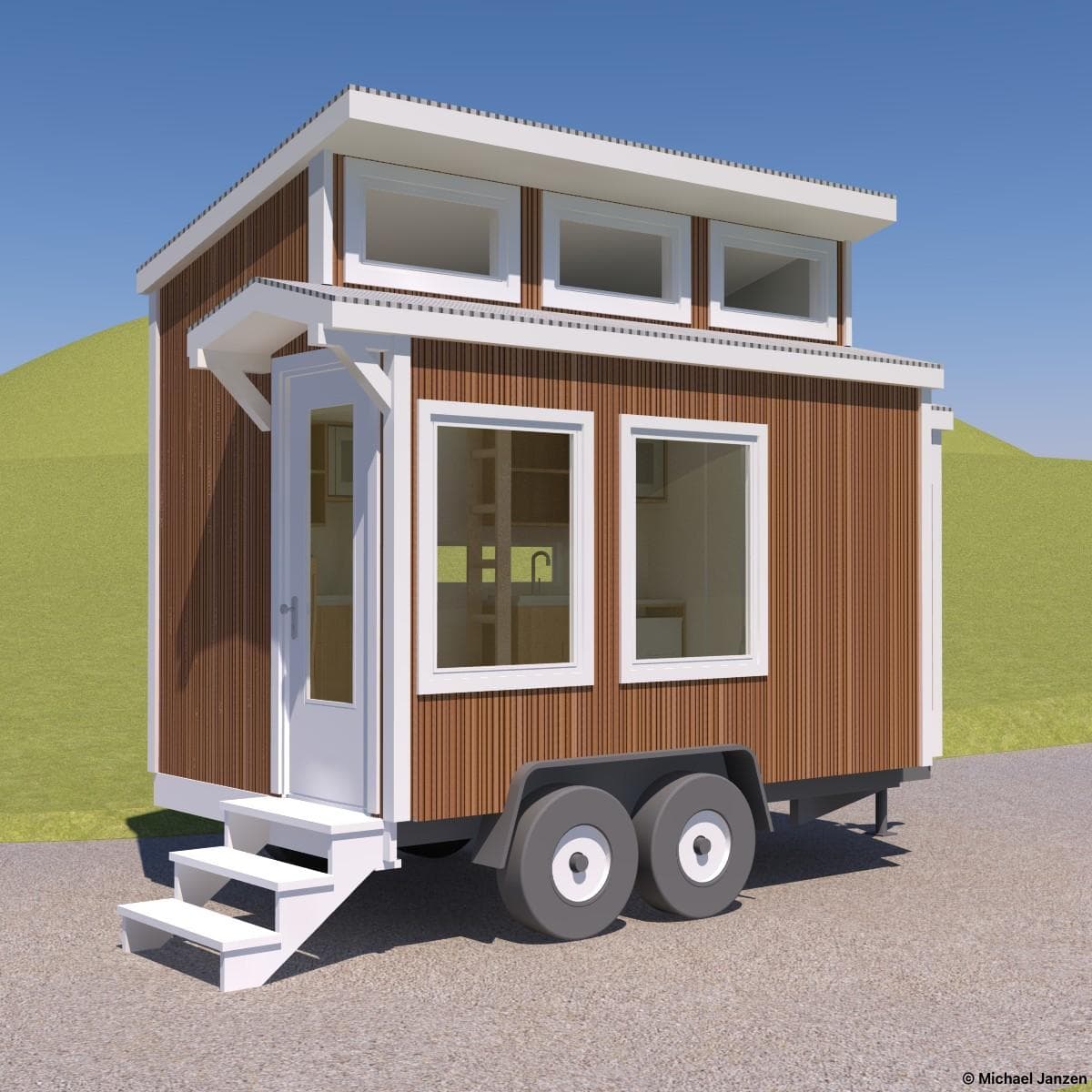
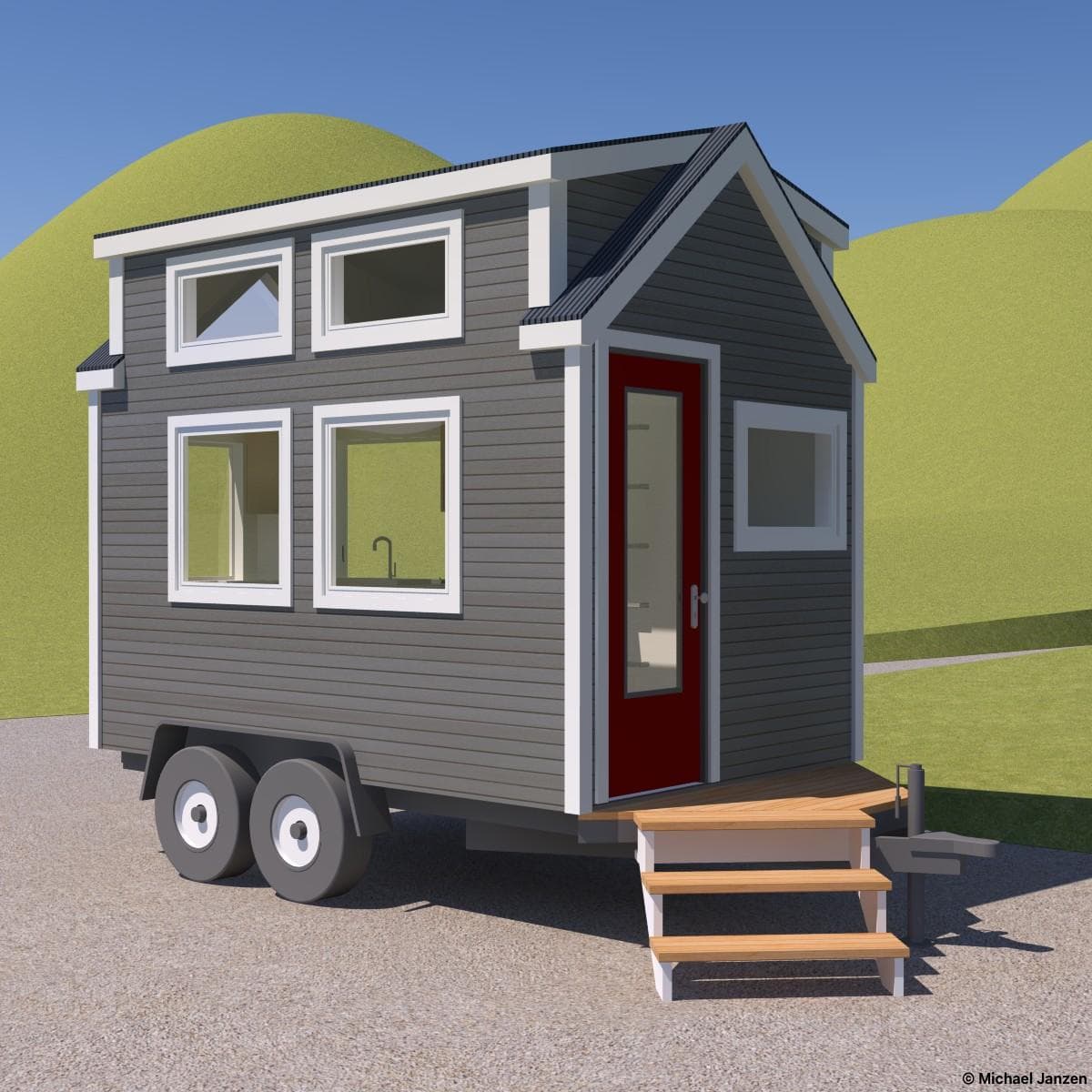
    This tiny house design study eplores a 3/12 shed roof with plenty of windows in a clerestory. The front corner entry has fold-up steps. Inside is a small bathroom with a shower, toilet, and generous vanity in a bump-out extension over the trailer tongue. The tiny kitchen has a sink with a cabinet drain rack, a small refrigerator, a small cooktop, a microwave, and storage. There’s also space for a small chair, ottoman, and table/desk. The loft has room for a queen bed accessed by a fixed ladder. The window over the trailer tongue is shown with shutters that would help prevent damage from rocks & debris while on the road.

  • Shed Dormer Tiny House Design Study

    Shed Dormer Tiny House Design Study

    This tiny house has a 10/12 gable roof with large 3/12 shed dormers. The entry is over the trailer tongue and has fold-up steps. Inside the entry are a small wet bathroom with a shower, toilet, and tiny wall-mounted sink. The kitchen has the basics: a sink, a small refrigerator, a small cooktop, and storage. Also, space for a small chair and table is on the lower level. The loft has space for a queen bed and is accessed by wall-mounted ladder rungs inside the entry.

  • Cross-Gable Tiny House Design Study

    Cross-Gable Tiny House Design Study

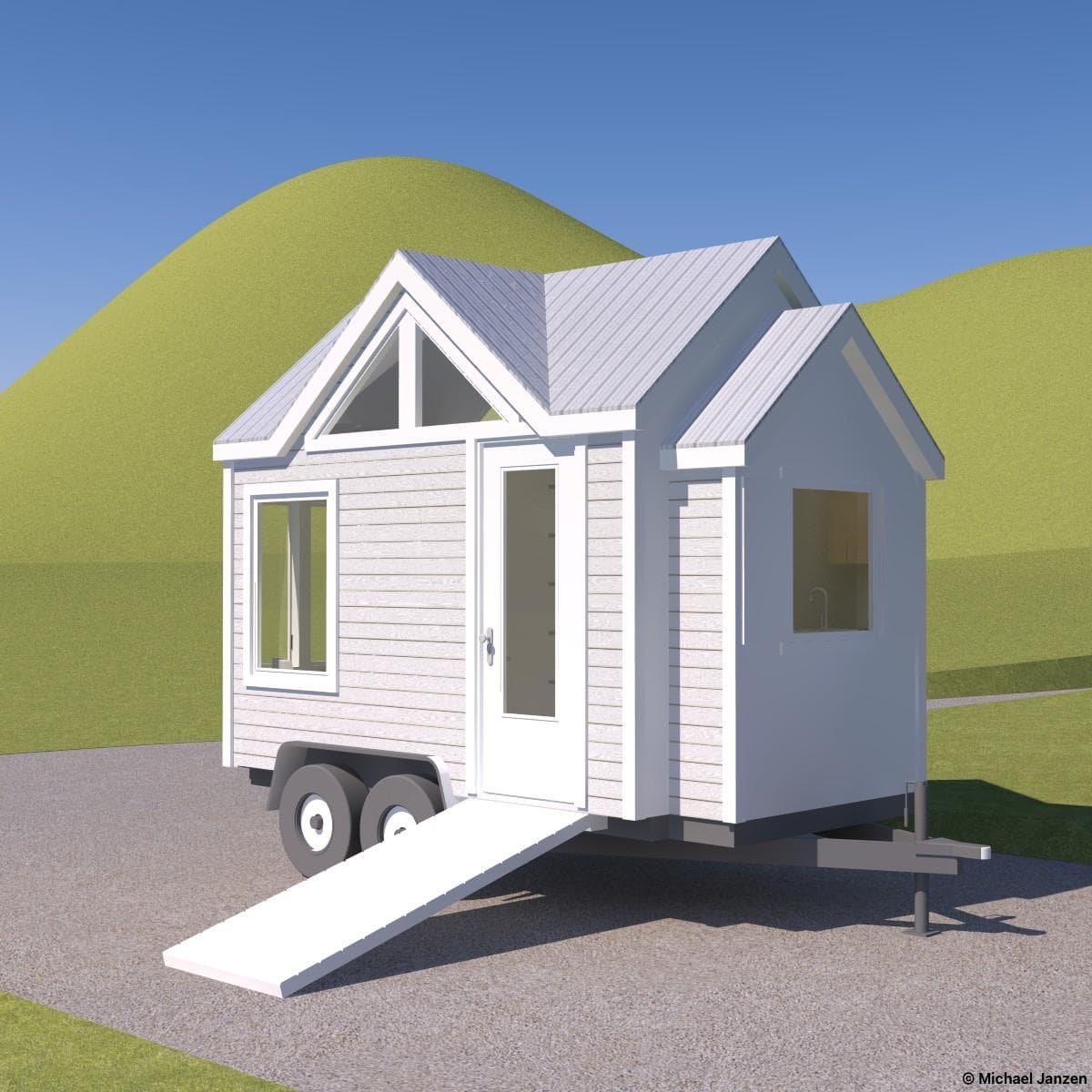
    A 10/12 cross-gable roof with large windows and a side entry. A fold-up ramp would provide easy access. Inside is a tiny wet bathroom with a shower, toilet, and tiny wall-mounted sink. The kitchen extends over the trailer tongue in a bump-out and has the basics: a sink, a small refrigerator, a small cooktop, and storage. Also, space for a small chair, a loveseat, and a desk is on the lower level. The loft has room for a queen bed and is accessed by wall-mounted ladder rungs.

  • Tiny House with Dormers Design Study

    Tiny House with Dormers Design Study

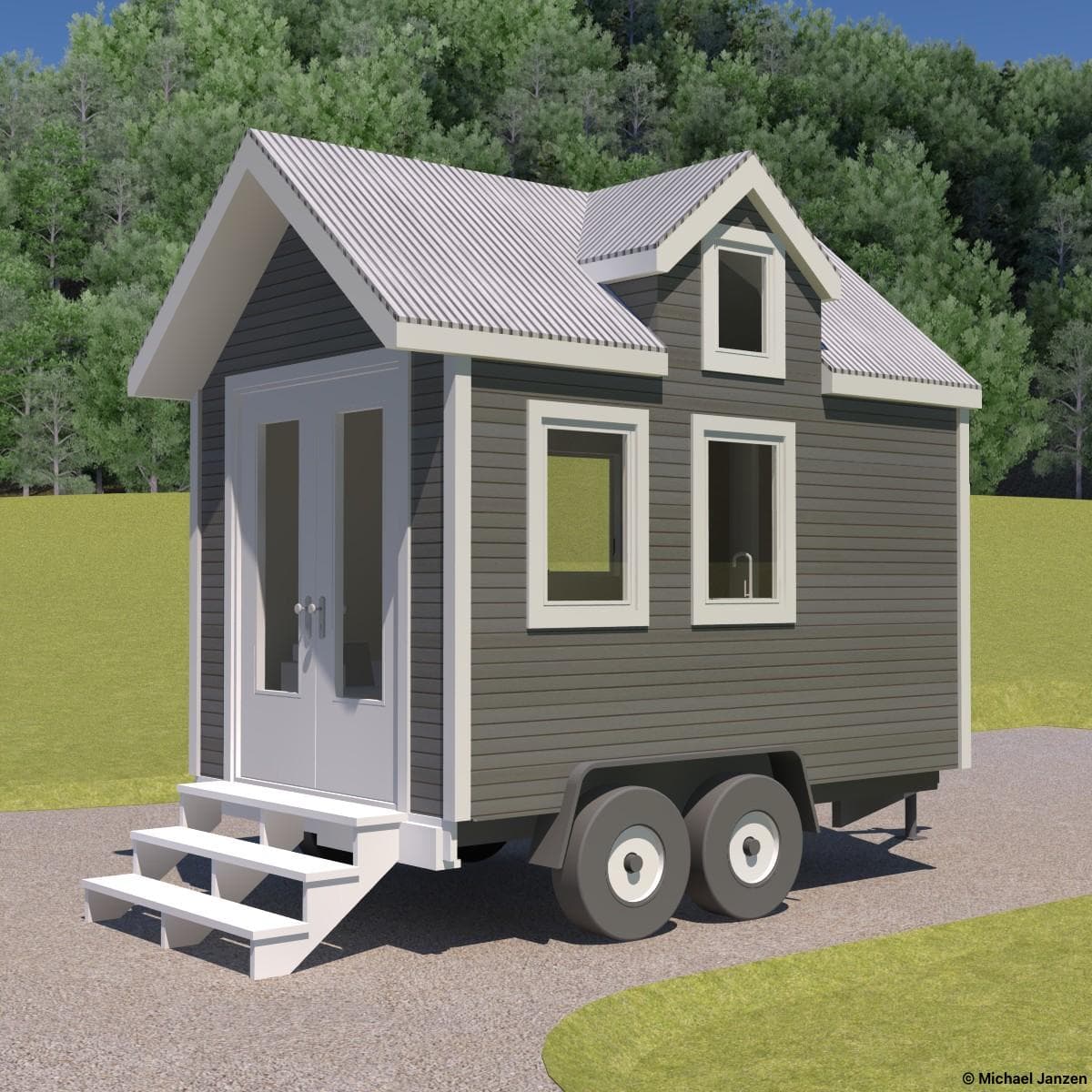
    A classic 8×12 tiny house with a 10/12 gable pitched roof, small gable dormers, and a French door entry. Inside is a bathroom with a bay window, 32-inch square shower, toilet, and generous vanity. The kitchen has the basics: a sink, a small refrigerator, a small cooktop, and storage. Also, on the lower level is space for two small chairs. The loft has room for a queen bed and is accessed by a movable ladder.

  • Vardo Tiny House Design Study

    Vardo Tiny House Design Study

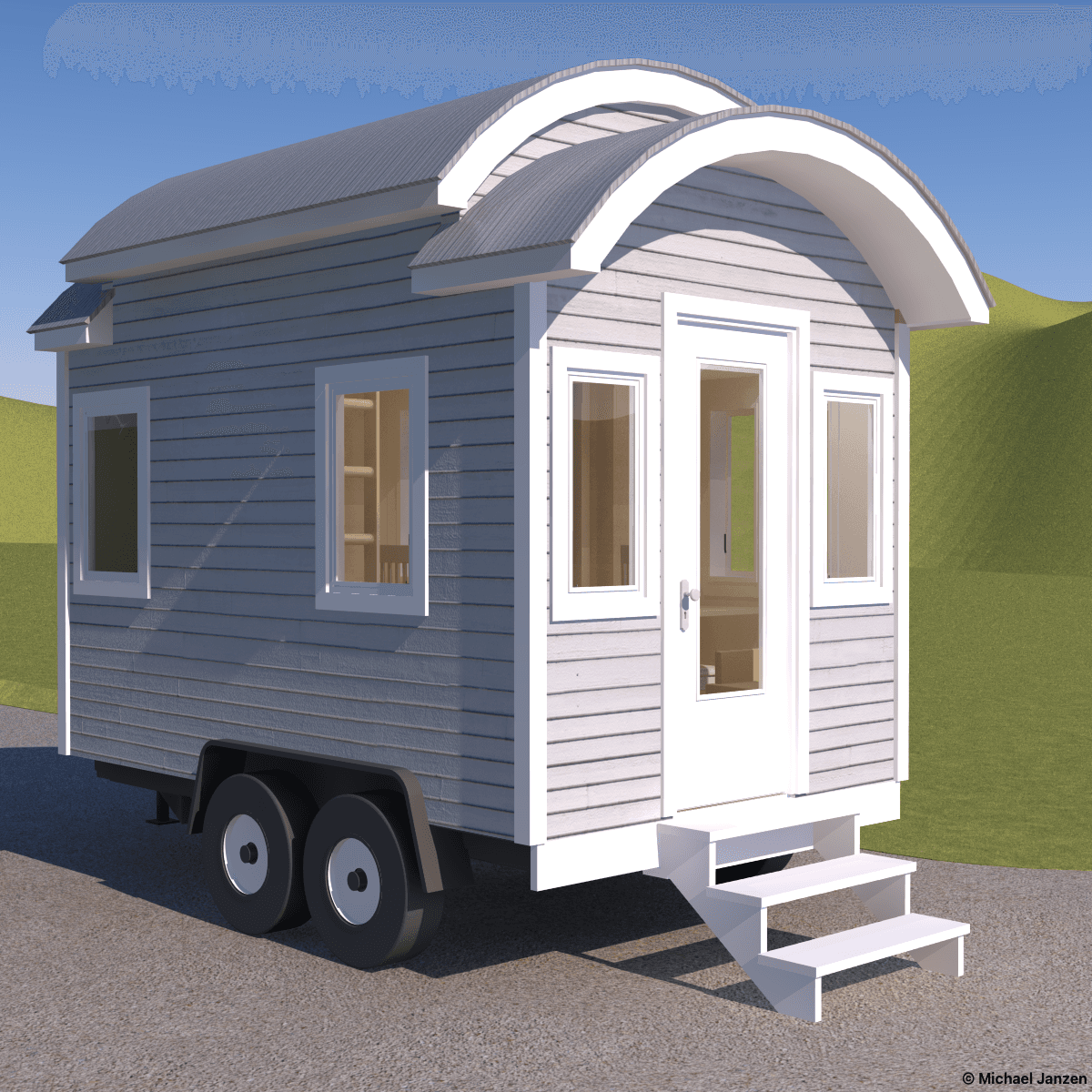
    When the tiny house movement was new, an 8×12 tiny house was common. It’s just enough space for one person or a close couple. This size home could also make a great backyard home office or guest room.

    The curved Vardo-inspired roof sets this tiny house design apart from most tiny houses. A vardo roof is a little harder to build but it has a captivating personality. Inside are all the essentials: kitchen, bathroom, storage, sleeping loft, desk & chair, and seating for guests. 

  • Homesteader’s Cabin v.2 – Updated Free House Plan

    One of the most popular free tiny house plans I offer is the Homesteader’s Cabin. It’s a 12′x24′ house with a 12/12 roof and a loft. The lower level has enough space for a small kitchen, bathroom, laundry closet, and living room. The loft can span half the house giving you a high ceiling in the living room or you can choose to build a full second floor for more space. Also included is a design for a space-saving alternating step ships ladder.

    Download the plans  PDF Version (18+MB file may take some time to open)

    via Homesteader’s Cabin v.2 – Updated Free House Plan | Tiny House Design.

  • An Aerodynamic Tiny House Design

    It’s designed to be built on top of a 20-foot flatbed trailer. It has a small porch so you can find your keys without standing in the rain. Just inside the front door is a small bathroom on the left and a floor-to-ceiling built-in cabinet on the right. Just past the small entry hallway the room opens up into a small kitchen on the left with a shallow counter on the right.

    Continue reading An Aerodynamic Tiny House Design at Tiny House Design.