
The "Extra-Wide" Revolution: Why 11-Foot Tiny Homes Are Taking Over in 2026
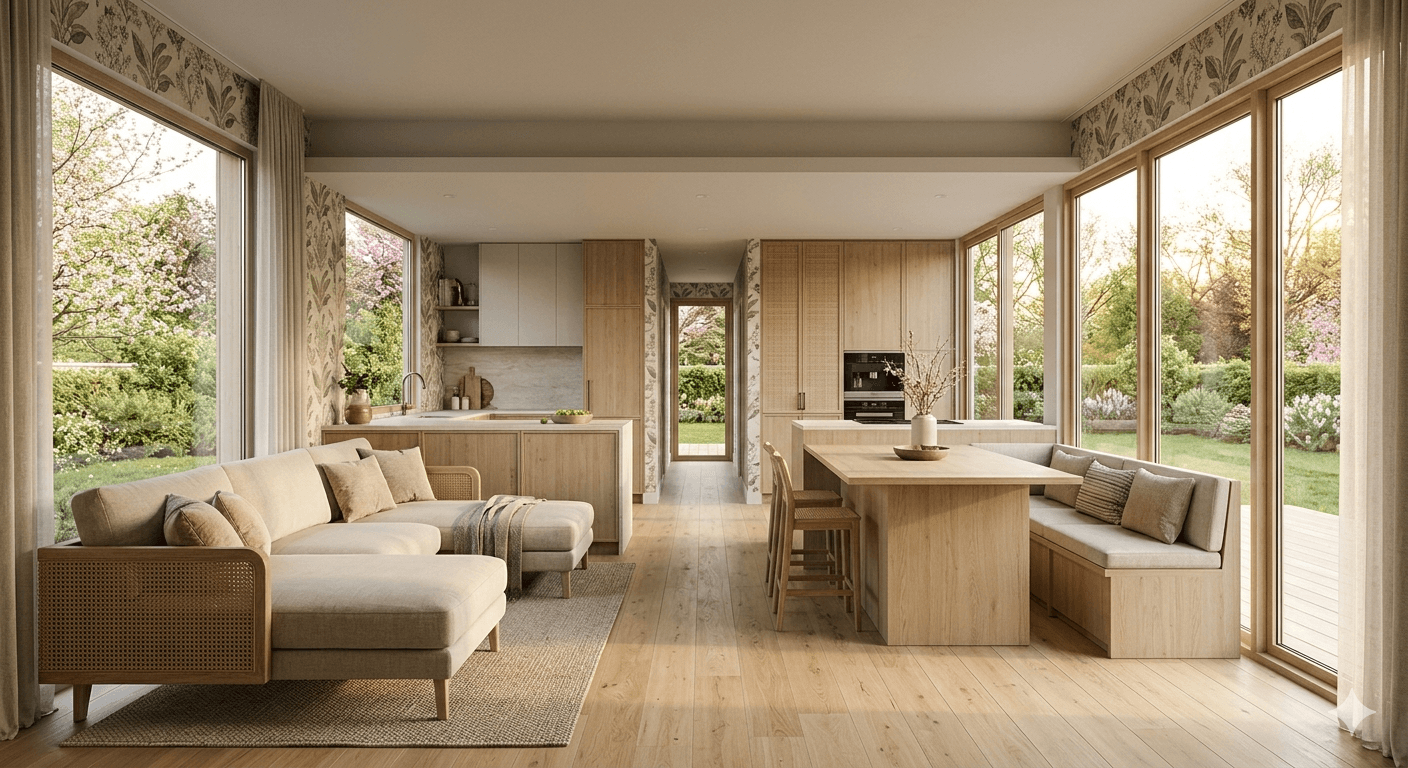
Shifting from portability to permanent placement, 11-foot-wide park model tiny homes are replacing corridor-style floor plans with open-concept layouts approaching 400 square feet.
For years, the standard width limit for the tiny house movement was 8.5 feet. It was the width that permitted towing on any North American highway without a special permit. and tow it down any highway in North America without a special permit. As of 2026, designers and buyers are prioritizing permanent placement over portability.
People are realizing that most tiny homes remain parked in one location for extended periods most tiny homes stay parked in one spot for years at a time. The extra-wide tiny home addresses this by replacing highway-width constraints with floor plans closer to those of a standard apartment. highway-width constraints with floor plans closer to those of a standard apartment.
The Corridor Problem: Breaking Out of the Hallway
If you’ve ever spent an extended amount of time in a traditional 8.5-foot-wide tiny house, the resulting floor plans produce a recognisable corridor effect. Because the space is so narrow, floor plans inevitably become linear. You walk from the living room, through the kitchen galley, past the bathroom, and into the bedroom.
By adding just 2.5 feet of width (bringing the total to 11 or even 12 feet), designers are moving away from this linear layout. That extra width allows for:
- True open-concept living areas where a sofa and a dining table can sit side-by-side rather than end-to-end.
- L-shaped and U-shaped kitchens with traditional island counters.
- Ground-floor bedrooms with enough walk-around space that you don't feel like you are sleeping in a closet.
The Urban Gable Park and the Rise of "Park Models"
This trend is reflected in new models hitting the market. At 30+ feet long and 11 feet wide, these homes resemble full-size apartment units built on a quad-axle trailer built on a quad-axle trailer.
These extra-wide homes are typically classified as "Park Models." They are still built on heavy-duty quad-axle trailers, but they are intended to be moved rarely. Yes, moving one requires a special wide-load permit on public roads to tow it on public roads, but for buyers looking for a permanent backyard Accessory Dwelling Unit (ADU) or a long-term placement in a tiny house village, that permit cost is typically offset by the measurable increase in usable floor area. They are often just under 400 square feet to meet the ADU requirements of many locations.
Zoning Without Walls
A recurring design approach in 2026 is "zoning without walls." In an extra-wide tiny home, you don't need to build claustrophobic partition walls to separate your living space from your kitchen.
Instead, the extra footprint allows you to use furniture and architecture to define the space. A subtle change in ceiling height, a strategically placed bookshelf, or a kitchen peninsula can clearly define where the cooking ends and the relaxing begins. Combined with this year's trend of oversized, floor-to-ceiling windows (often taking up 15-20% of the wall space), these homes measure larger in perceived usable area relative to their listed square footage.
Is an Extra-Wide Tiny Home Right for You?
The choice between a standard Towable Tiny Home on Wheels (THOW) and an Extra-Wide Park Model comes down to placement intent: whether the home will move frequently or remain in one location for an extended period
For owners who relocate their home between regions on a seasonal schedule, from the mountains of Colorado to the deserts of Arizona every few months, the standard 8.5-foot width is still your still the more practical choice.
For buyers building a permanent ADU, running a long-term rental, or placing a home in a tiny house village, the wider format is the more practical option, creating a high-end Airbnb, or placing a home in one of tiny house villages adding sites in multiple states, the wider format is the more practical option. option. In 2026, buyers selecting permanent sites are increasingly choosing the wider format over standard towable widths. For buyers prioritizing daily comfort over mobility, the extra-wide park model format provides more usable floor area per placement.