Professionals in the housing sector often find that regulatory language presents the most significant barrier to alternative housing.
A recent episode of the Less House, More Resilience podcast explores this landscape in detail. Host Laura Lynch speaks with architect Macy Miller regarding an upcoming adjustment to the International Residential Code (IRC).
The conversation focuses primarily on the IRC’s Appendix Q. This appendix currently omits language addressing the wheels and chassis of tiny homes. This omission historically places owner-builders in an uncertain legal position.
Macy details the current effort to introduce performance-based and prescriptive proposals to address this specific gap. These proposals aim to provide a clear regulatory framework for local jurisdictions.
The upcoming April code vote represents a concrete opening for the industry. Passing this language provides a practical pathway for municipalities seeking to expand housing options.
The National Association of Home Builders has signaled support for the measure. If the vote is delayed, the next opportunity to adopt the language falls in the 2030 code cycle.
Signing the Change.org petition is one way to support the measure before the April vote.
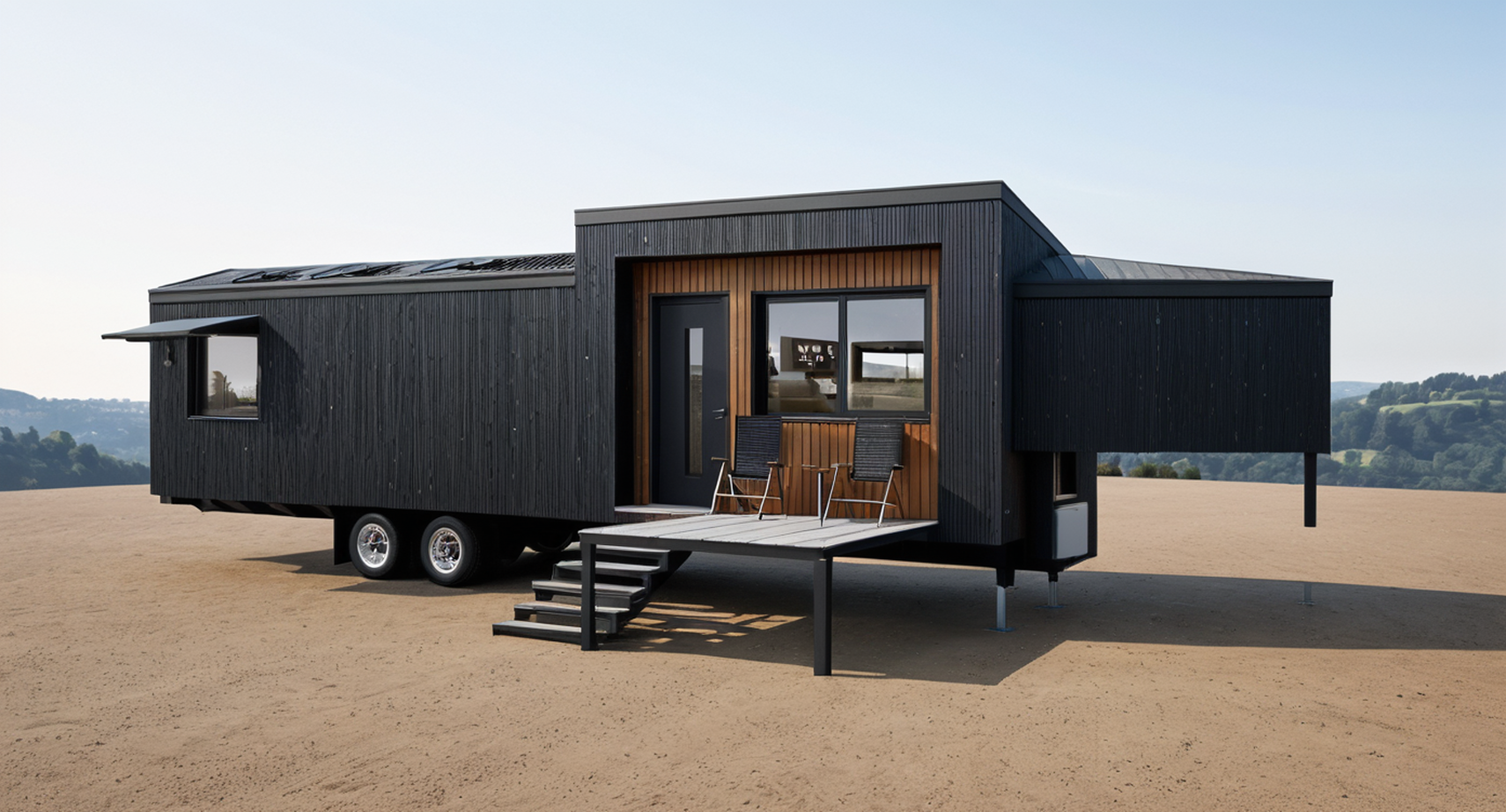
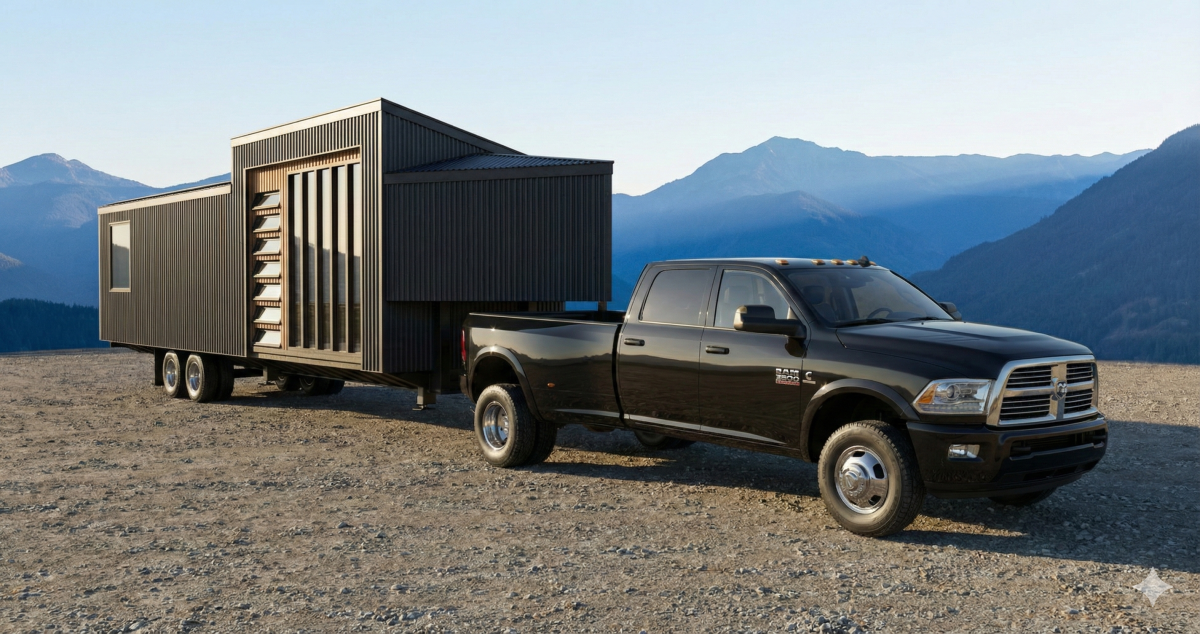
This is a tiny house concept I created a few years ago, long before Generative AI was a thing. I also just renewed my SketchUp Pro license and downloaded the latest version which came with a built-in AI rendering feature. This post covers both the tiny house design and a review of the new SketchUp AI rendering feature.
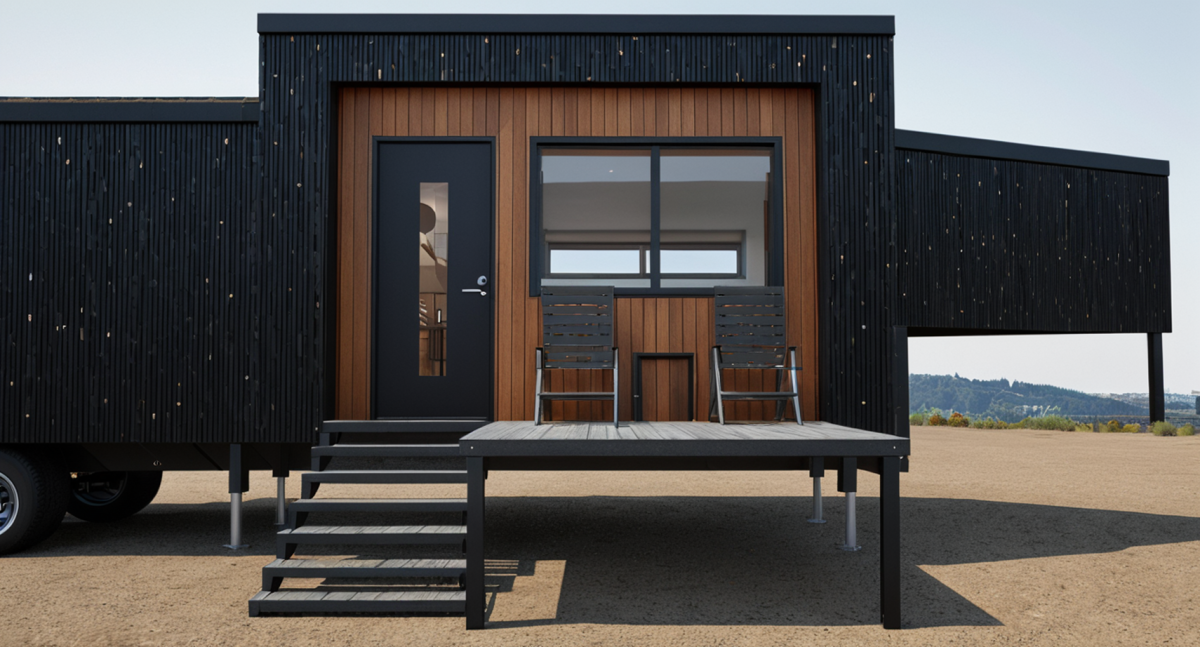
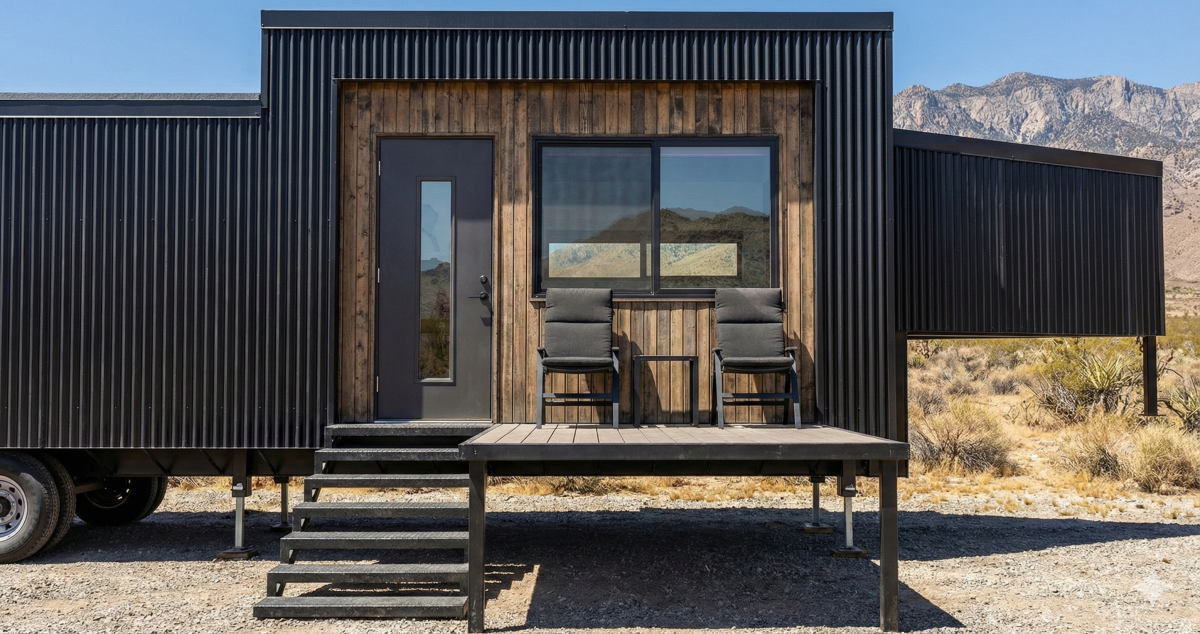
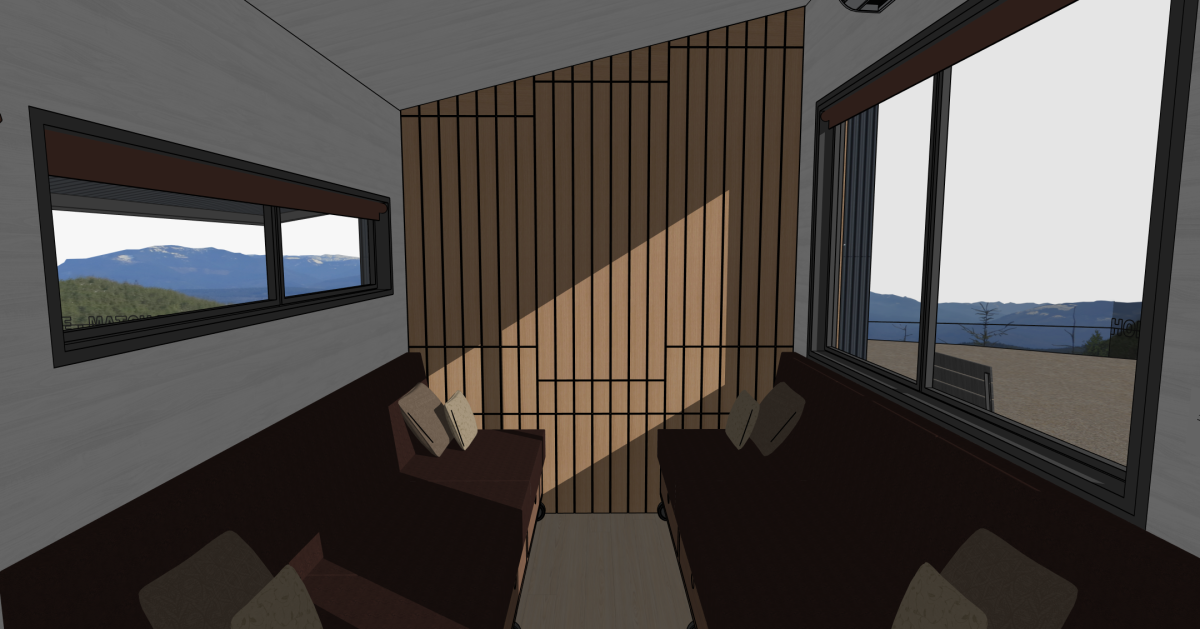
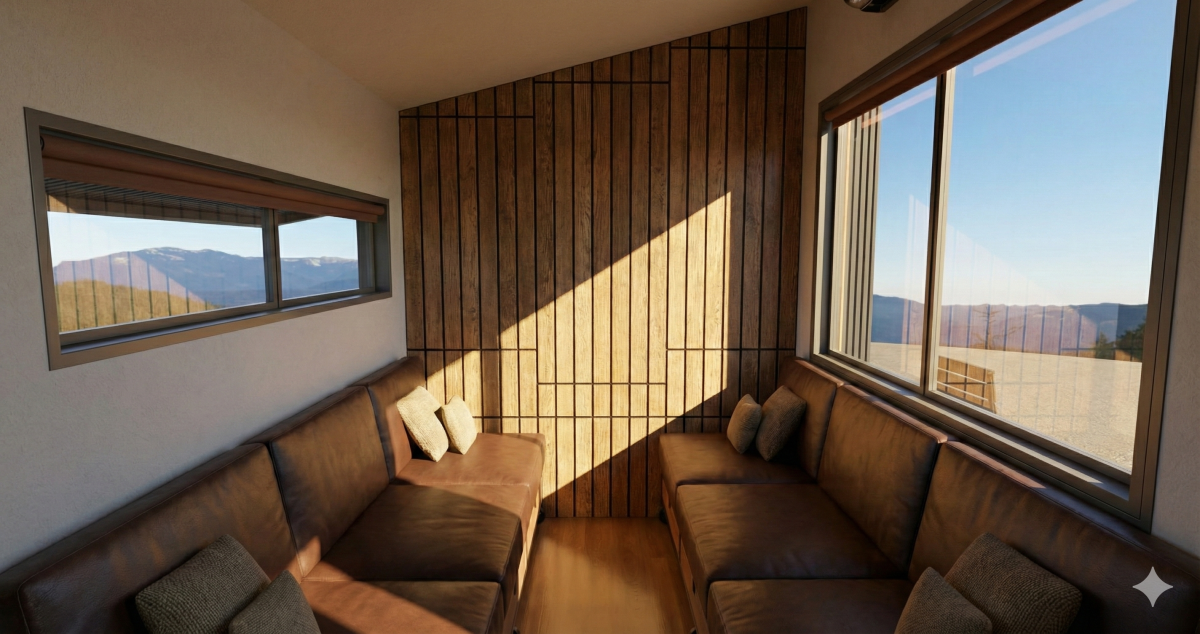
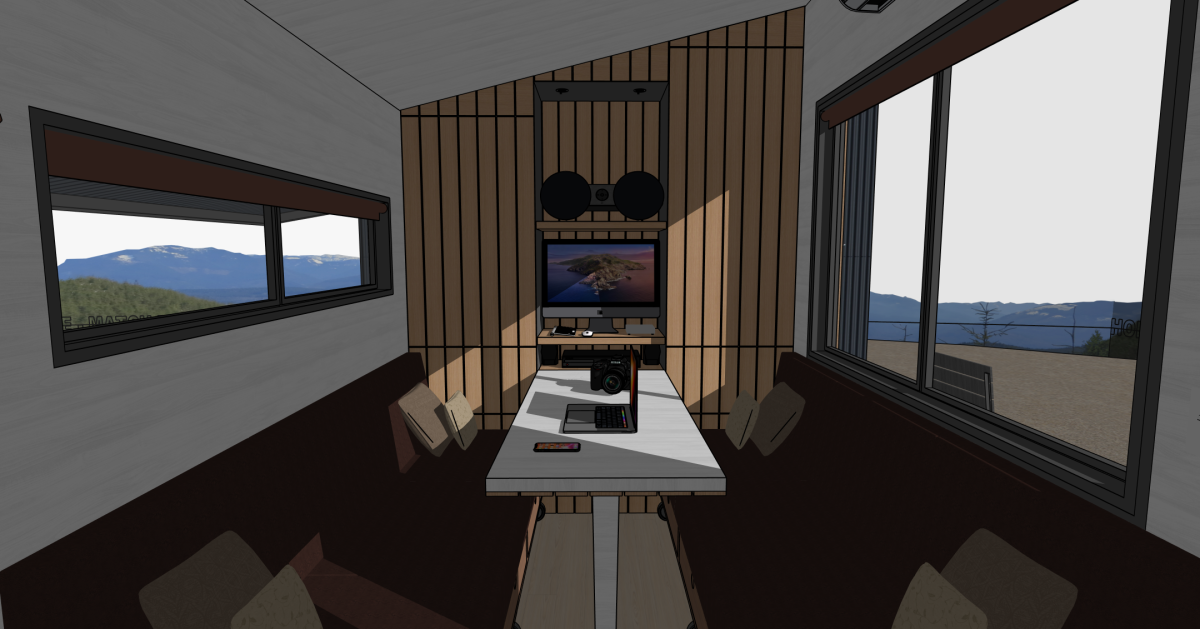
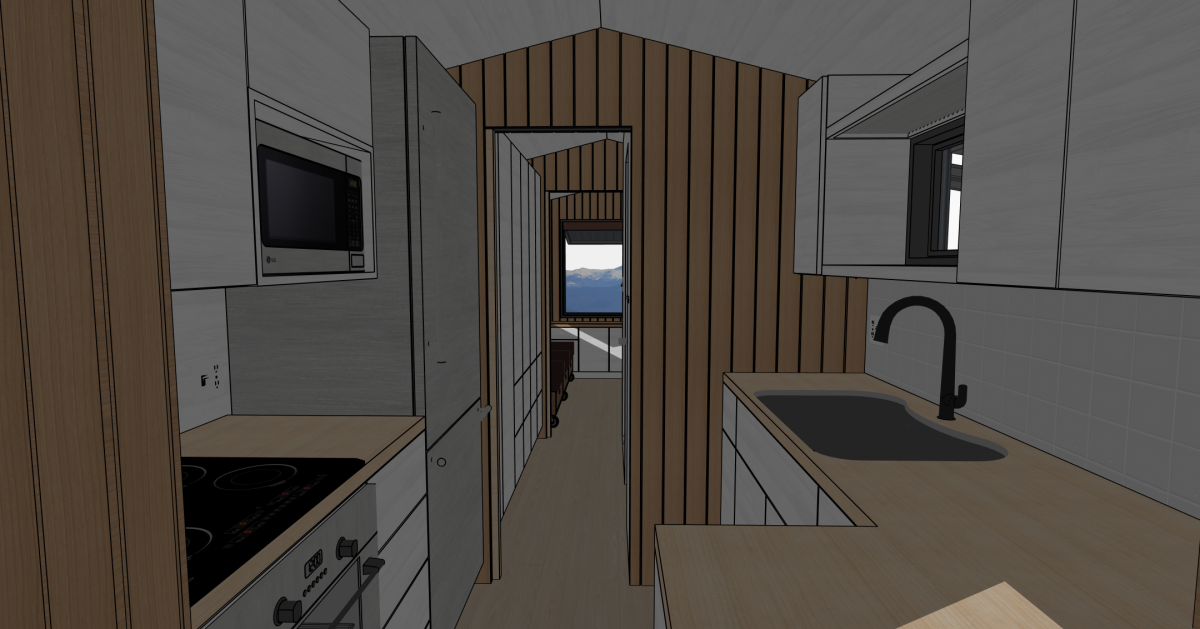
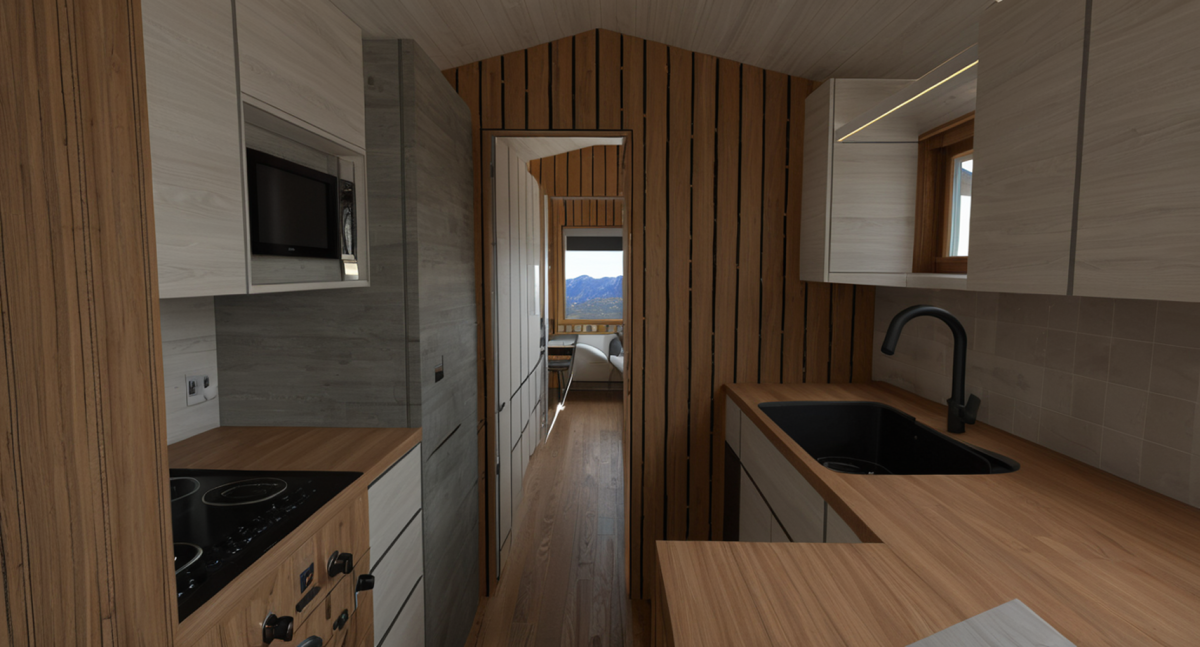
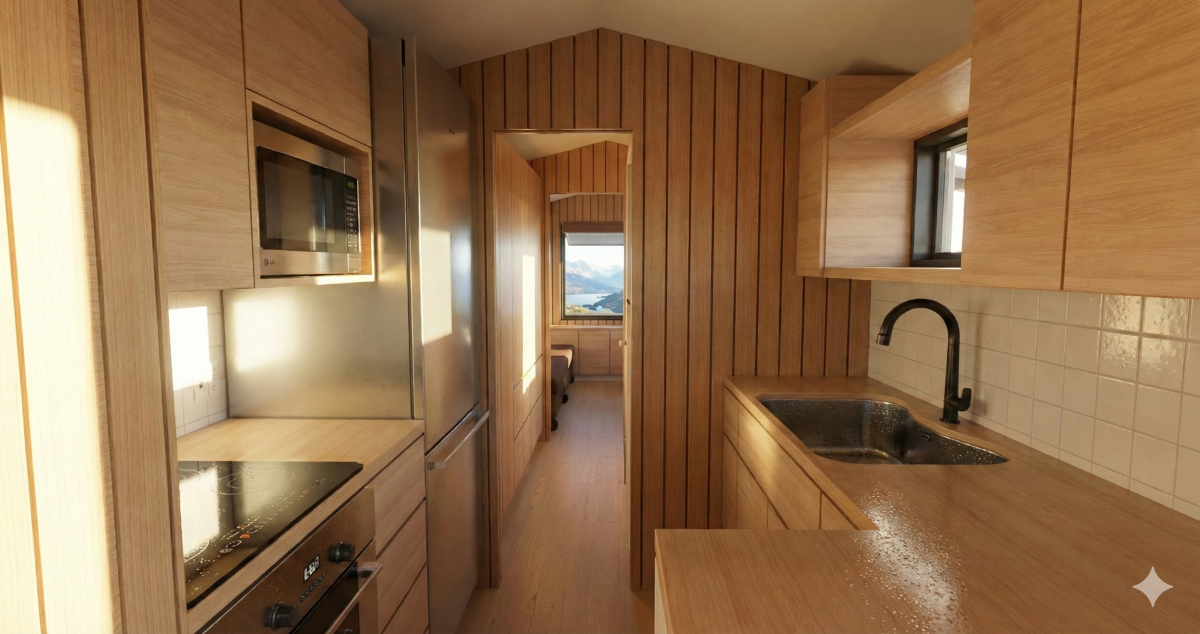
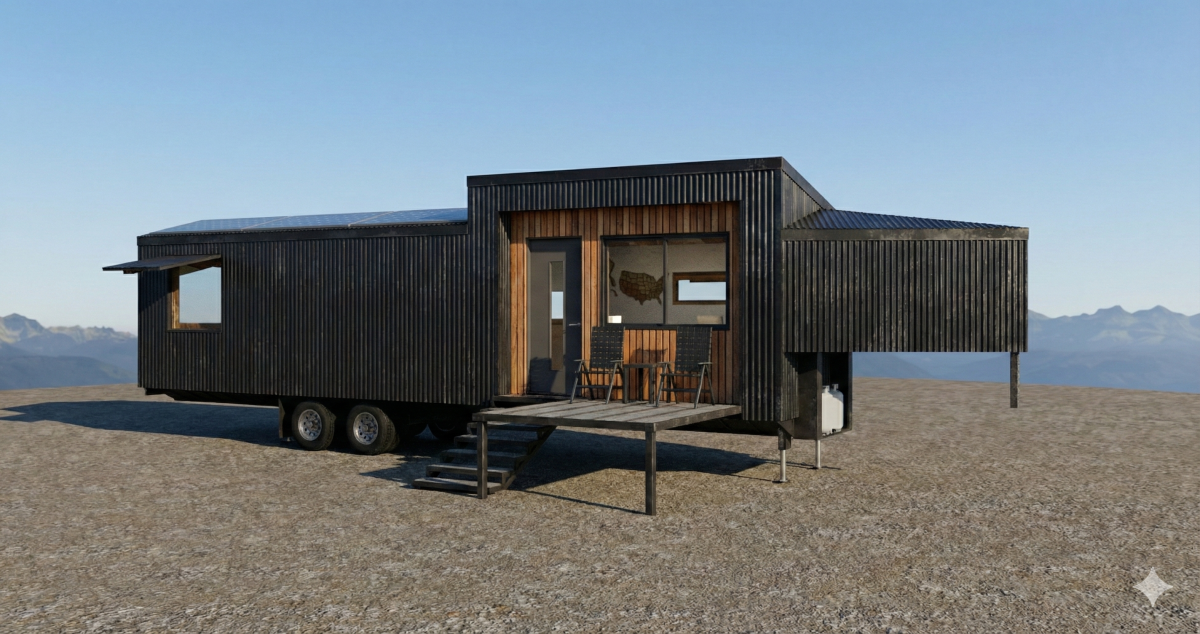
In the images you’ll see three versions, the native SketchUp export, the new SketchUp AI rendering output, and for quality comparison a rendering by Gemini Pro (a.k.a. Nano Banana Pro). You can spot the Gemini renderings because they are watermarked with a little four-pointed star in the right bottom corner. I used the simplest prompts to create these , so this is not rigorous testing, just what you get on the first pass.
SketchUp
SketchUp AI
Gemini
I find it useful to invent “stories” in my mind when drawing design concepts, (like we do in app design with use cases or user personas), because it simulates a real project and makes it more challenging (i.e., more fun). I pictured a family of four traveling through North America, hitting all lower 48 states and ending up in Alaska.
SketchUp
SketchUp AI
Gemini
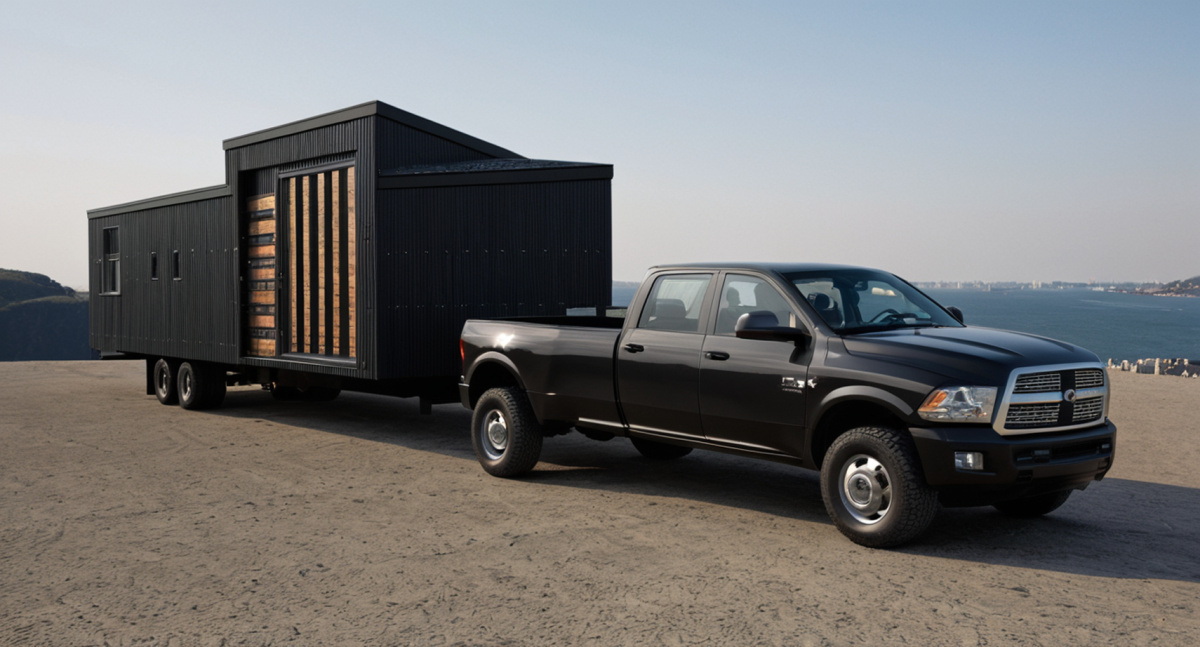
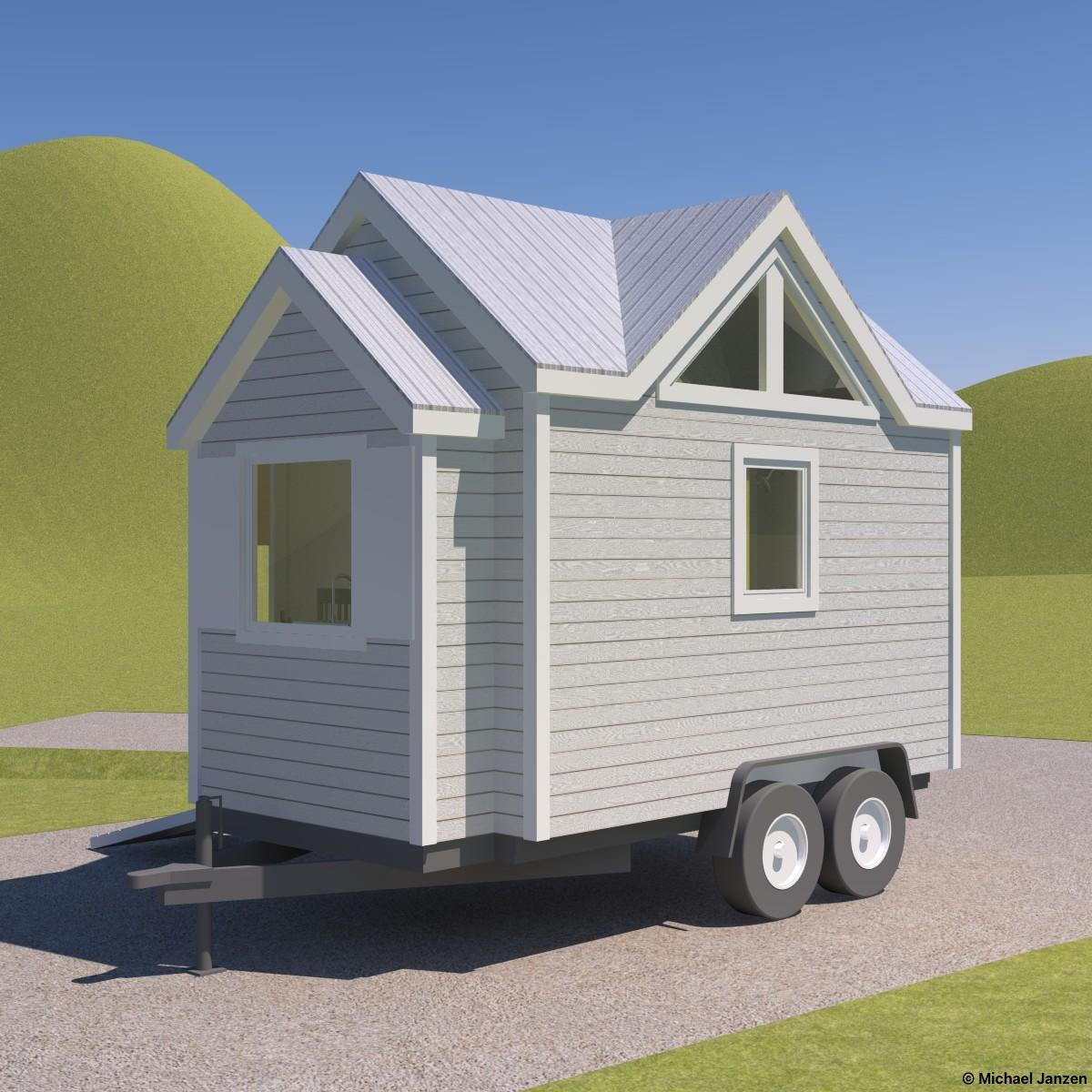
To make a road trip of that scale possible while towing a tiny house, which is usually not a fun task, I imagined it would be built on a stout trailer with duel axle duallies, making it easier for travel using a heavy duty pickup. It’s like a big gooseneck travel trailer, but heavier.
To save weight, the structure would be made from lightweight steel framing (e.g. Volstrukt framing) but finished like a comfortable tiny house on wheels so that once it arrived in Alaska it would still be comfy to live in it all year long. (I know, I know, the Alaskans are laughing at me right now – four seasons, tiny house, yeah right.)
SketchUp
SketchUp AI
Gemini
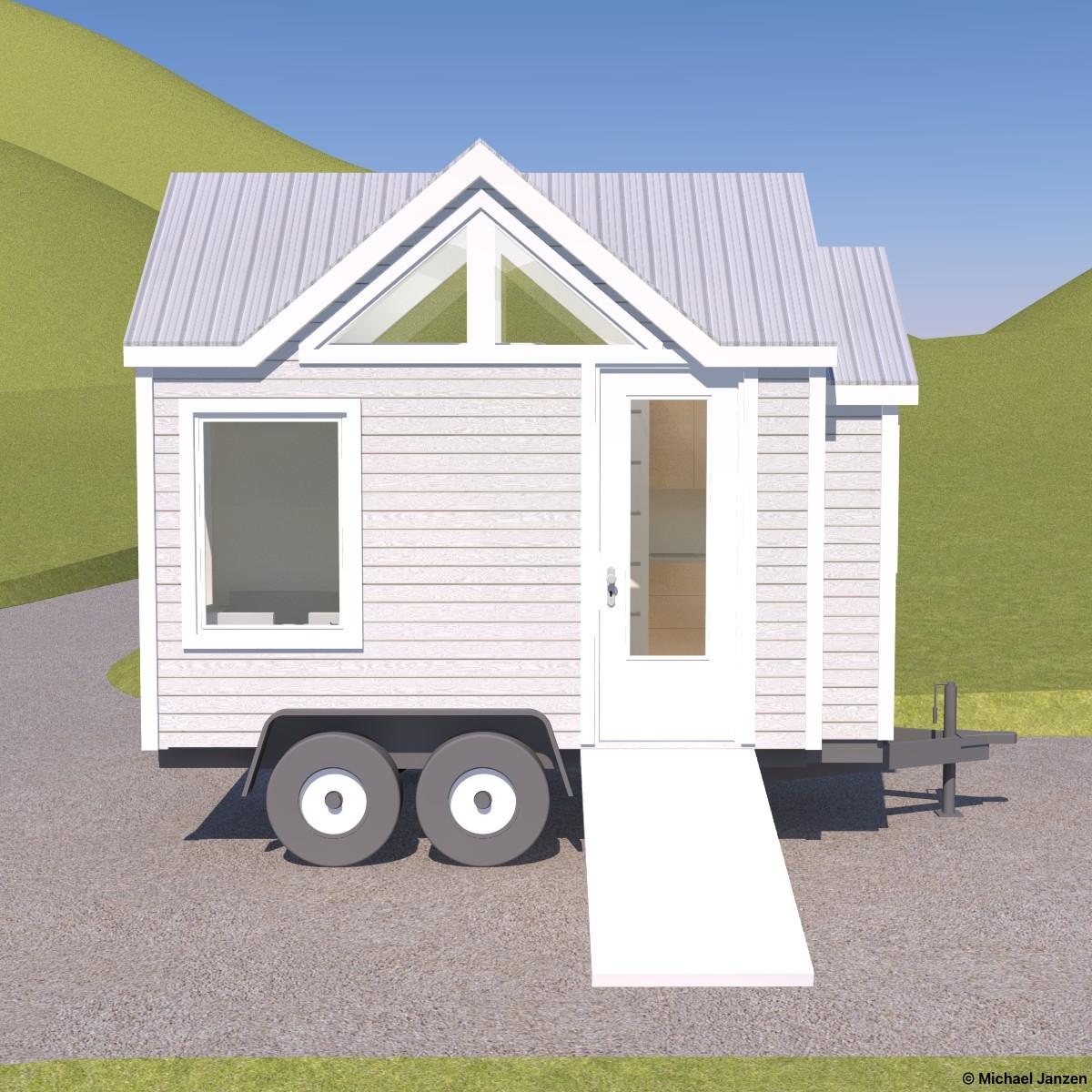
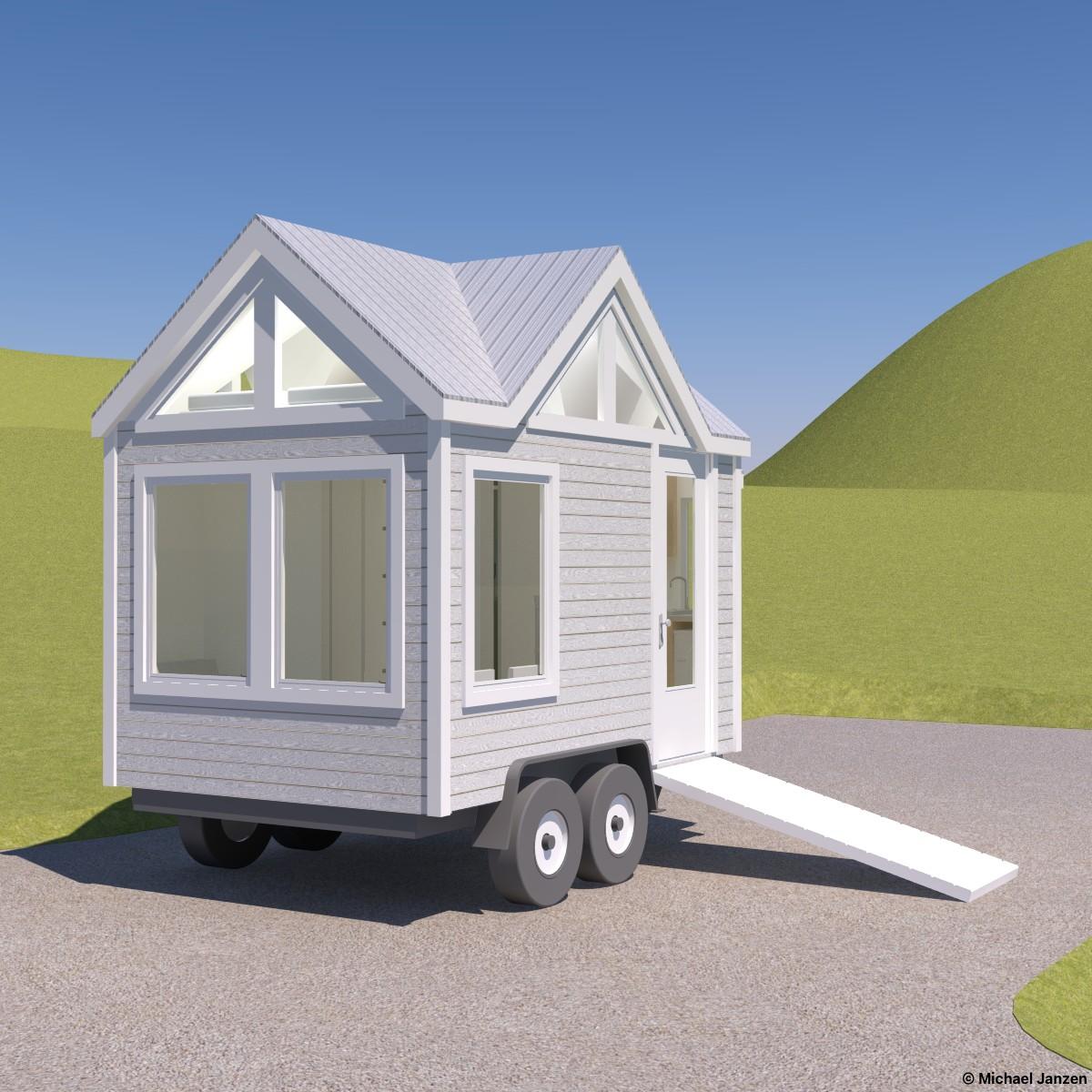
The house has just a few strategically located large windows. The windows all have sturdy shutters that lower into place protecting and locking up the house securely when closed. When open they provide shade and function like awnings.
SketchUp
SketchUp AI
Gemini
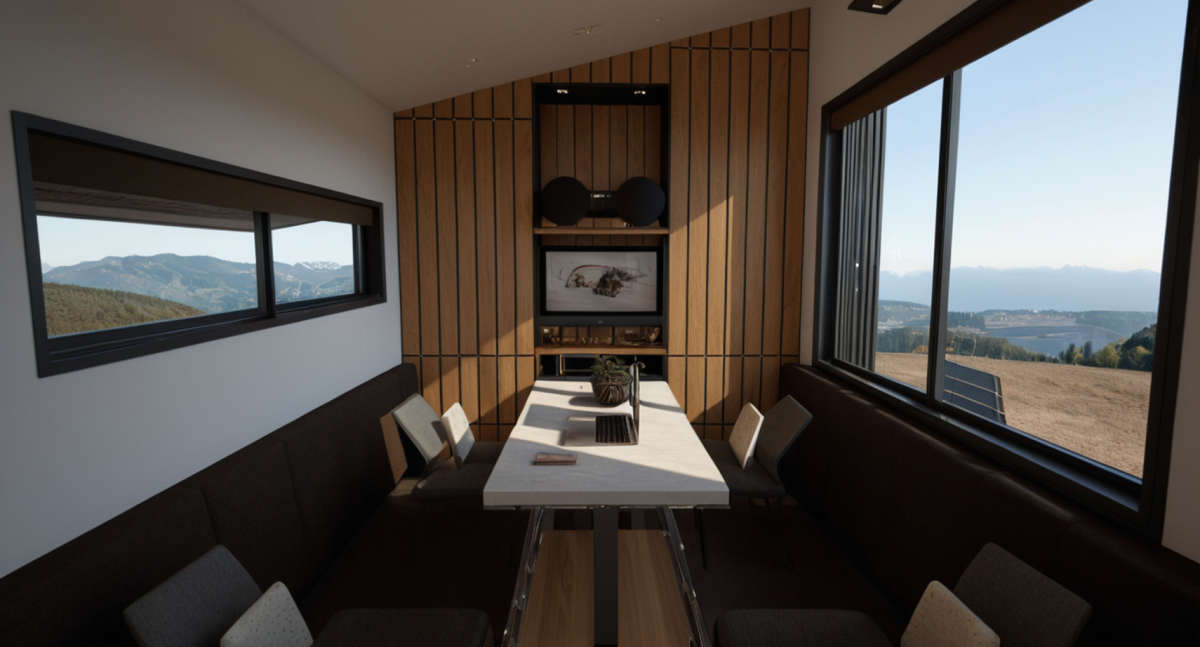
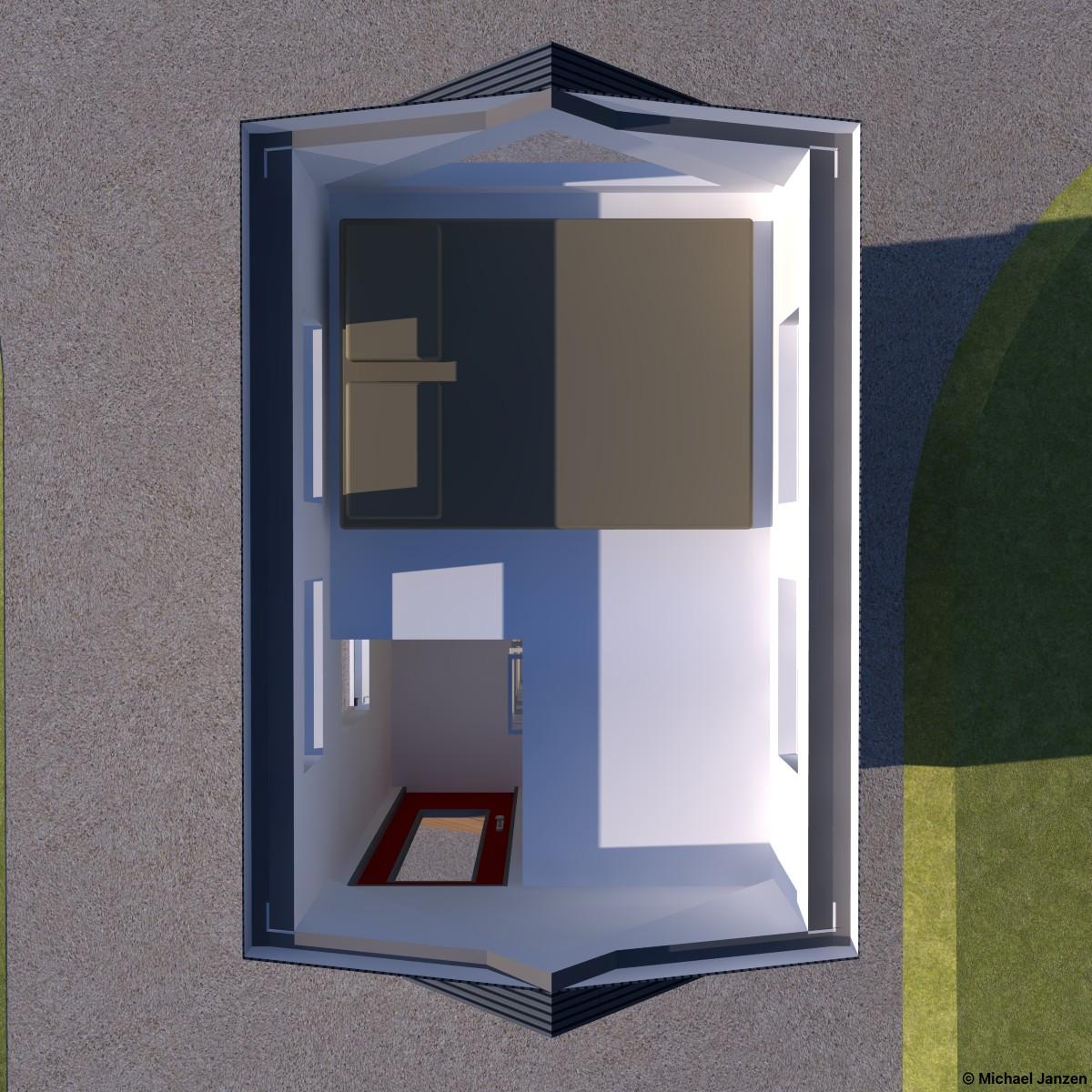
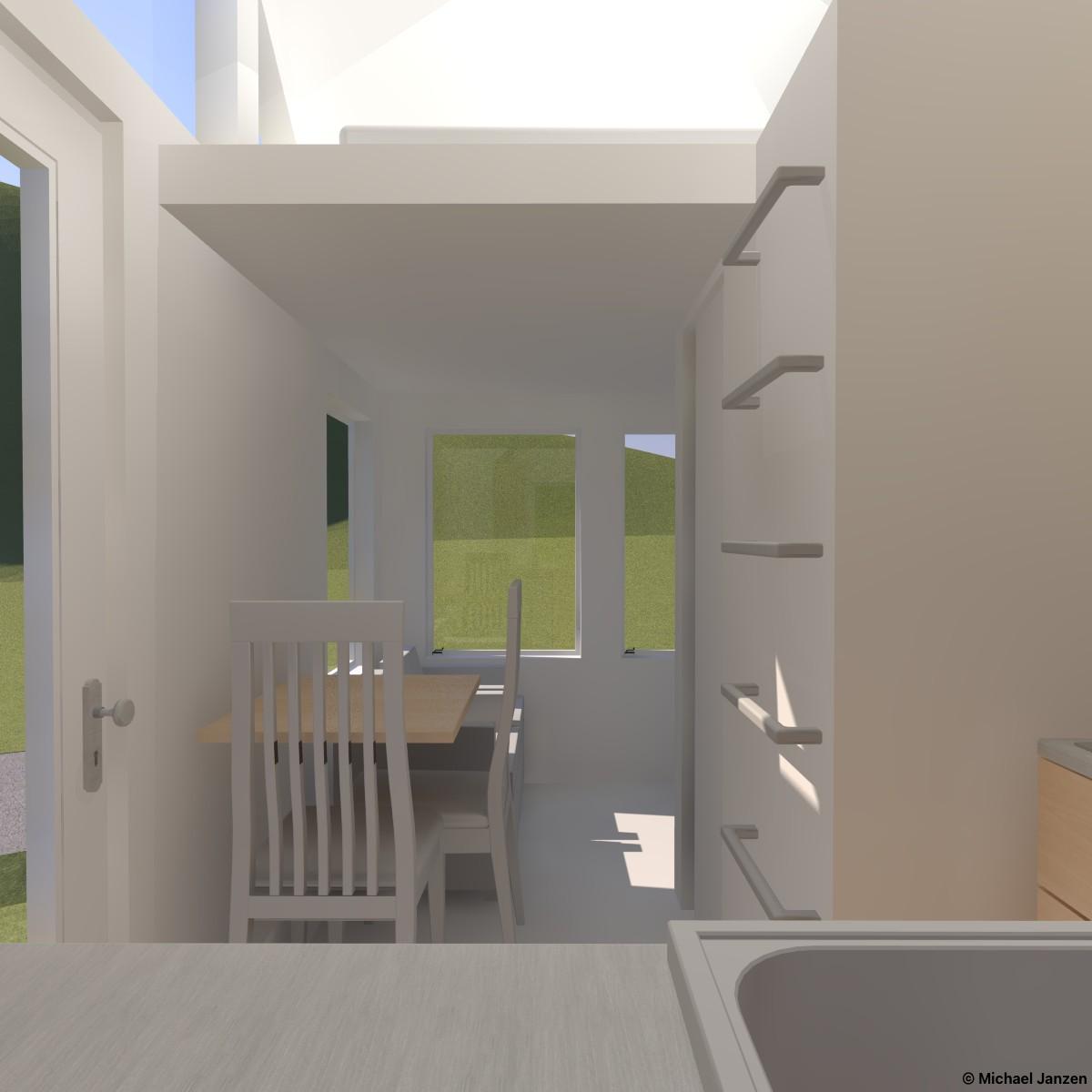
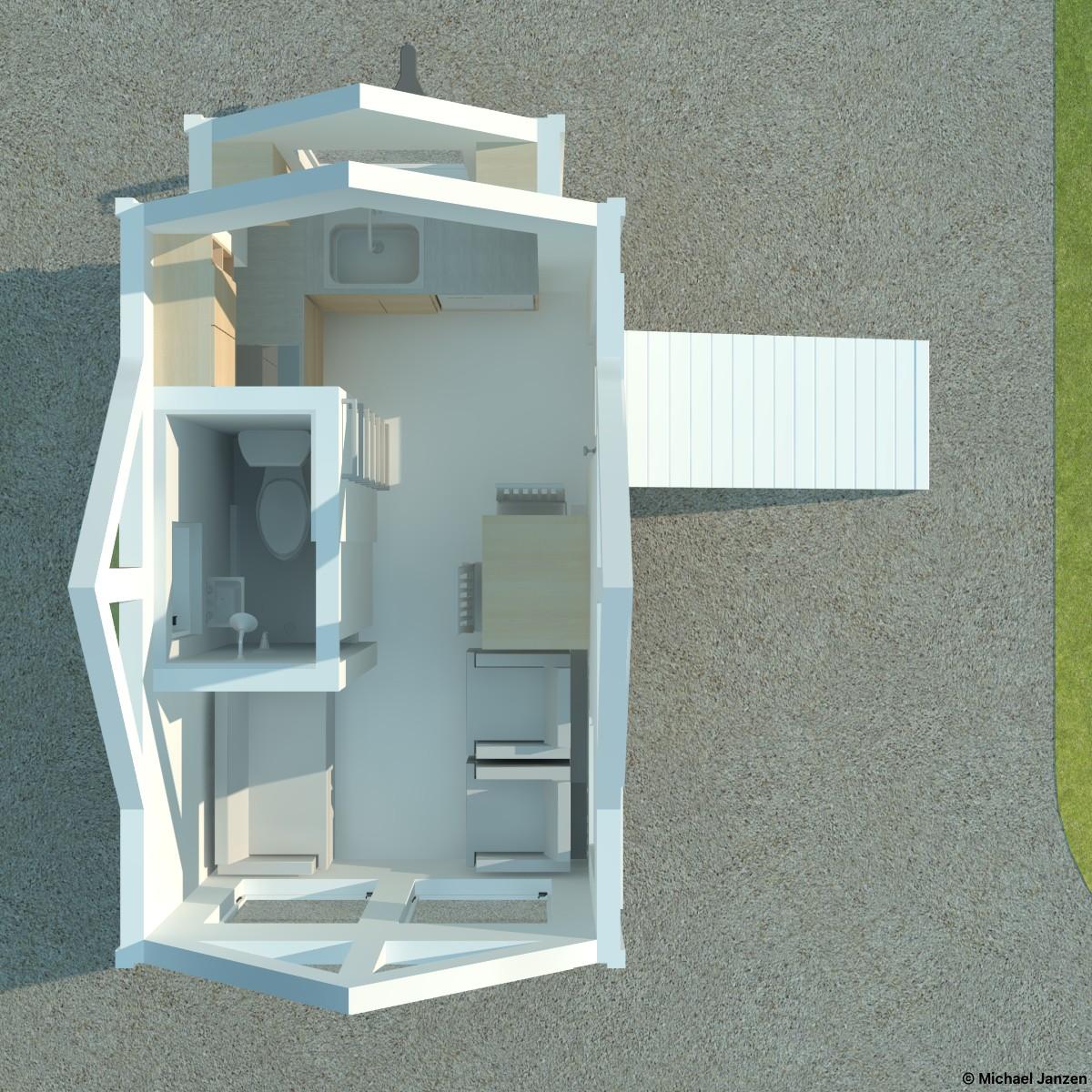
The house features a living room that had three modes: dining living, bedroom. The slat wall hides cabinets that open to reveal storage but also a fold-down table. The two long sofas provide storage and can be pushed together to form a queen size bed. I pictured this being the parents bedroom with all night access to the kitchen and bathroom down the hall. The bunk room in the back would be for the kids.
SketchUp
SketchUp AI
Gemini
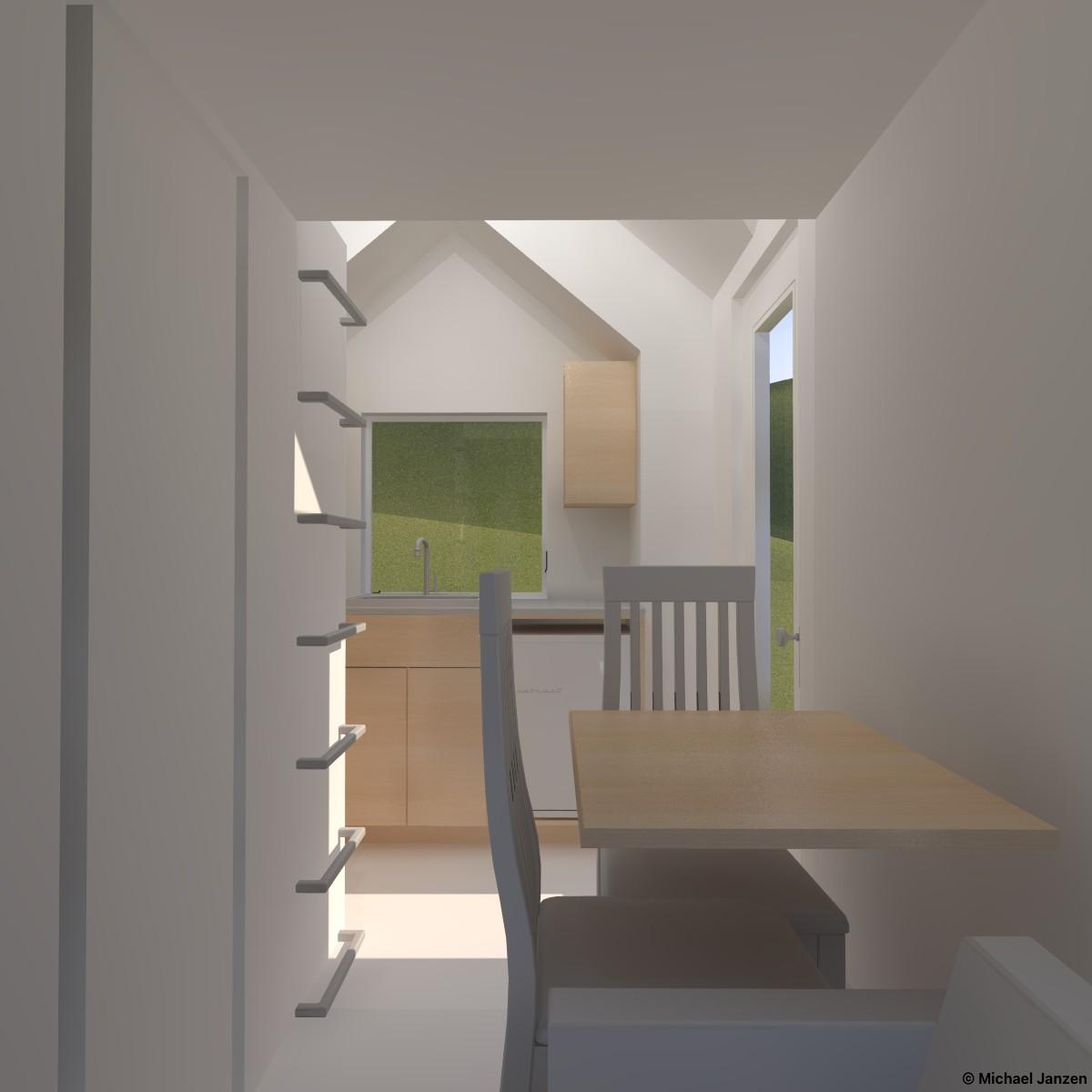
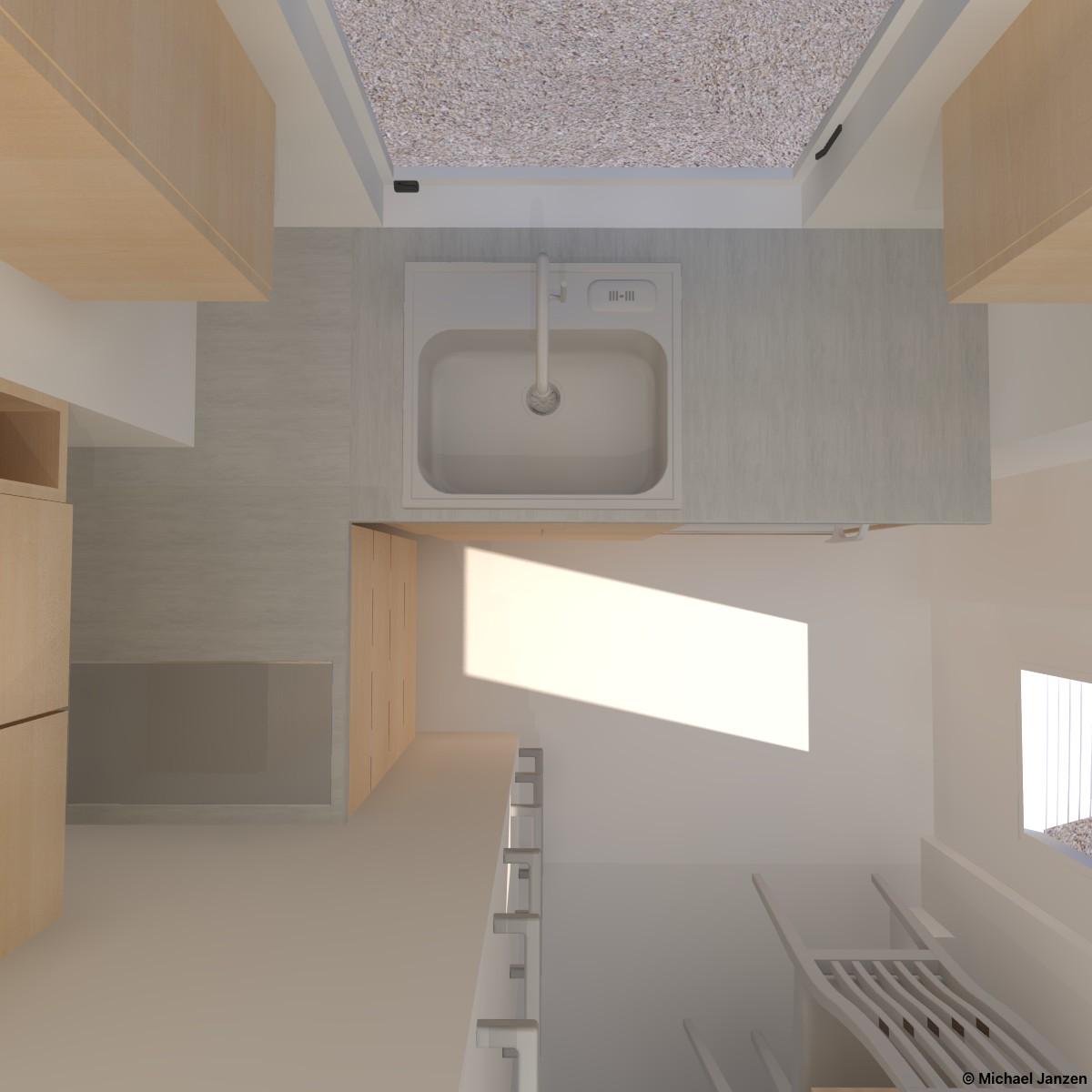
The kitchen fits the core needs of a family of four living full-time: cooktop, refrigeration, and counter prep space.
SketchUp
SketchUp AI
Gemini
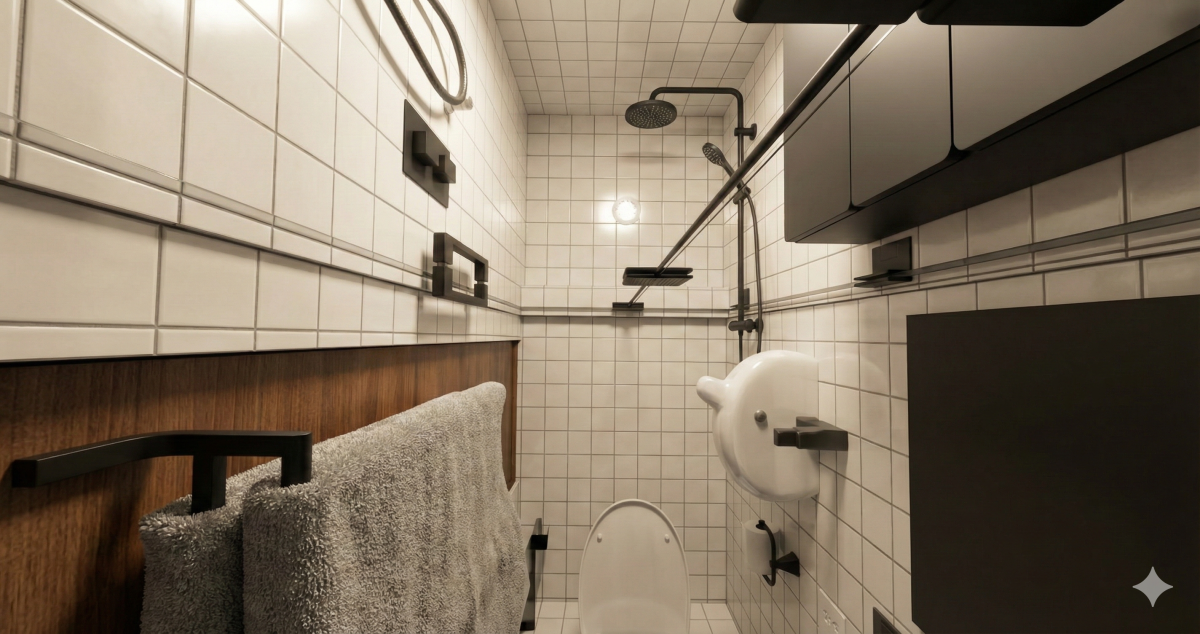
Past the kitchen is a storage lined hall and a bathroom with bunk room in the back.
SketchUp
SketchUp AI
Gemini
There is no loft to keep the house shorter and travel friendly. In many ways this combines the best of a travel trailer with a tiny house but doesn’t introduce complexities like slide-outs which would reduce the weather tightness and four season capabilities.
SketchUp
SketchUp AI
Gemini
This is purely a design concept and I have no plans to create house plans for this design. But tell me in the comments what you think and if you’d like to see more designs like this.
SketchUp
SketchUp AI
Gemini
The images were all drawn by me using SketchUp Pro but the renderings were just created today.
The design is 100% human, hand drawn in SketchUp, and the rendering is faithfully executed by AI without much distortion. I’m including both the SketchUp native export, the SketchUp AI rendering, and a rendering by Gemini Pro for comparison.
My initial opinion of this new AI feature for SketchUp is that the cost is not worth the result. Every time is generates an image it costs credits. It also makes three at a time, which seems odd, although it does give the user a quick way to pick the preferred output. So I guess that could be a time saver. The UI also feels clunnky, kind of old-school, and not in a good way.
Trimble (maker of SketchUp) gave me, a paid Pro user, 150 AI credits to play with but at 5 credits per rendering you run out of free credits fast.
I pay $20 a month for Gemini Pro, use it all day long for other work, and it could create a ton of renderings like these in a day by converting native SketchUp images without hitting daily limits. From the results shown here, I prefer the Gemini Pro output.
So while the built-in AI rendering in SketchUp is a nice addition, the pricing does not compete with the alternatives, including the old-school plugins like Podium which is what I used before generative AI was an option. At this point I htink I’d just use Gemini instead of plugins or the SketchUp AI.
*(paragraph removed)*
AI is great for churning out business documents, rendering images, and doing deep research, but a quick post like this would take longer to draft and edit with AI than to just writing it myself. It would also sound a lot different, more polished in structure, but less direct in voice.
Thoughts on the SketchUp AI rendering — whether the clunky feel and credit cost match your experience — are welcome in the comments.
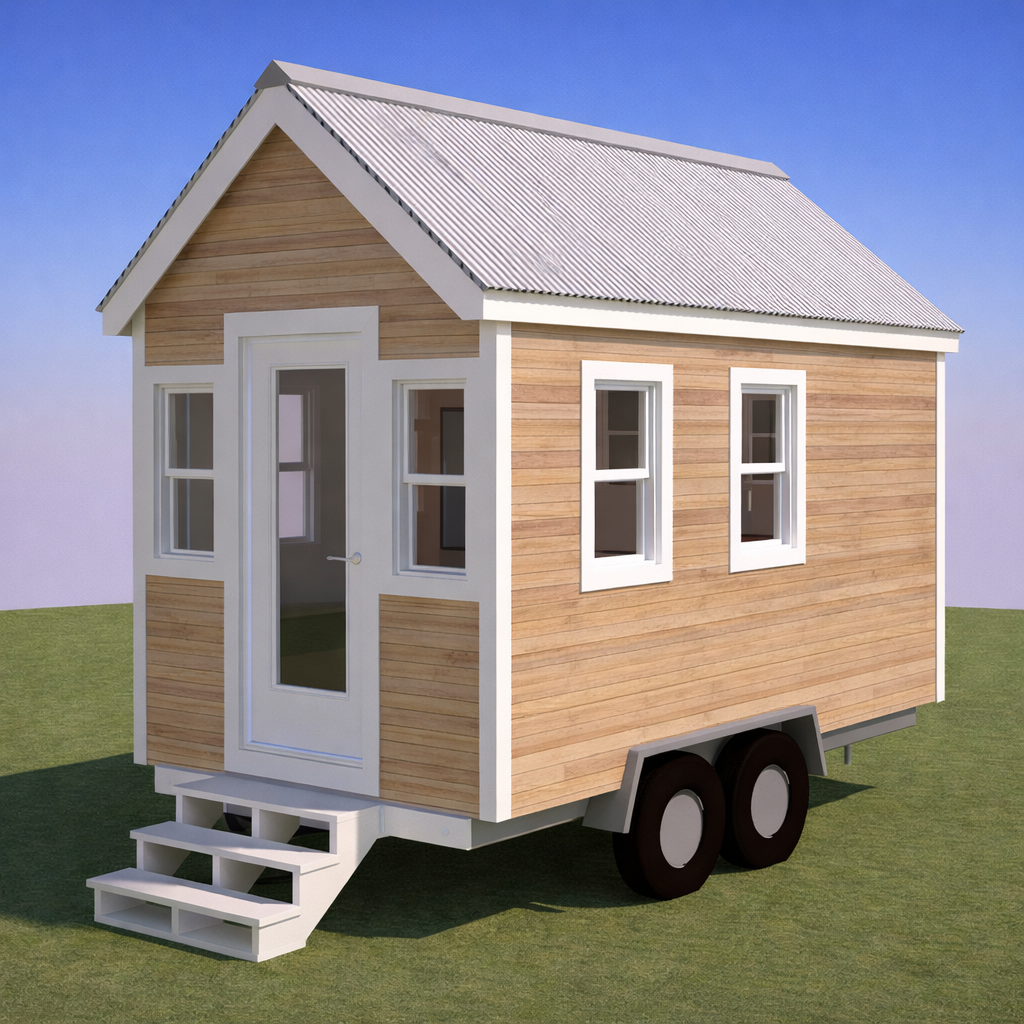
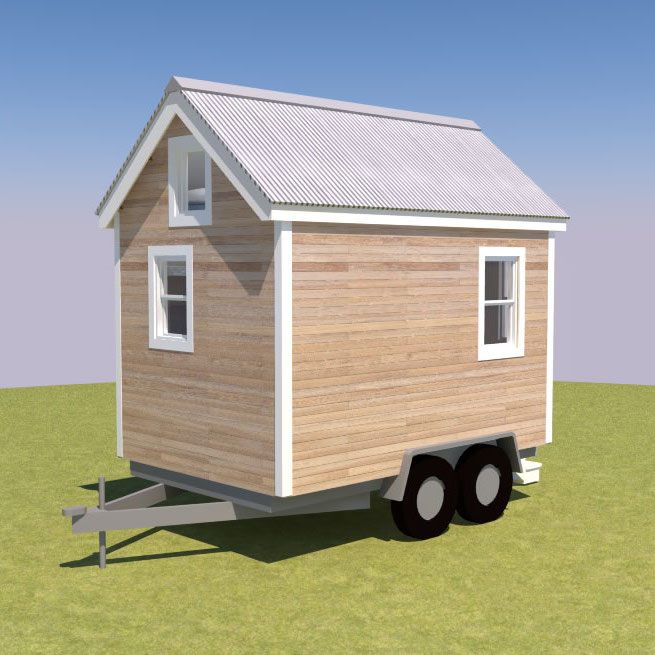
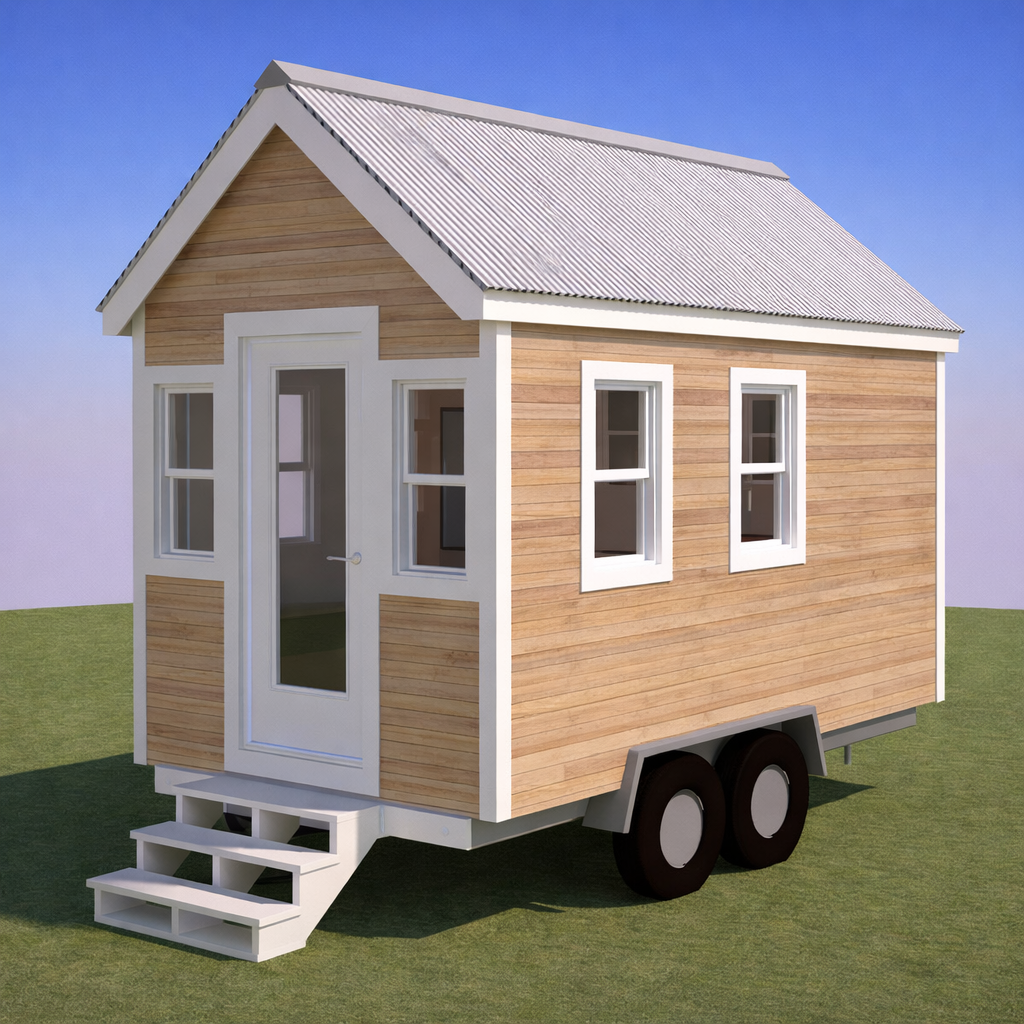
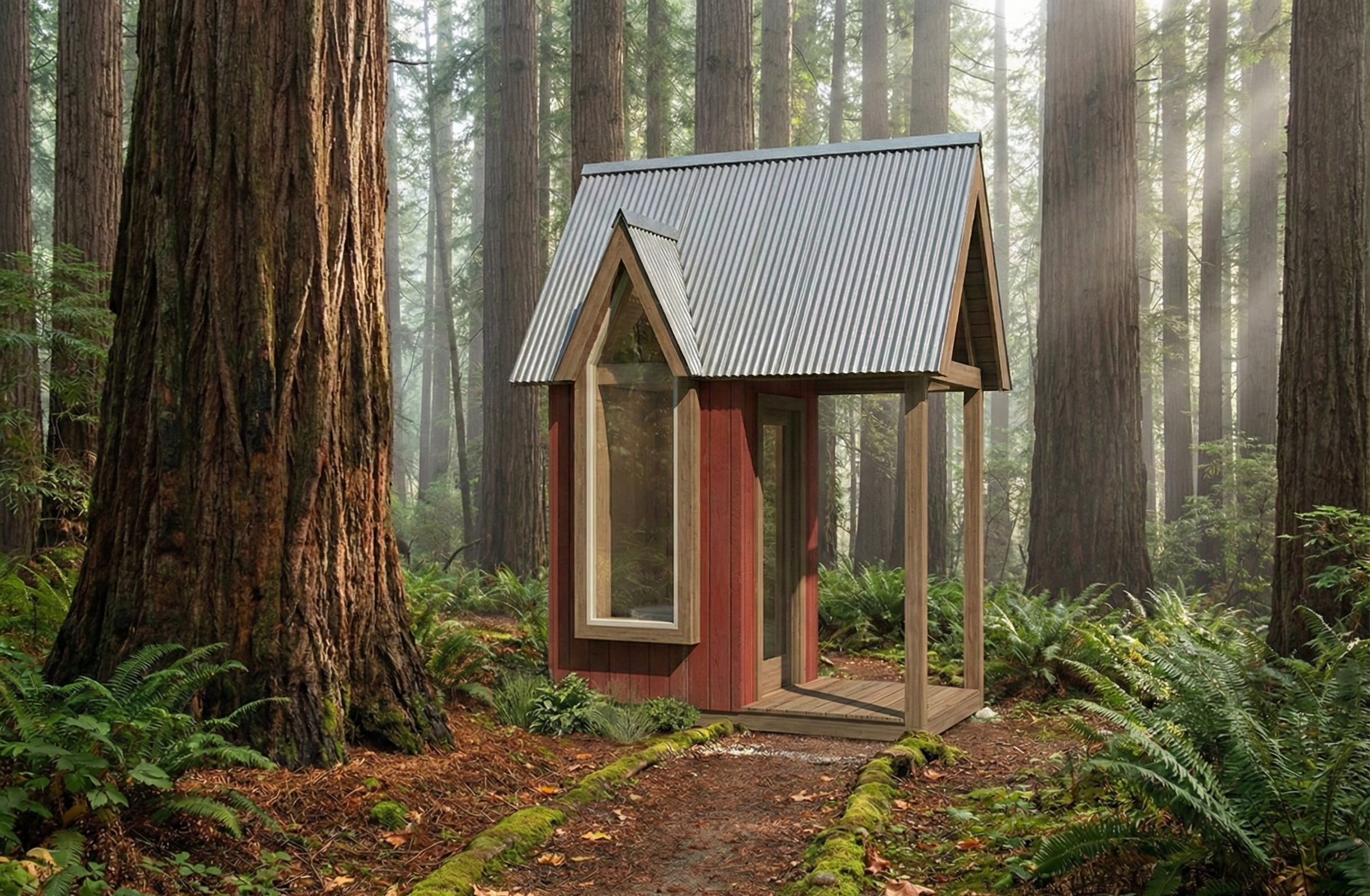
This was one of the first tiny house designs I created when I started designing tiny houses. It’s named for a tiny community in Mendocino County, California that seems perfectly sized for a house this small.
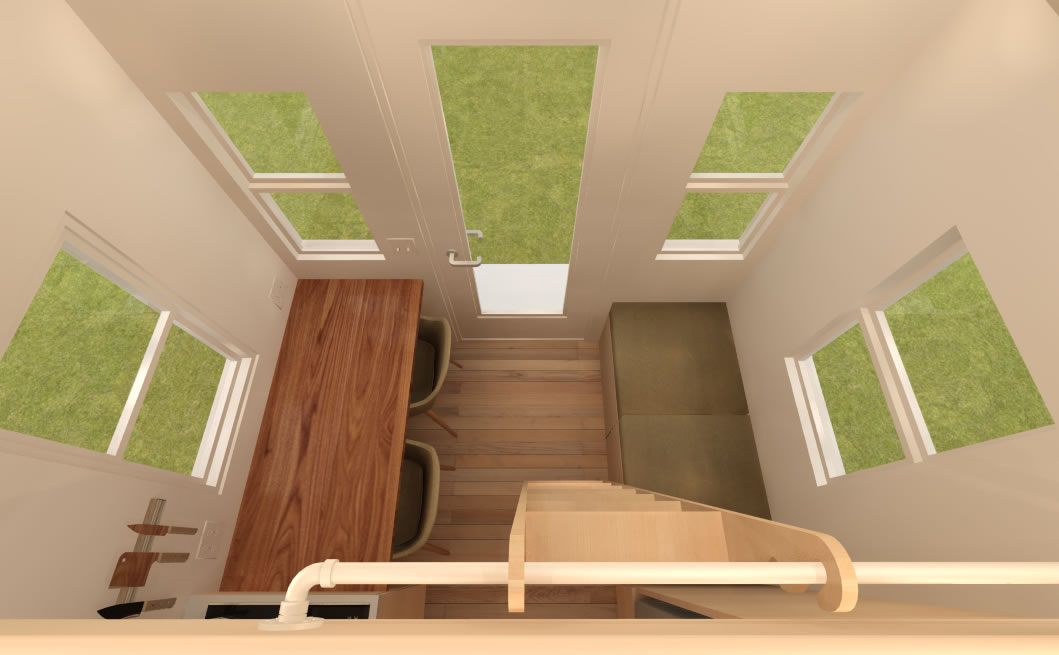
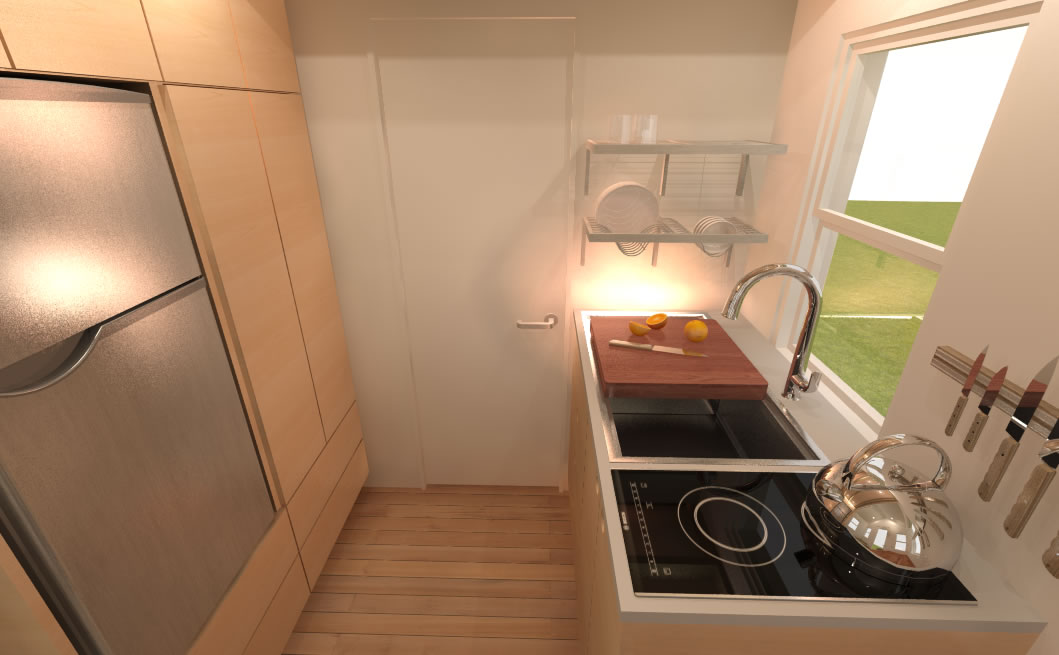
It measures just 8×12, so it has less than 100 square feet. As you can see it also has a loft that fits a queen sized bed, a bathroom with a 32″ square shower, sink, and toilet. It has a tiny kitchenette and desk/table too.
I once ran a blog dedicated to tiny house design, but sold it years ago. I kept all the plans but thought they were lost in a hard drive meltdown a couple years ago. I recently discovered a backup on an old computer, so I’m making this one available for free.
It is a good example of the kinds of tiny house plans I used to make. They read more like assembly instructions than blueprints. This was intentional because the people I wanted to help were owner-builders. I kept the cost low and attainable too. But like I said you can grab the Philo 12 for free.
If you’ve been following my work since the early days (2008–2012), you know that I spent over a decade obsessed with solving the puzzle of tiny homes. I drew hundreds of concepts, thousands of blog posts, published books on tiny house design, and spent years arguing that 120 square feet was enough.
Then, in 2019, I stopped.
I stepped away from drawing in public to focus on my job in tech. It was a necessary break. But now it’s 2026, and I’ve felt a pull to the light.
Before committing to that direction, retiring the existing archive makes sense.
There’s a traditional potter’s method of clearing the studio and mind — smashing pots. I smashed pots. It’s not a violent act — breaking the work resets both the space and the thinking behind it. and a clear head.
That is what this post is about.
I am officially retiring the tiny house design archive in 2026, closing out a body of work that has accumulated over the past several years. But to fully commit to that future, I need to let go of the past.
The Final Send-Off
I recently found my full archive of designs from an old computer that I thought had been lost. Rather than letting them sit in digital purgatory, I’ve decided to bundle them all together for one last “send-off.”
The bundle marks the end of the first era of this work.
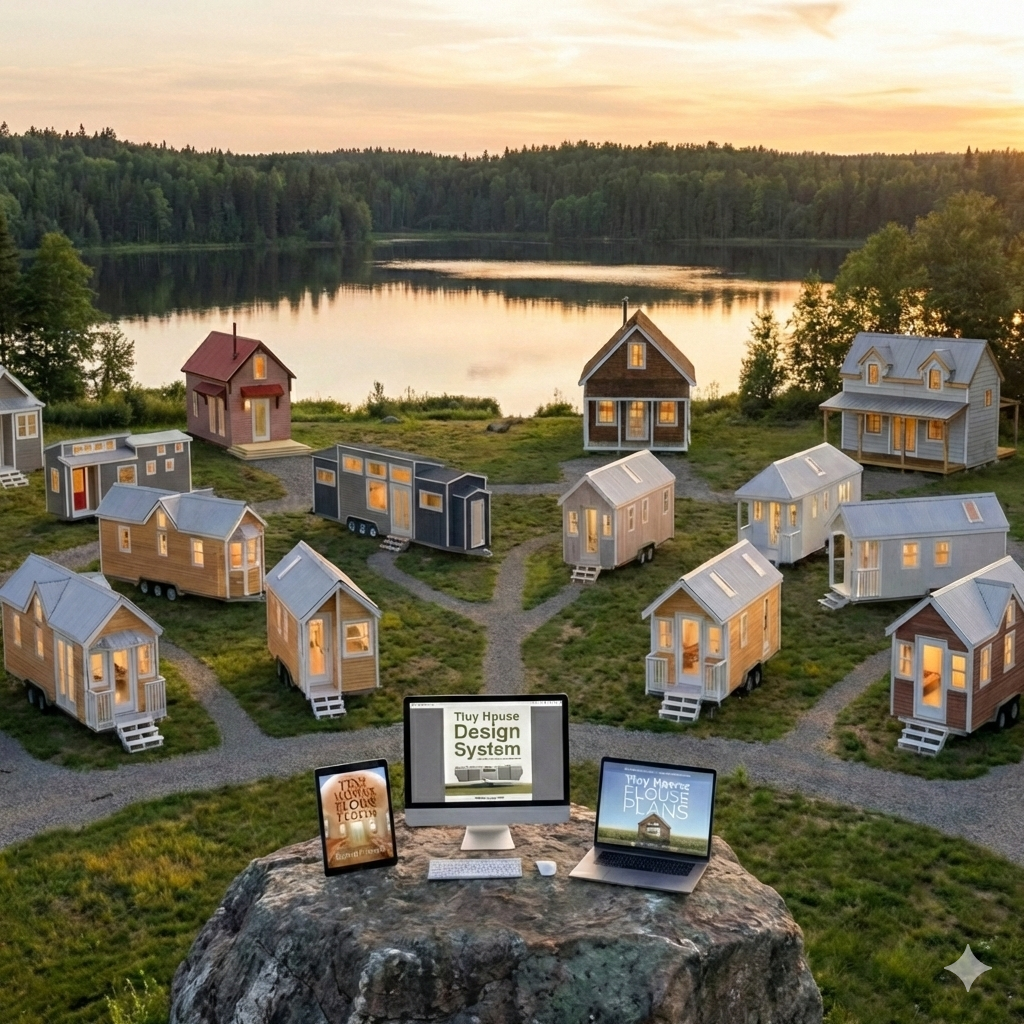
Inside the Archive Bundle, you’ll find the work that defined my contributions to the first decade in the tiny house movement:
The “Mendocino” Series: Plans like the Anchor Bay, Potter Valley, Boonville, and Philo—named after the tiny Northern California communities that were a strong influence in my youth and where my grandmother’s cabin stood in Redwood Valley.
The Experiments: Designs like the Carrack and the Westport that tested the limits of scale.
The Library: All four of my design books, including the Tiny House Design System and the 1st Edition of Tiny House Floor Plans (no longer available in print).
What Happens Next?
I am keeping this bundle available for a short time only. Once I feel the “shelves are clear,” I will be permanently retiring these plans to focus entirely on the new 2026 concepts.
If you are a builder, a builder, a researcher, or someone studying how a tiny house is assembled how a tiny house is assembled, I hope these serve you well. They were a joy to create, and I’m glad they are finding new homes before I turn the page.
One of the things that originally drew me to tiny hose design was the puzzle of it—the challenge of packing maximum utility into the smallest possible footprint. I once challenged myself to design a house just 9 square feet to test the practical lower limits of human habitation. This was back in 2008.
I called it “Nine Tiny Feet.” I never built it, wish I had. The floor space was 3’x3′ and it included a kitchen, desk, seating, toilet, and shower. The sleeping loft, (not included in the square footage due to ceiling height), extended over the porch. My design is pictured on the left and faithfully rendered by Gemini. The plans for this no longer exist, I can’t find them anywhere. If there is interest, I will redraw them from memory.
Even if you never intend to live in a micro home, there is measurable value in studying how they work. Designs like these demonstrate extreme space optimization and multimodal living—concepts that apply to homes of any size.
Perhaps most importantly, I designed the house plans for regular people to build. Unlike standard architectural blueprints, which can be cryptic to the untrained eye, these are presented more like assembly instructions. My goal was to demystifying the construction process—walking through how a complex roof is framed, how a dormer is attached, and how a bay window comes together step by step.
It’s early February 2026, and I’ve returned to the archive for this final look.
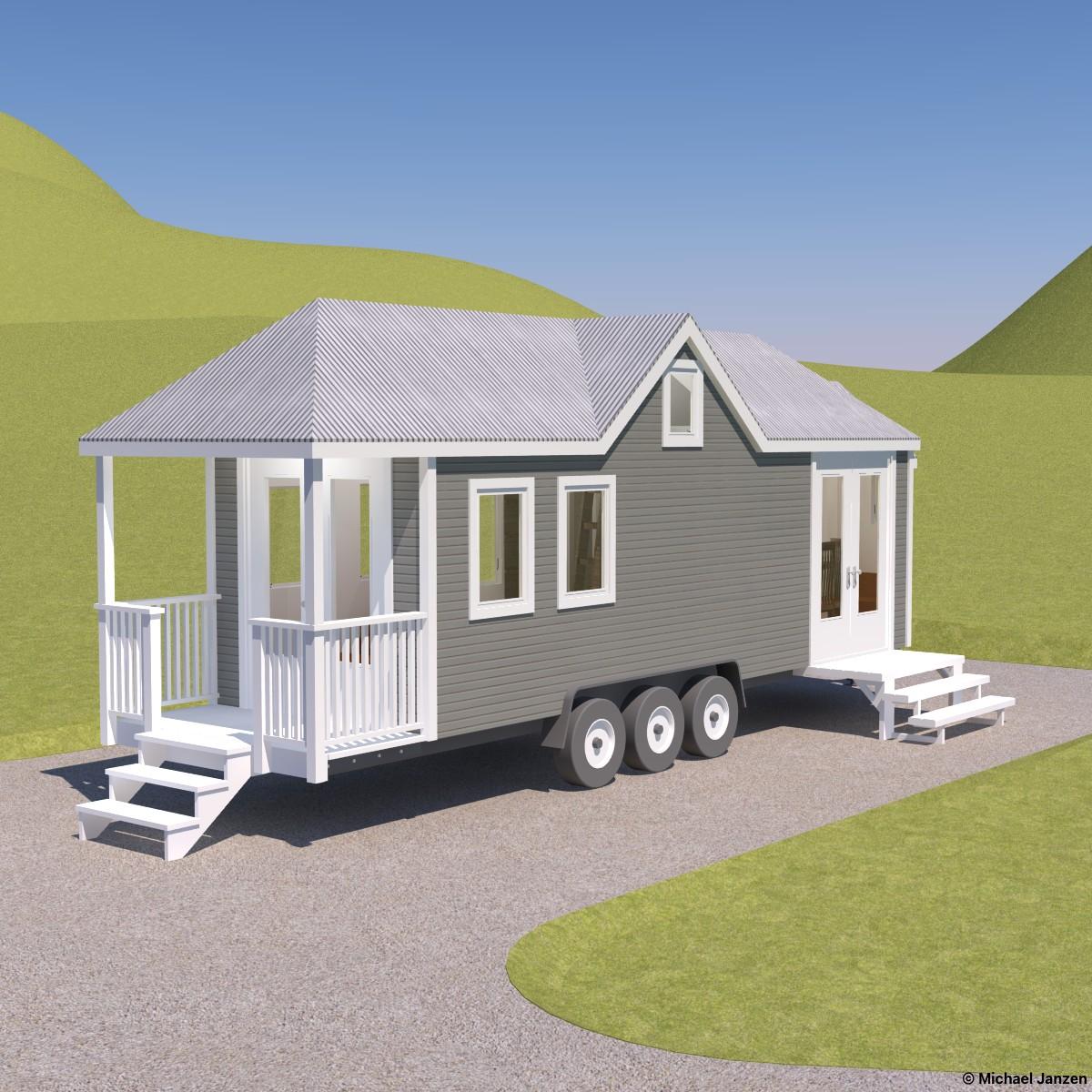
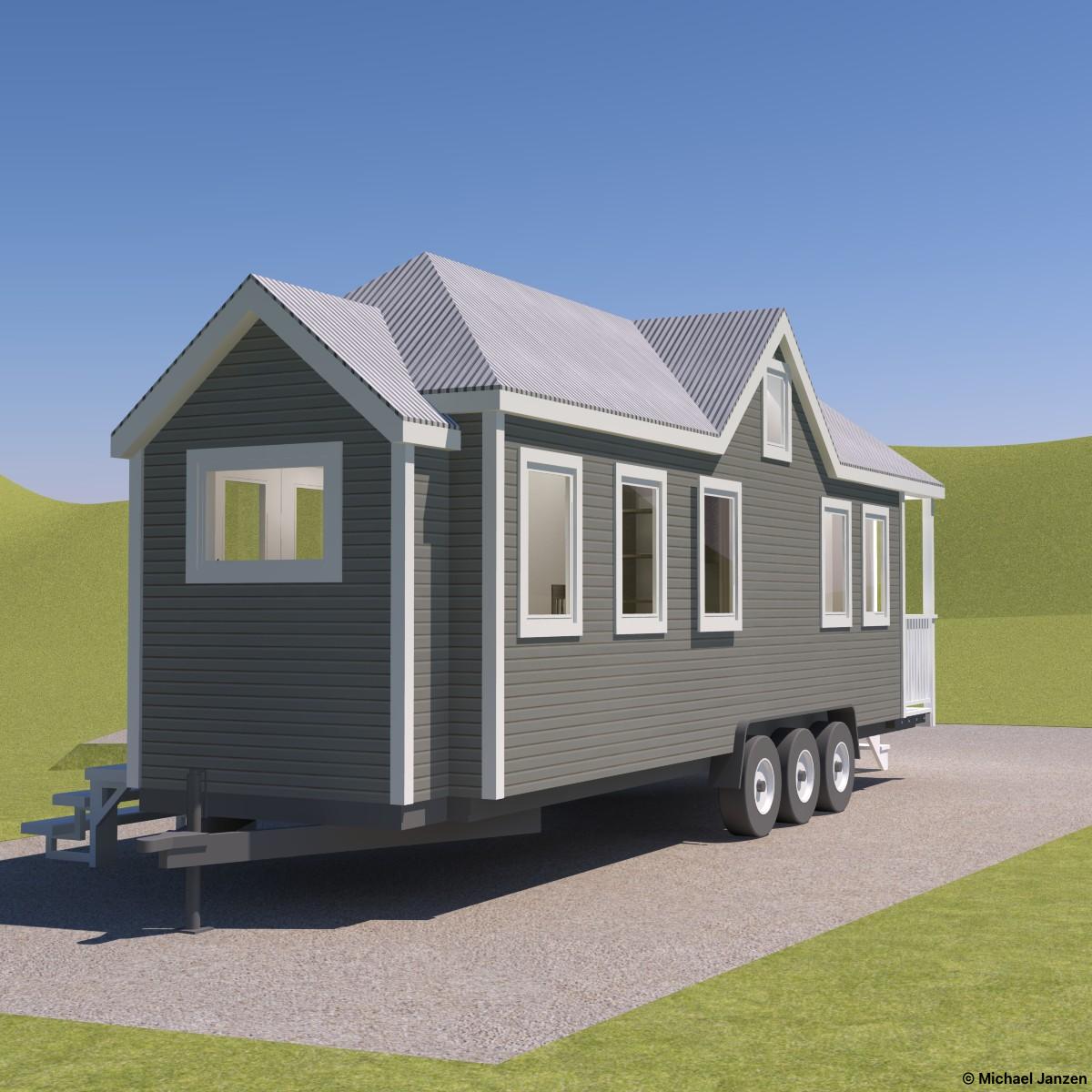
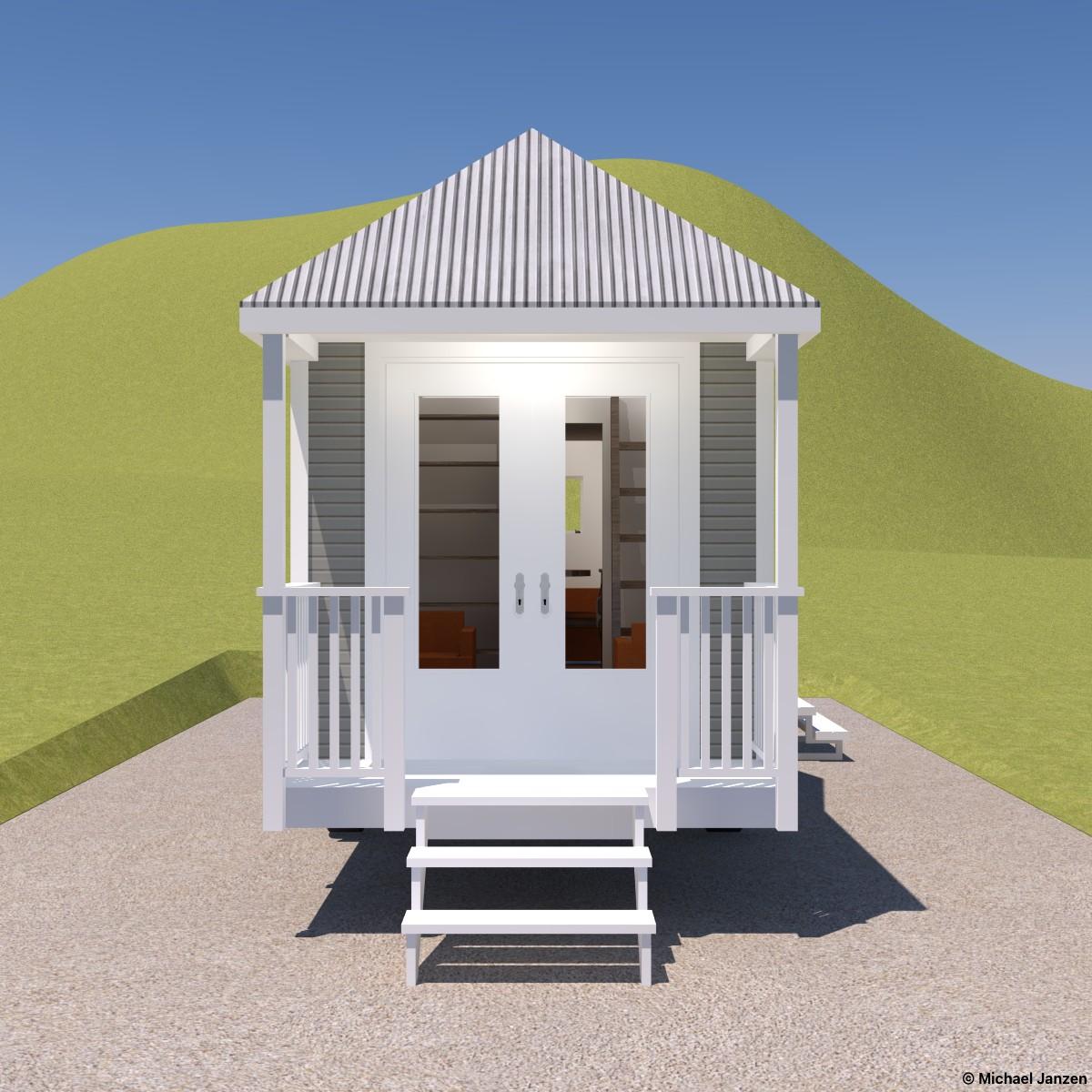
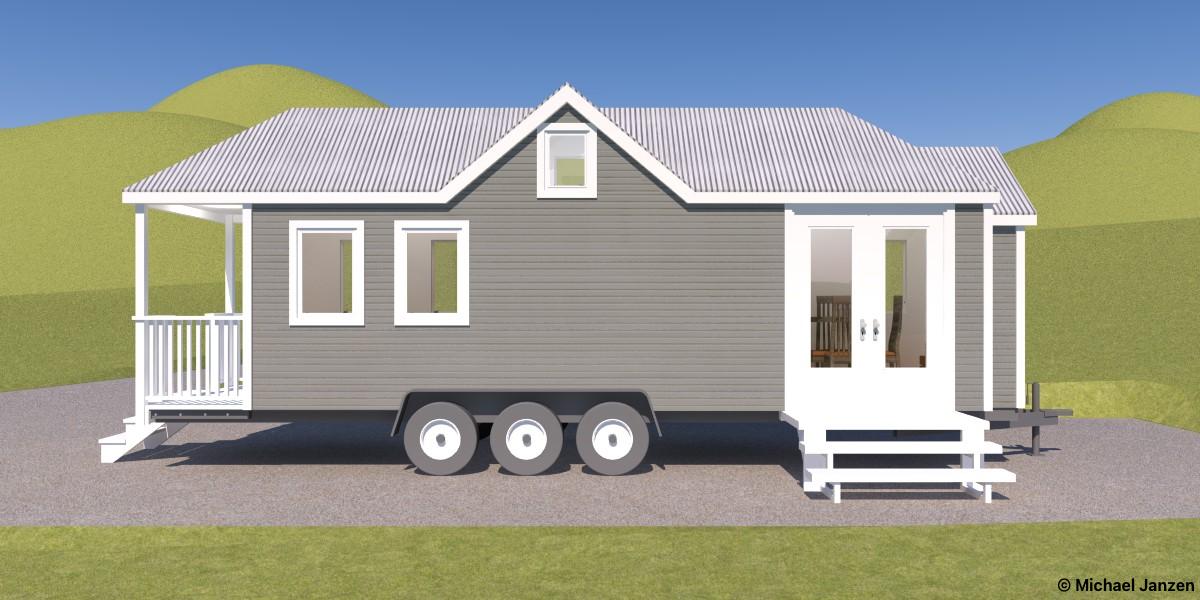
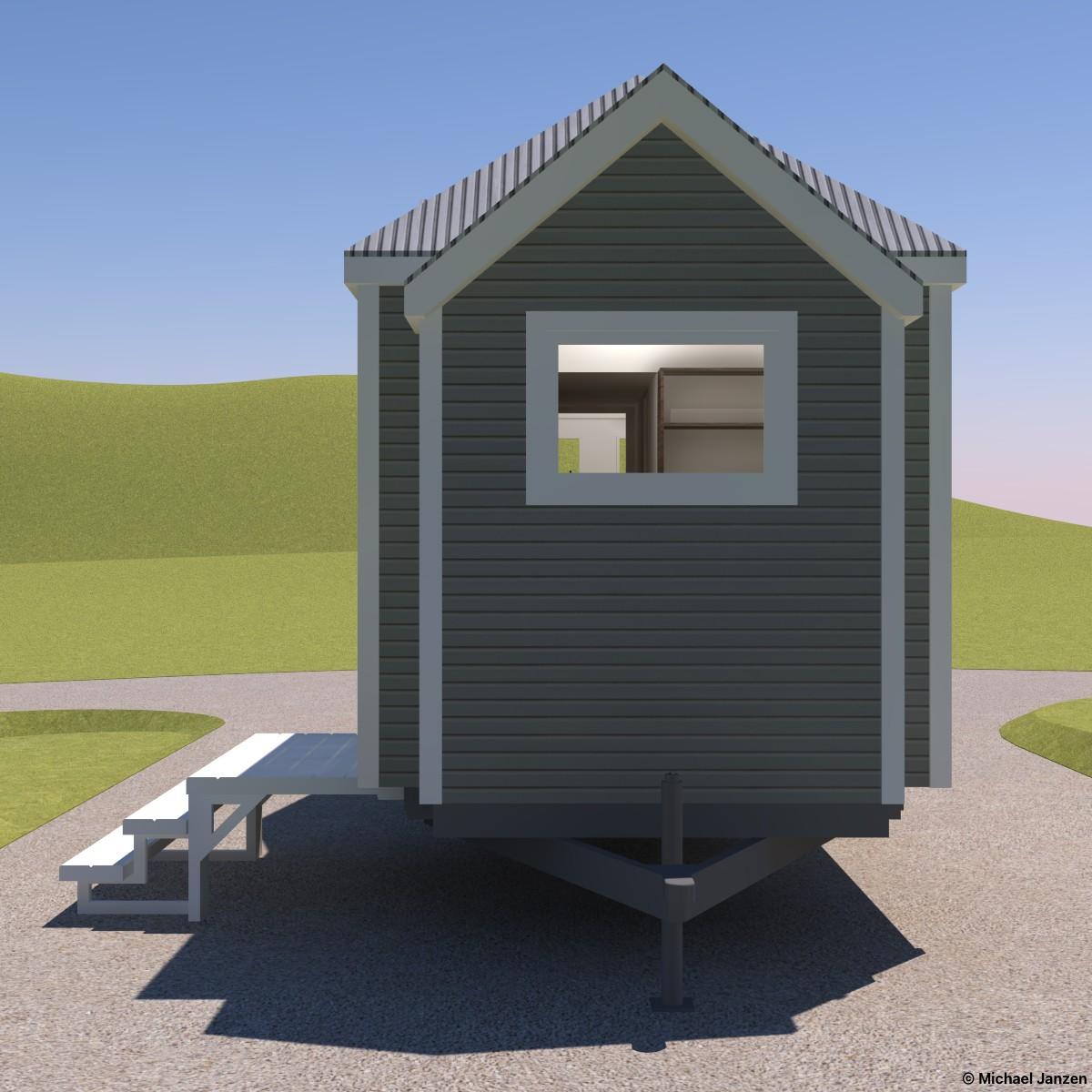
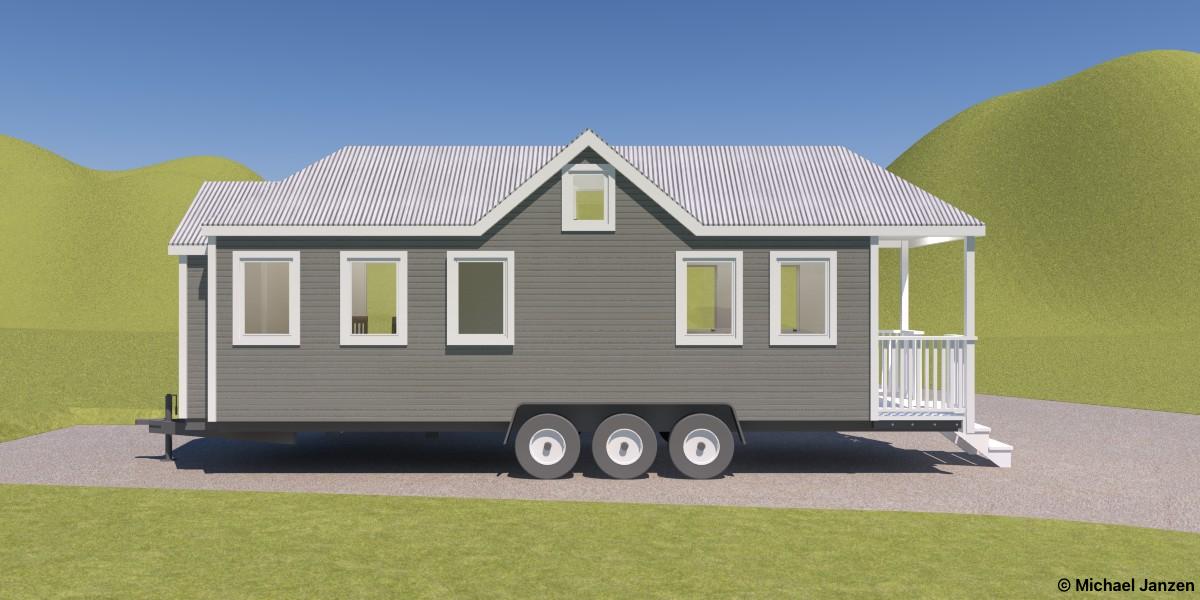
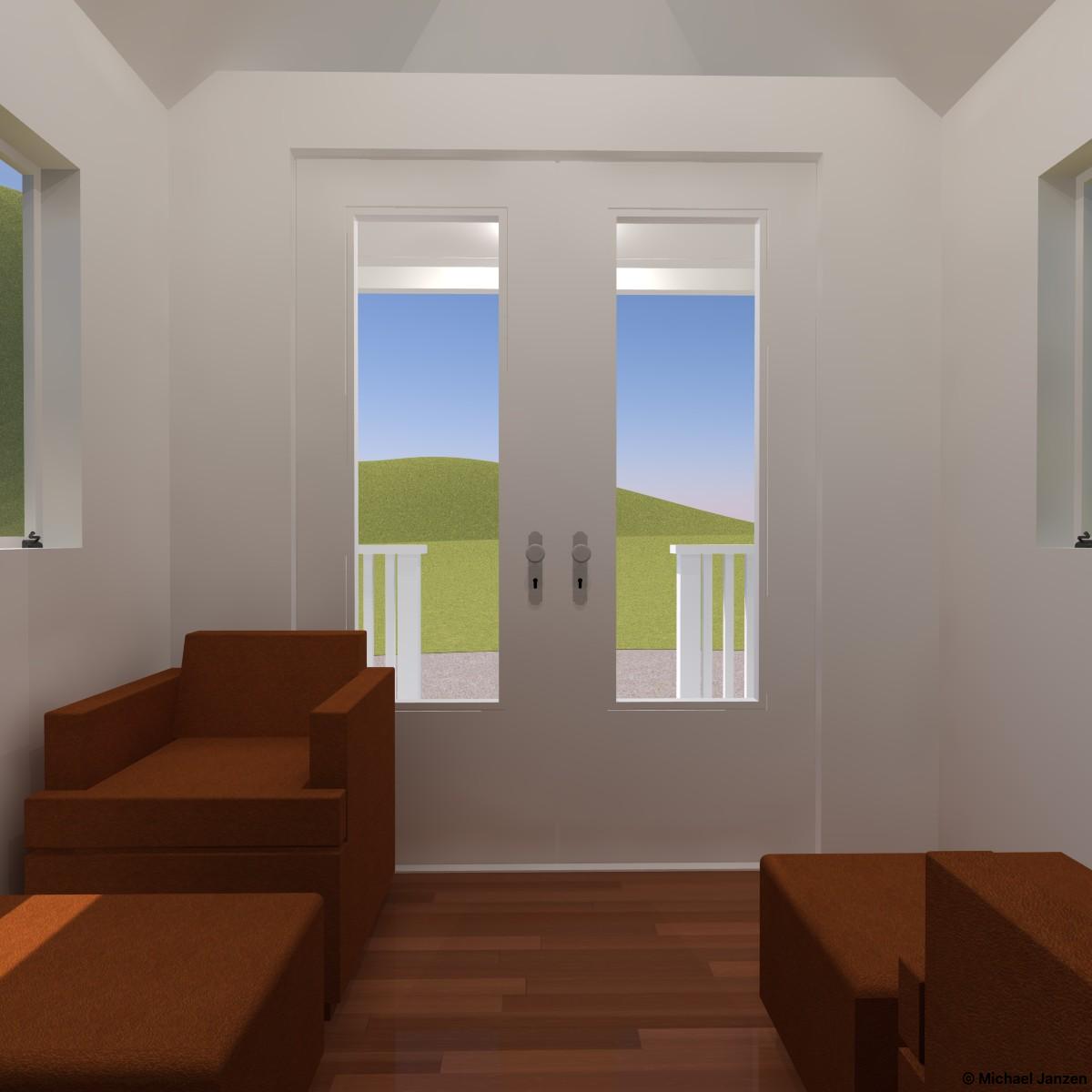
This 28-foot tiny house has a hip roof, a cross gable, and a deep front porch with french doors. At the center of this tiny house are a kitchen and bathroom. Over the kitchen and bathroom is a loft with a queen bed. The front room has two comfy chairs, each with its ottoman. The back room shows a table for four and a sofa tucked into a bump-out extension. A second fold-down porch extends from french doors to the side of the house.
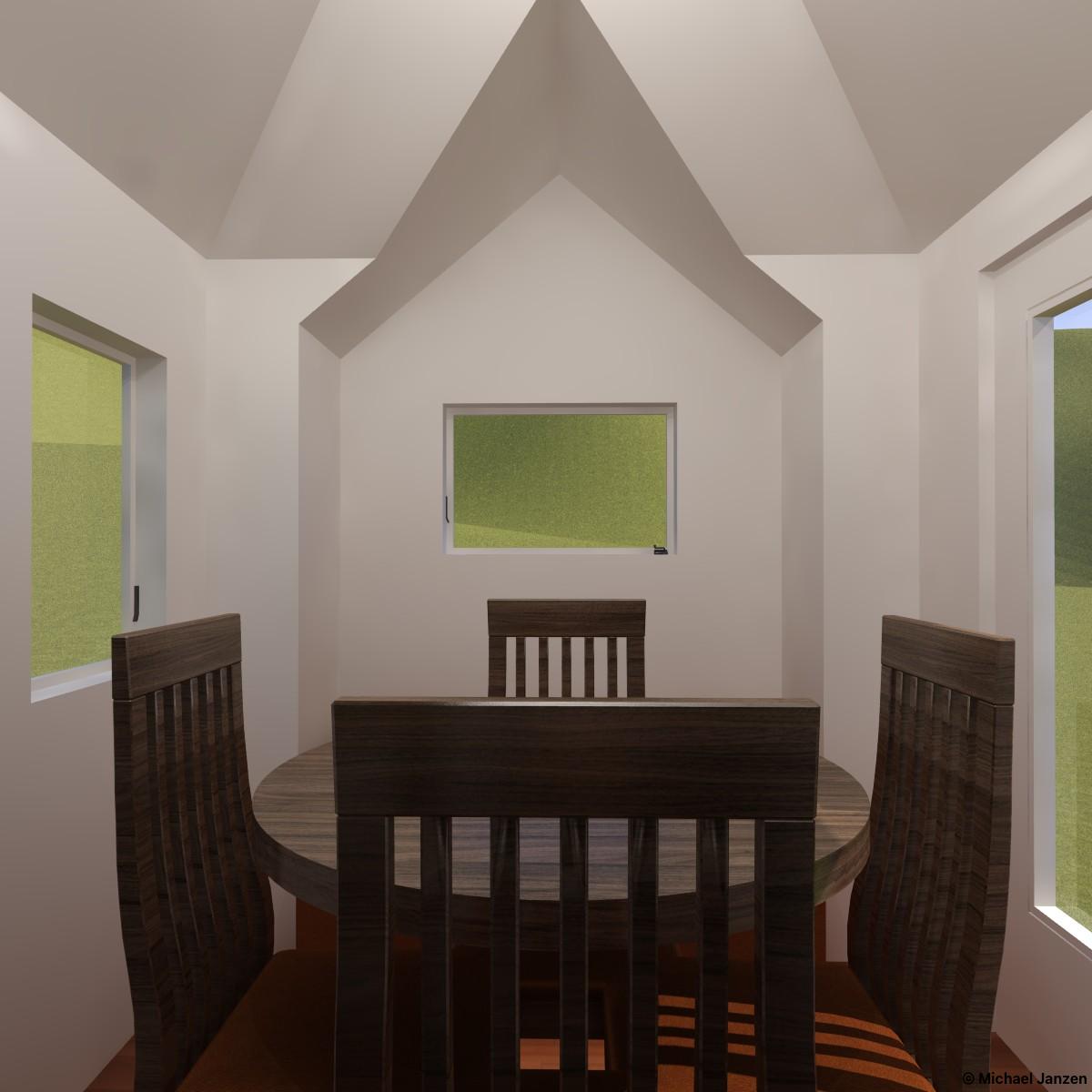
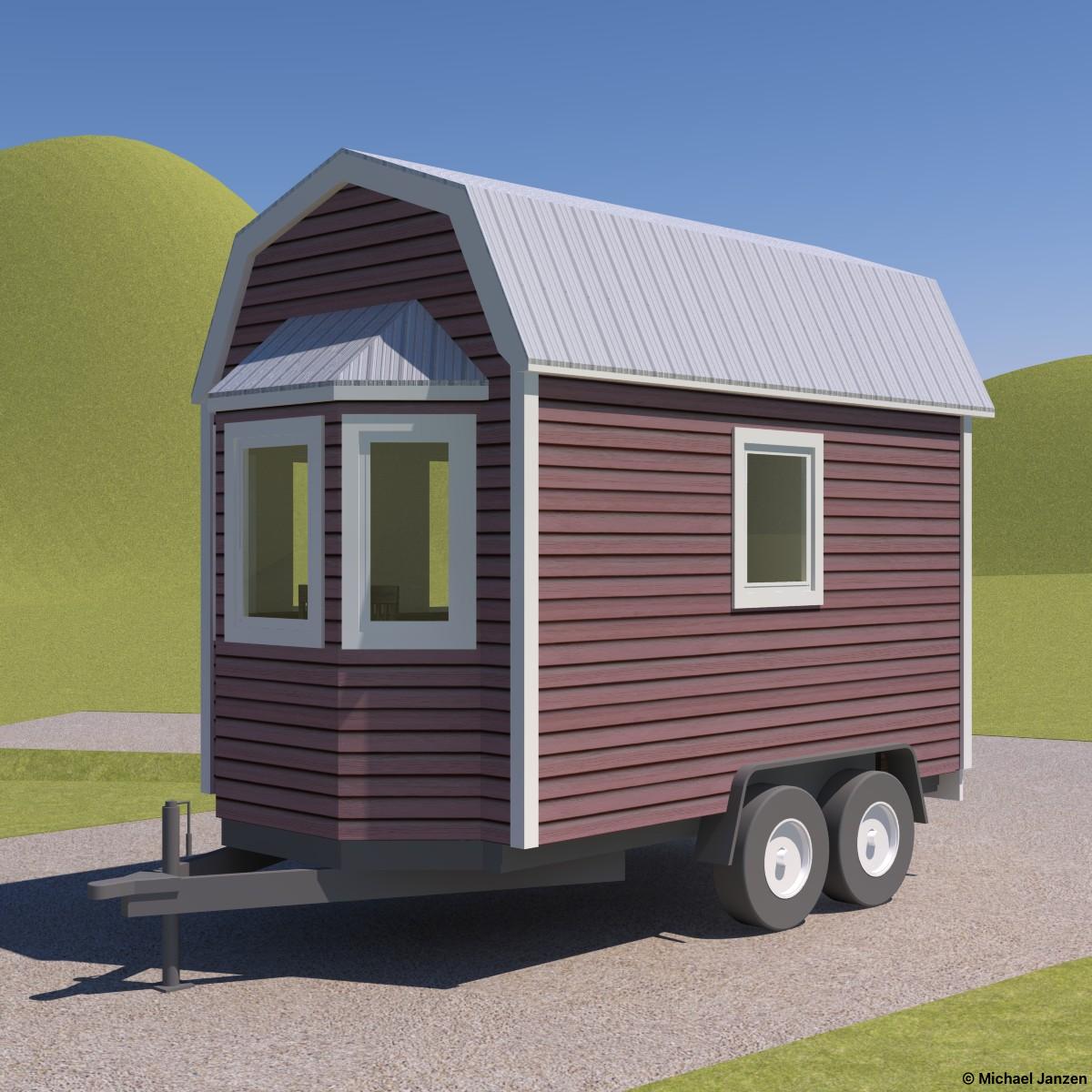
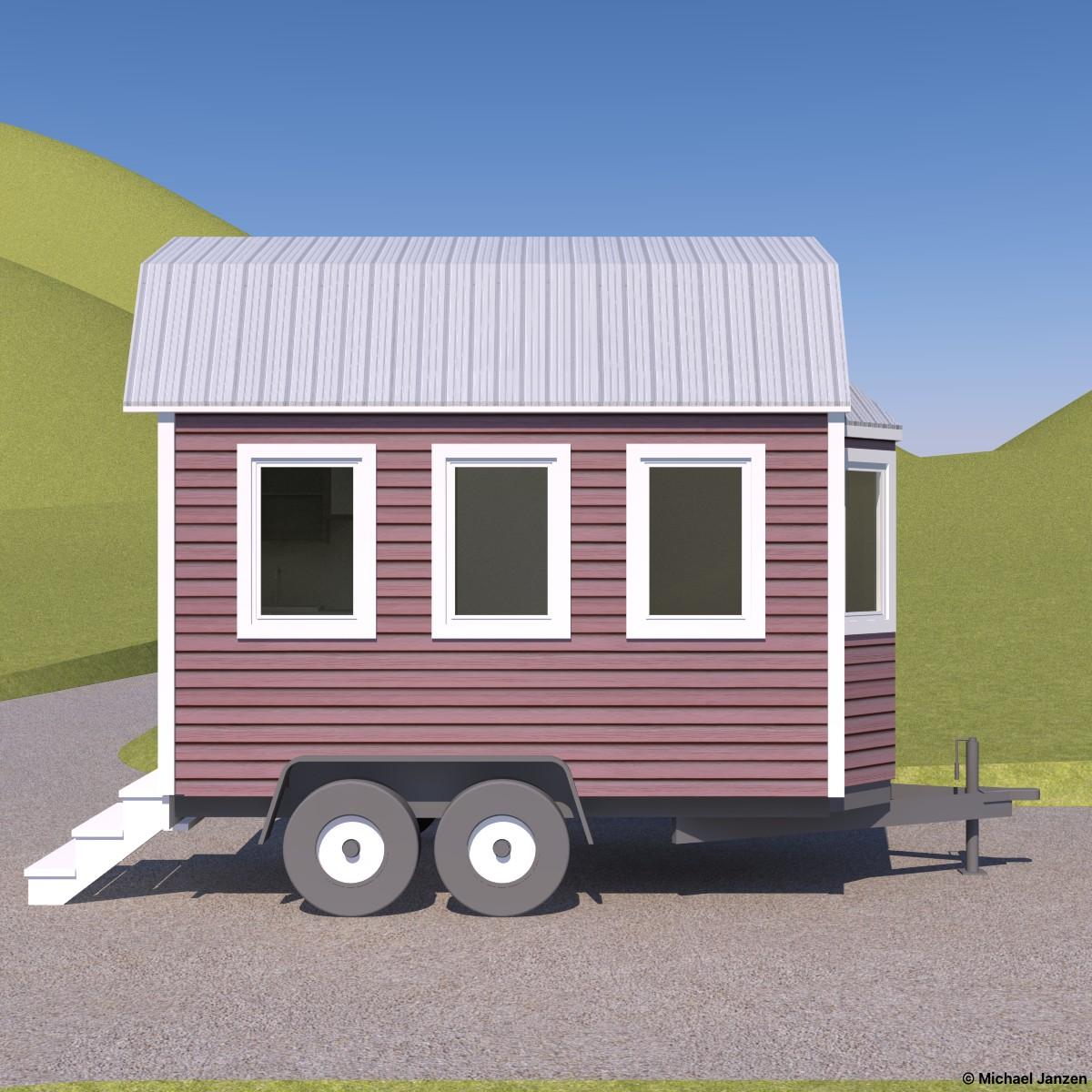
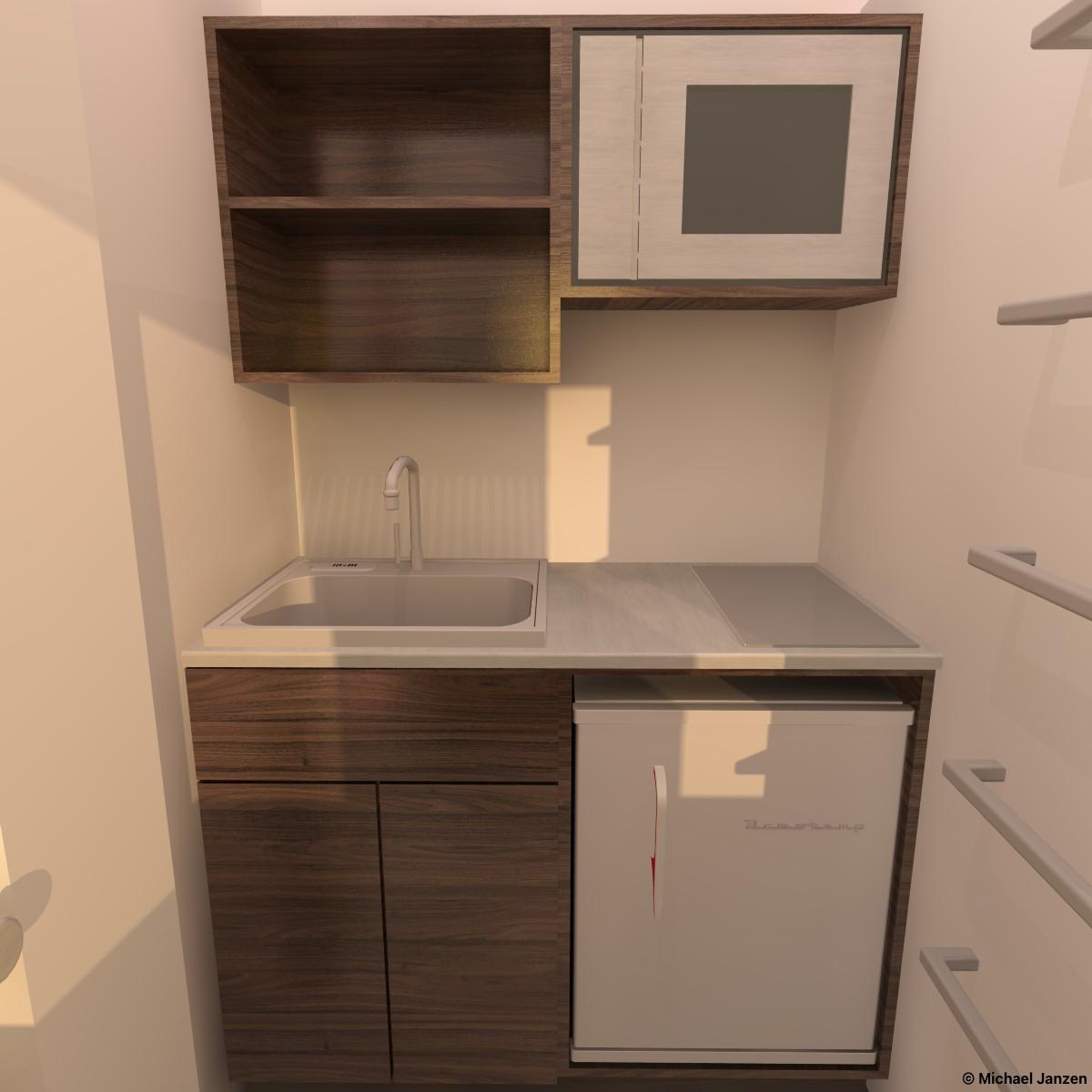
Here’s a gambrel-roofed tiny house with plenty of windows. The front corner entry has fold-up steps. Inside is a wet bathroom with a shower, toilet, and small wall-mounted sink. The tiny kitchen has a sink with a cabinet drain rack, a small refrigerator, a small cooktop, and a microwave. The house also has a long and shallow set of cabinets along the right wall below the windows… so there is quite a bit of storage. On the back wall is a desk that fits neatly in a bay window. The loft is small, but thanks to the gambrel roof it has ample headroom.
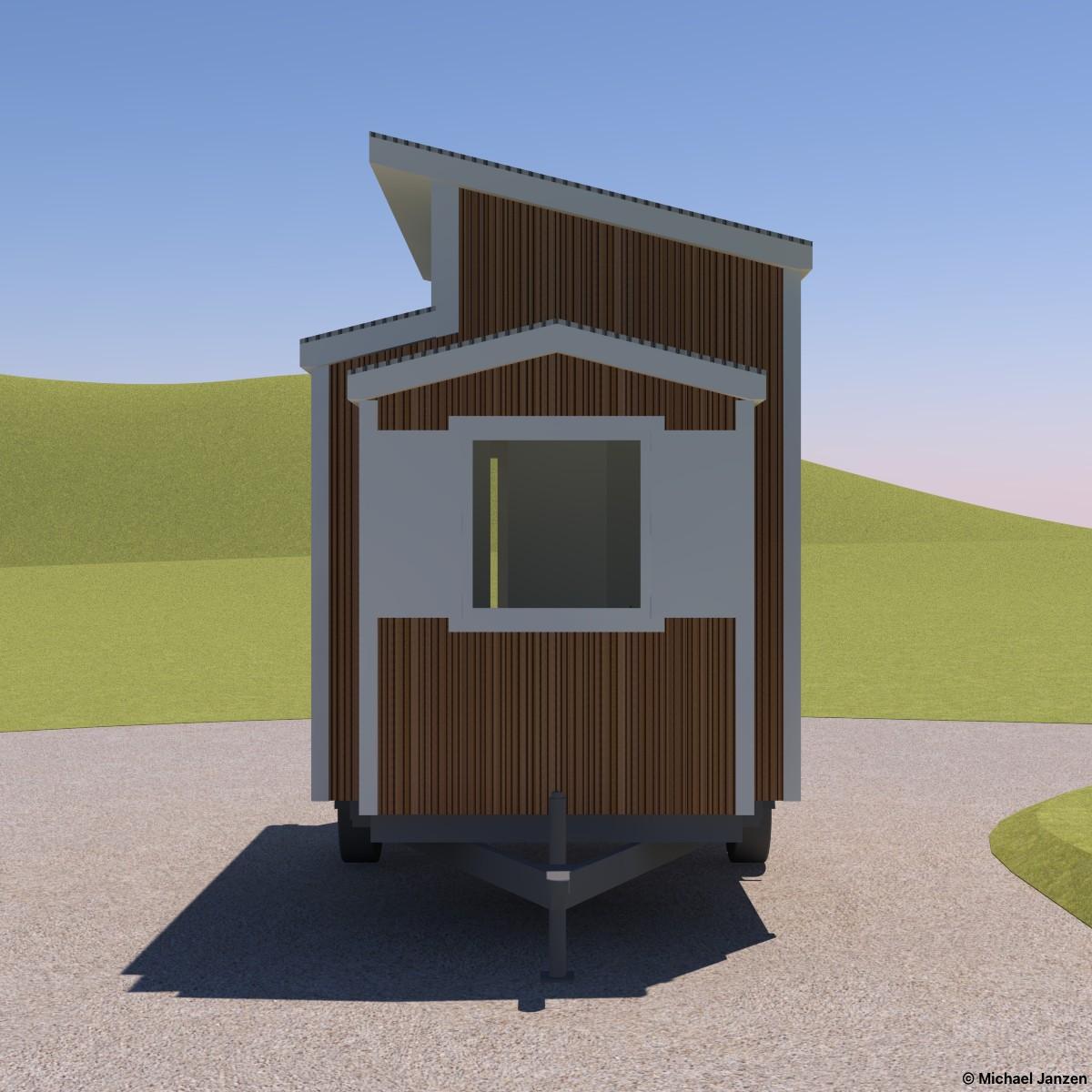
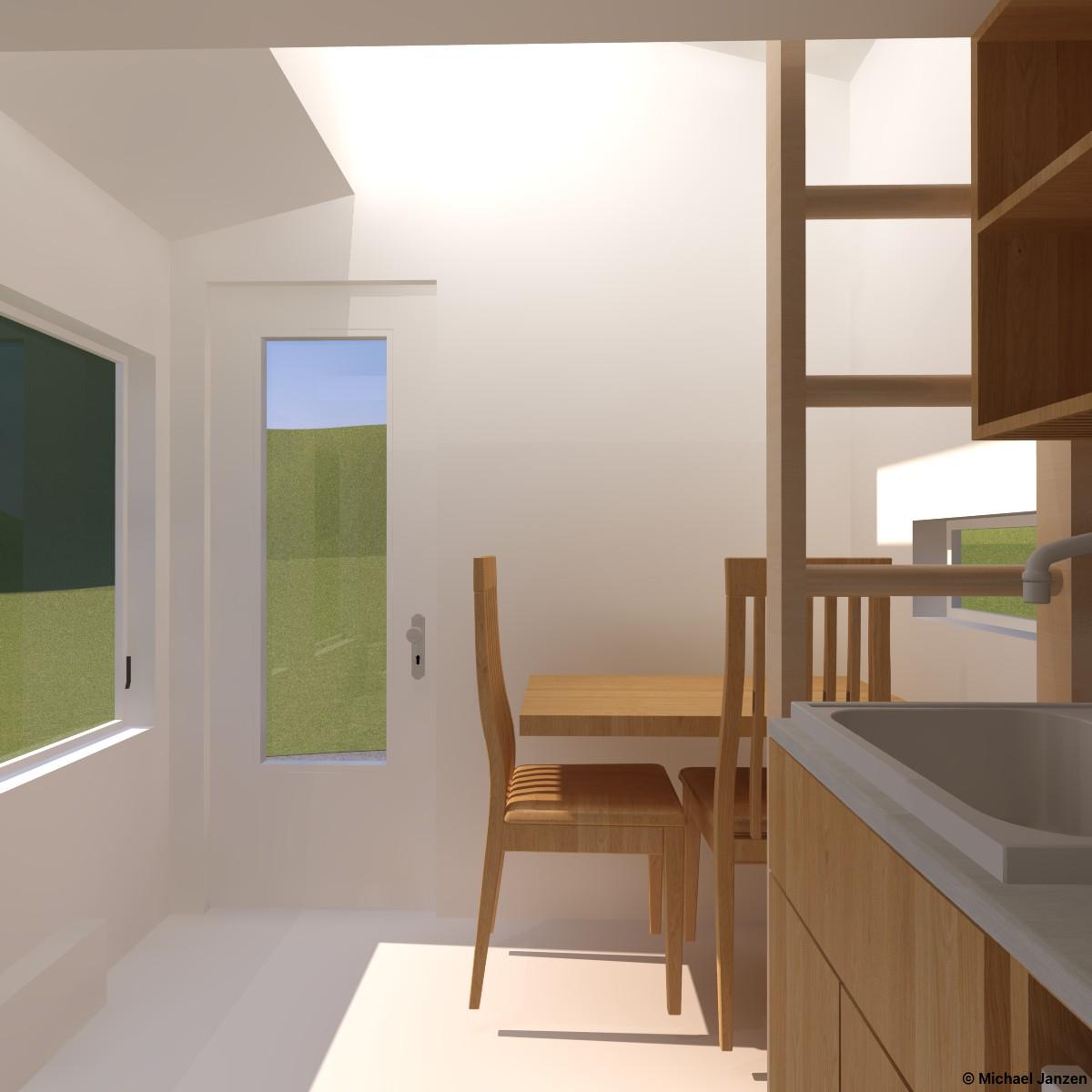
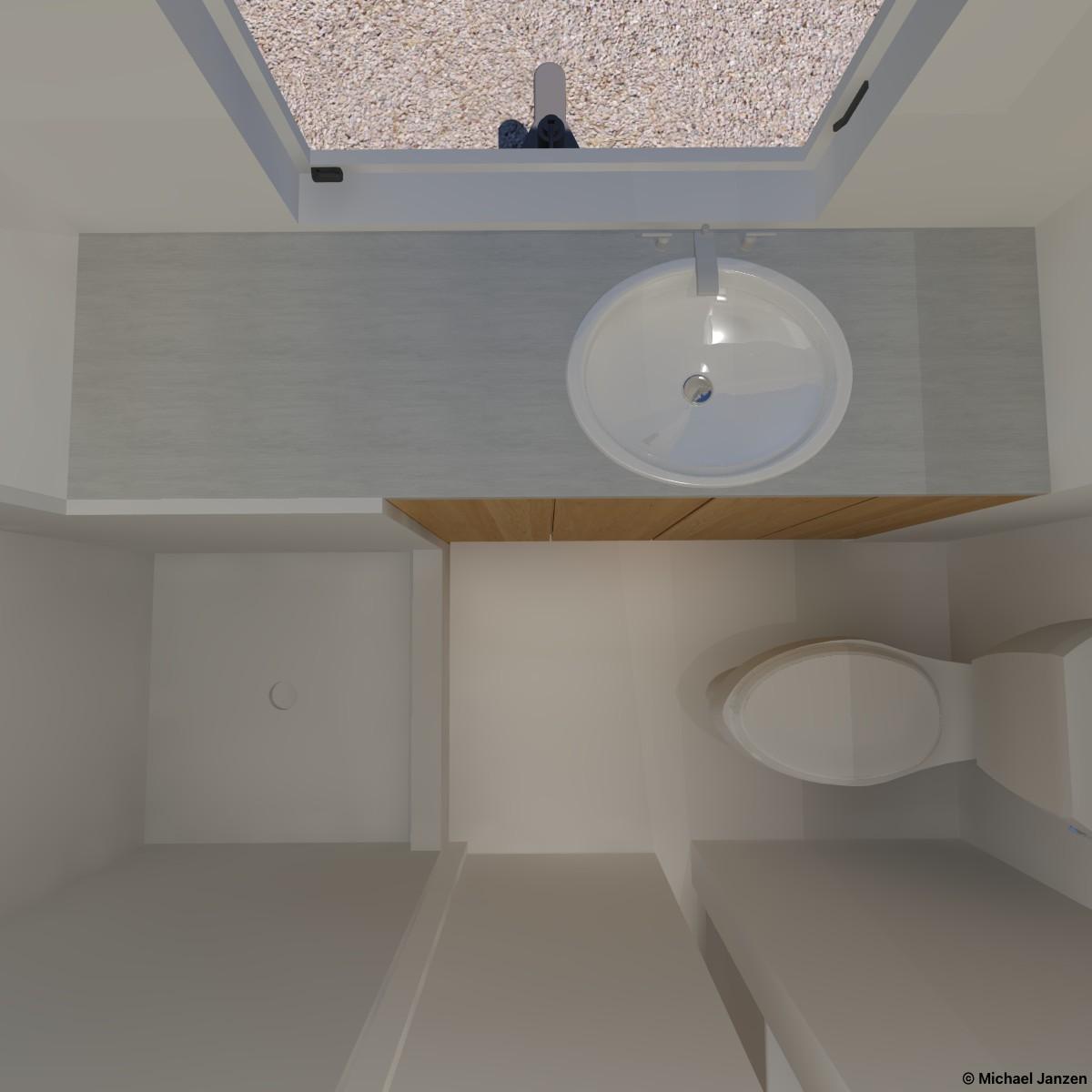
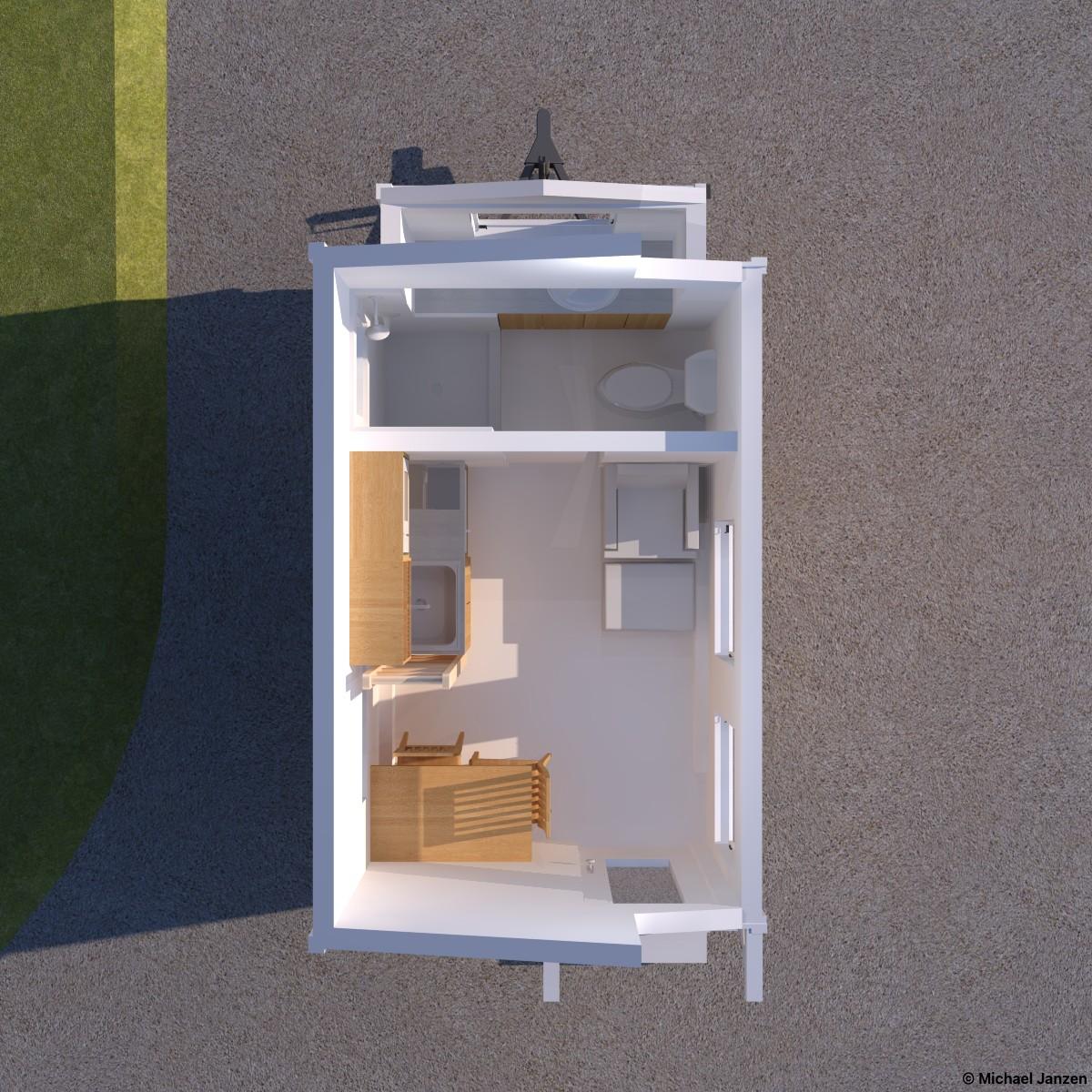
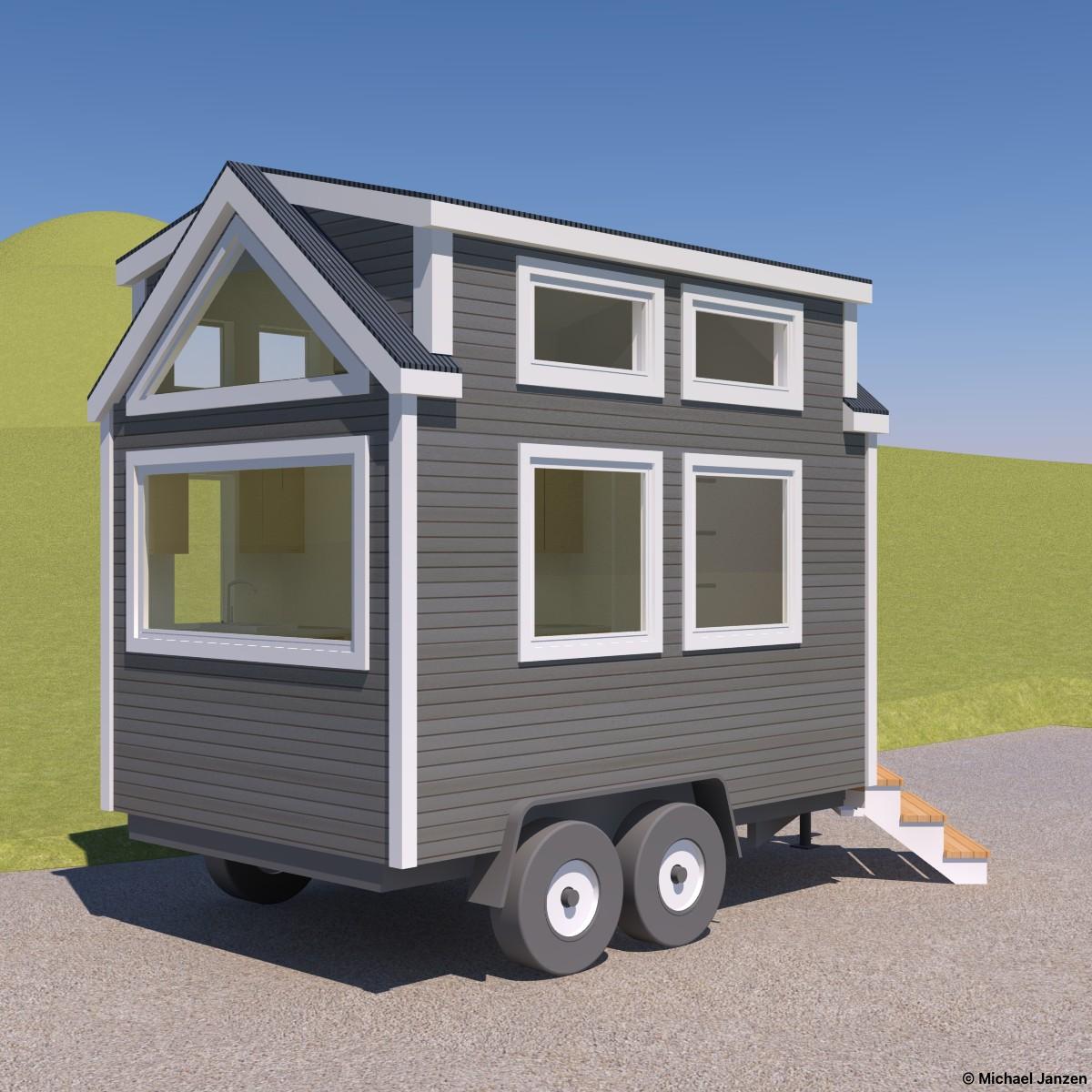
This tiny house design study eplores a 3/12 shed roof with plenty of windows in a clerestory. The front corner entry has fold-up steps. Inside is a small bathroom with a shower, toilet, and generous vanity in a bump-out extension over the trailer tongue. The tiny kitchen has a sink with a cabinet drain rack, a small refrigerator, a small cooktop, a microwave, and storage. There’s also space for a small chair, ottoman, and table/desk. The loft has room for a queen bed accessed by a fixed ladder. The window over the trailer tongue is shown with shutters that would help prevent damage from rocks & debris while on the road.
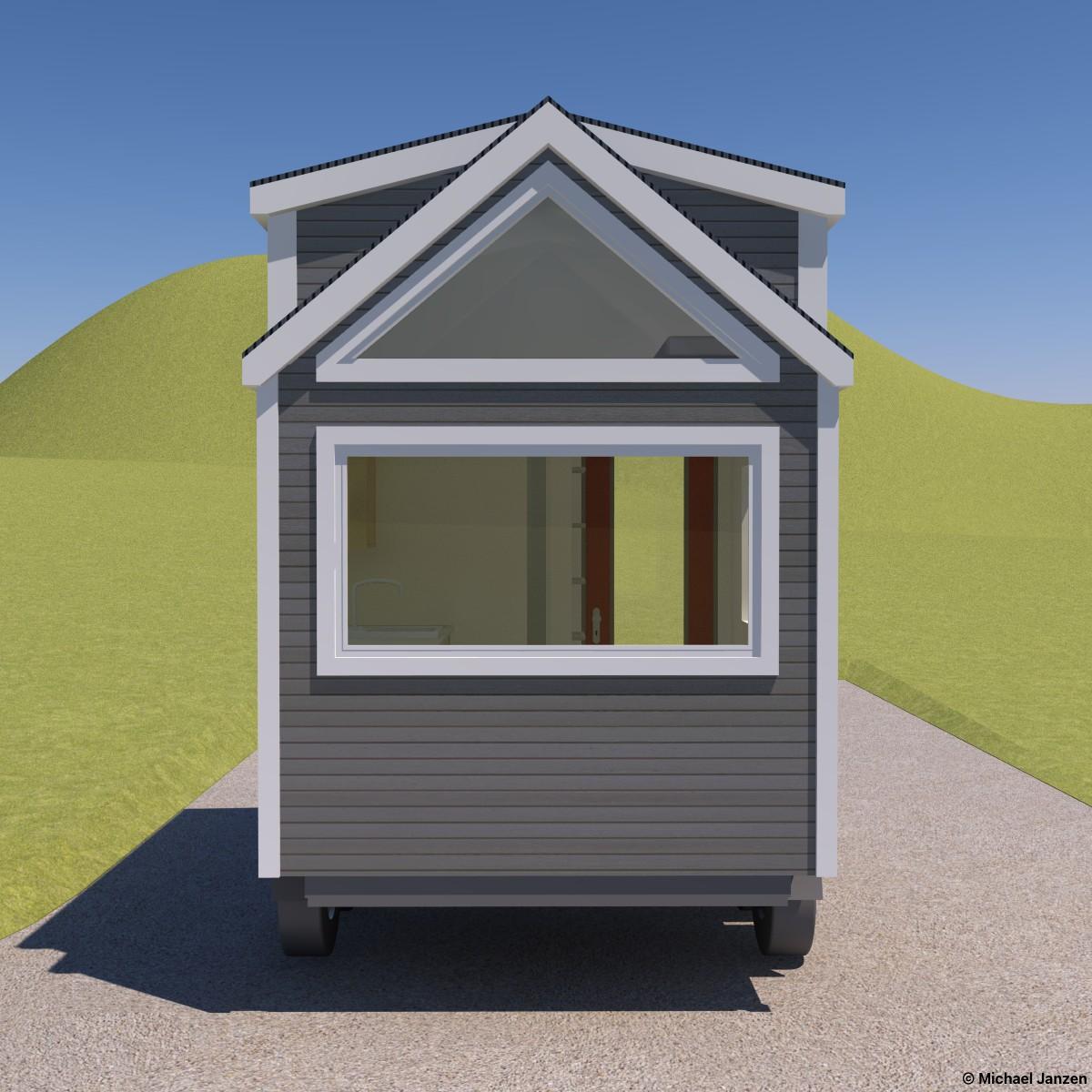
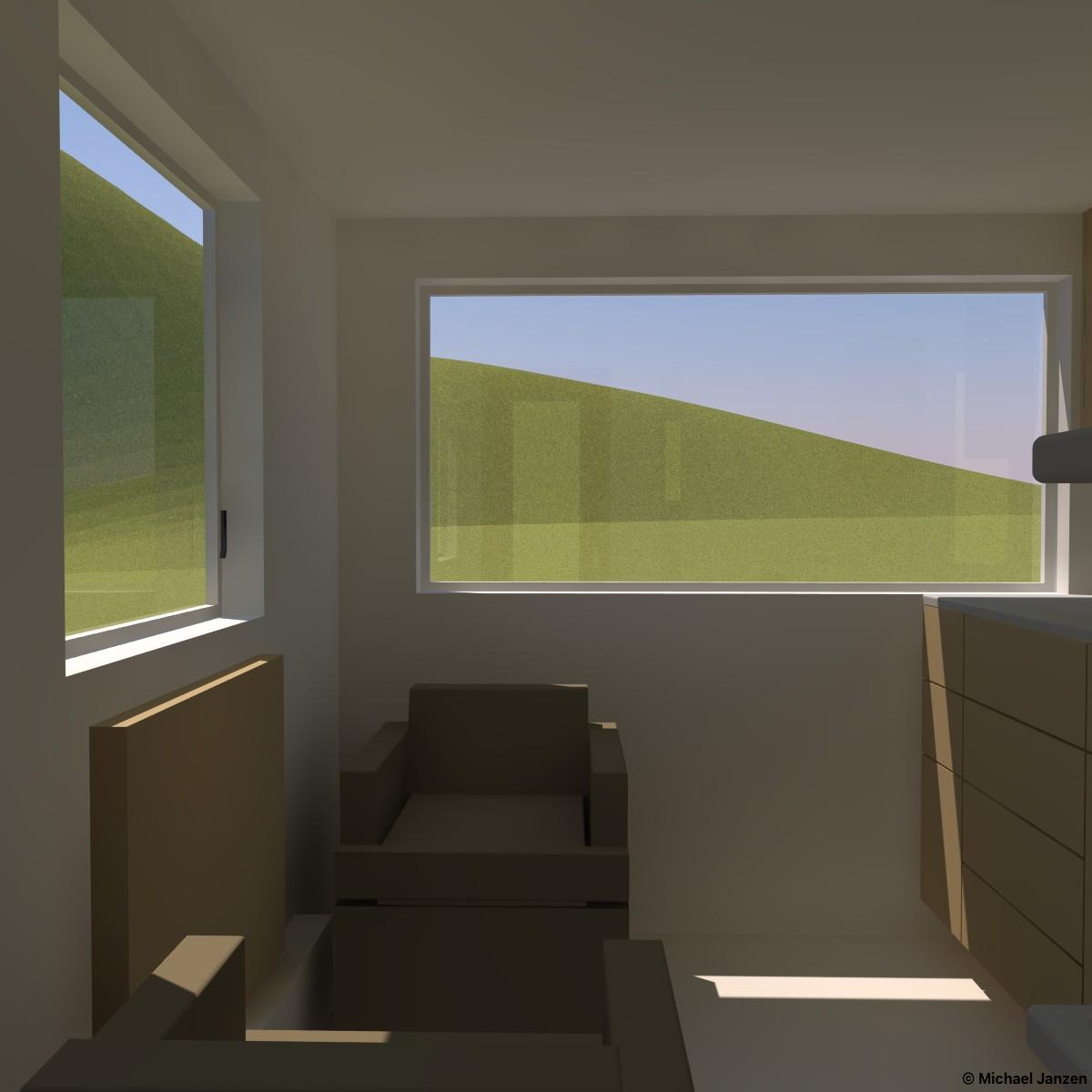
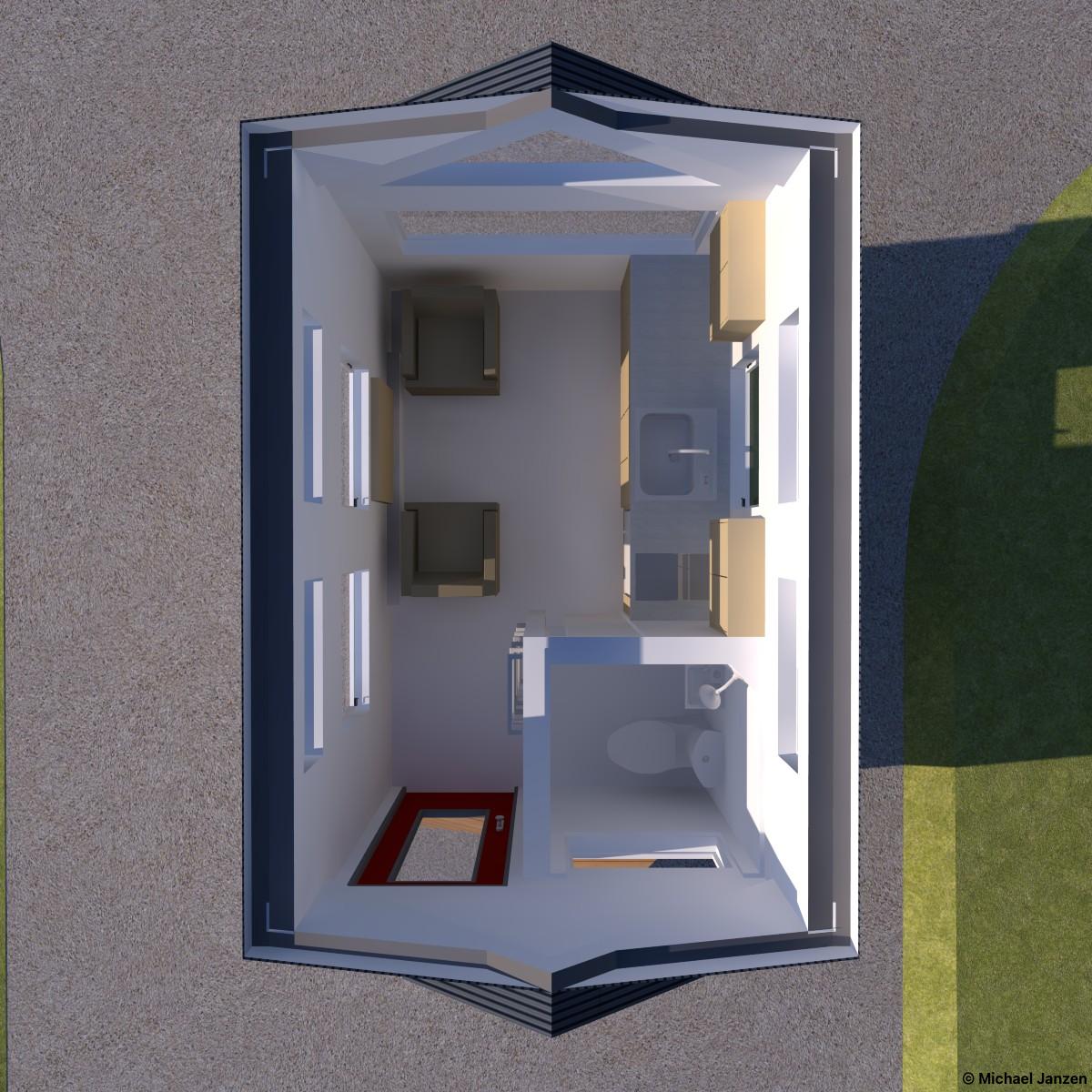
This tiny house has a 10/12 gable roof with large 3/12 shed dormers. The entry is over the trailer tongue and has fold-up steps. Inside the entry are a small wet bathroom with a shower, toilet, and tiny wall-mounted sink. The kitchen has the basics: a sink, a small refrigerator, a small cooktop, and storage. Also, space for a small chair and table is on the lower level. The loft has space for a queen bed and is accessed by wall-mounted ladder rungs inside the entry.
A 10/12 cross-gable roof with large windows and a side entry. A fold-up ramp would provide easy access. Inside is a tiny wet bathroom with a shower, toilet, and tiny wall-mounted sink. The kitchen extends over the trailer tongue in a bump-out and has the basics: a sink, a small refrigerator, a small cooktop, and storage. Also, space for a small chair, a loveseat, and a desk is on the lower level. The loft has room for a queen bed and is accessed by wall-mounted ladder rungs.