Tag: building codes

  • Tiny House Building Codes: Navigating the IRC

    Tiny House Building Codes: Navigating the IRC

    Professionals in the housing sector often find that regulatory language presents the most significant barrier to alternative housing.

    A recent episode of the Less House, More Resilience podcast explores this landscape in detail. Host Laura Lynch speaks with architect Macy Miller regarding an upcoming adjustment to the International Residential Code (IRC).

    The conversation focuses primarily on the IRC’s Appendix Q. This appendix currently omits language addressing the wheels and chassis of tiny homes. This omission historically places owner-builders in an uncertain legal position.

    Macy details the current effort to introduce performance-based and prescriptive proposals to address this specific gap. These proposals aim to provide a clear regulatory framework for local jurisdictions.

    The upcoming April code vote represents a notable opportunity for the industry. Passing this language provides a practical pathway for municipalities seeking to expand housing options.

    The National Association of Home Builders has signaled support for the measure. Delaying this vote risks pushing potential legalization back to the 2030 cycle.

    Want to help and take action? Sign the Change.org petition.

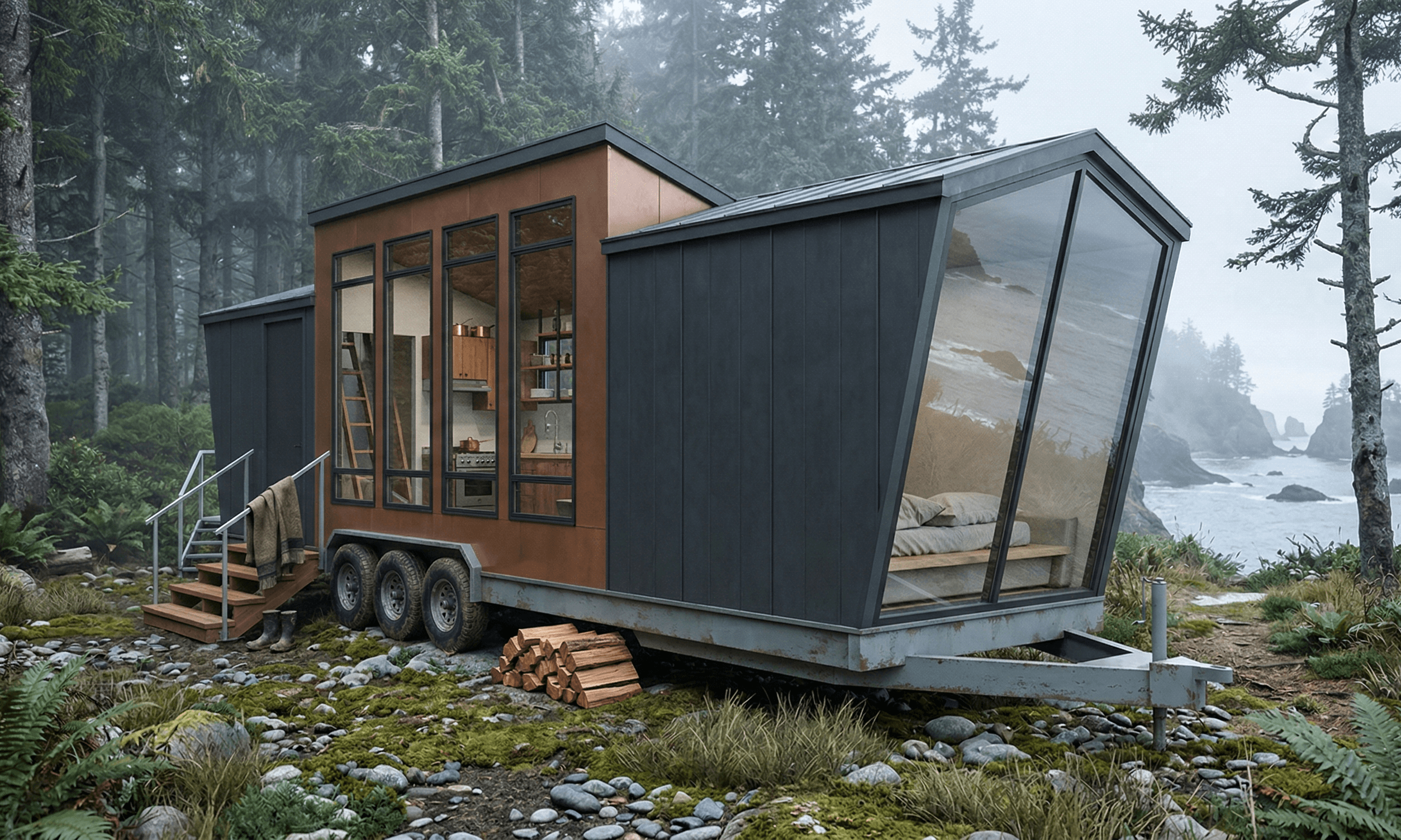
    Image: Tiny House Design by Michael Janzen with SketchUp Pro and rendered by Gemini Pro 3.1.

  • The Rise of Tiny Houses: A Sustainable Solution to Affordable Housing

    The Rise of Tiny Houses: A Sustainable Solution to Affordable Housing

    The Tiny House Movement: A History of Affordable Housing Solutions

    The tiny house movement is a growing trend in the United States that has gained popularity as an alternative solution for affordable housing. Tiny houses are typically defined as 400 square feet or less, with some as small as 80 square feet. They offer a minimalist lifestyle with the potential for mobility and a reduced environmental footprint. This article explores the history of the tiny house movement in the United States, its key milestones, influential figures, and current trends and challenges.

    The Origins of the Tiny House Movement

    The tiny house movement can be traced back to the early 2000s when influential figures like Jay Shafer, Dee Williams, and Michael Janzen began promoting living in smaller, more sustainable spaces. Shafer founded Tumbleweed Tiny House Company, which offered plans and workshops for building tiny houses. Williams wrote a book, The Big Tiny, about her experience building and living in an 84-square-foot house. Janzen started publishing plans and books for tiny houses, which sparked interest and discussion.

    Key Milestones in the Development of the Movement

    The 2008 financial crisis was a primary catalyst for the growth of the tiny house movement, as many people were looking for affordable housing options. Additionally, in 2018, the International Residential Code Appendix Q was introduced, providing a pathway for legally constructing tiny houses on foundations.

    Reasons Behind the Movement’s Popularity

    The tiny house movement has gained popularity as an affordable housing solution due to its relatively low cost of construction, reduced energy costs, and the ability to place tiny houses on cheaper, more accessible land. According to the Tiny House Industry Association, tiny houses have an average cost to build between $20,000 and $50,000, compared to the median home price in the United States of $347,500 in 2022. Tiny houses also have a smaller environmental footprint, requiring less energy to heat and cool.

    Statistics on Tiny Houses in the United States

    According to the U.S. Census Bureau, there were approximately 1,500 tiny houses in the United States in 2018. However, this number is likely much higher, as many tiny house owners still need to register their homes as permanent residences. Google Trends data shows that the search term “tiny house” has steadily increased in popularity since 2012, with a peak in 2019.

    Progress in Changing Government Zoning and Building Codes

    Changing government zoning and building codes has significantly challenged the tiny house movement. However, there have been some successes. Locations such as Spur, Texas, and Fresno, California, have changed zoning laws for tiny houses. Additionally, the International Code Council released the International Residential Code Appendix Q in 2018, providing a pathway to legally construct tiny houses on foundations.

    Legal Challenges Facing Tiny Houses

    Zoning laws, building codes, and regulations are significant legal challenges facing the tiny house movement. Many areas have minimum square footage requirements for homes, which makes it difficult for tiny houses to be legally constructed. Additionally, tiny houses on wheels are often classified as recreational vehicles, subject to different regulations than permanent residences.

    Conclusion

    The tiny house movement offers an affordable housing solution with reduced environmental impact. While there have been challenges in changing zoning and building codes and navigating legal regulations, progress has been made in some areas. As the search term “tiny house” continues to gain popularity, it is clear that the movement is here to stay.

  • Tiny Houses Growing Through the Cracks in City Rules

    So far, three years after the Charlotte couple started work, they’ve heard no complaints. The Bouchers aren’t yet living in their house full time because it isn’t finished, so they’re probably safe from zoning officials, but the regulatory uncertainty looms over their future plans.” – Sam Hardiman for The Charlotte Observer.

    Read the complete story about: ‘Tiny house’ movement grows through the cracks in city rules at The Charlotte Observer

  • Be Fearless and Have Fun – Erin’s Approach to Tiny House Living

    Erin’s many attempts to legitimize her little house with the city didn’t result in a stamp of approval, but it did strengthen her belief that “the city” isn’t something to fear. It’s just a group of people who are doing their jobs, and are being asked a question they haven’t answered yet.” – Unlikely Lives

    Read the whole story… Erin: Be Fearless and Have Fun at Unlikely Lives

  • National Straw Bale Building Code is a Go!

    A historic day for straw bale construction!
    Thankfully, we’ve never had to worry ourselves about local building codes, but there are many, many more folks who regularly struggle with codes when attempting to build a natural home in their area. And so the following news is very welcome, not just for those folks, but for a potential ecological/cultural tidal shift, as well. Earlier in October, an appendix on straw bale building was approved for inclusion in the 2015 International Residential Code for one and two-family dwellings. The IRC is basically the foundation for building codes all across the US.” – Ziggy

    Continue reading at Small-Scale.net

  • Alex’s Top 7 Tiny House Books for 2013

    This year a lot has happened in the world of tiny houses including quite a bit of new books. In this post I wanted to share some of my new favorites with you along with some of the classics.

  • Tiny Houses Aren’t the Fad – McMansions Are the Fad

    This is an older video but a good one. Stephen Marshall explains some of the tiny house loopholes and how to work with & around zoning rules. In the video Stephan quotes me (at 4:40) from a radio talk interview we did together where I said something to the effect that Tiny houses aren’t the fad – McMansions are the fad. It seems that current housing market trends continue to support this statement. Downsizing is up, McMansions down.

    Here’s more about Stephen and this video:

    “People who live in wee homes now have their own movement. It’s a bit of a media event, but it’s not a fad, argues tiny home builder Stephen Marshall (of Little House on a Trailer). While his 112 square foot caregiver cottage makes great press, he argues the perfect tiny home is 400 sq ft. For most of those in the movement, McMansions have no appeal tiny homes are human-sized.”

    See the video on YouTube: The human scale of tiny homes & McMansions as fad