Category: Archived

  • How to Convert a Van in 7 Days

    Nate Murphy helps Harriet build a van conversion in just 7 days. Nate is a climber and built his van so he could travel and climb more. On his website Nate provides a ton of info on DIY van conversions.

    In this video he works with Harriet to build out her van and shows all the steps. If your considering a van build this can give you a glimpse of the process. Photo credit Nate Murphy.

  • Two Humans and Two Dogs Living in a Conversion Van

    The following is a guest post by Jayme & John from Gnomad Home.

    Hey there, we’re Jayme and John from Gnomad Home! We’ve been living and traveling in our 1996 Chevy Express high top conversion van since April of 2017. Joining us in our adventures are Nymeria (3) and Delilah (7), our four-legged companions. We joke that our dogs are the reason we built the van in the first place – we wanted to give them more than a backyard to run around in and dog walks on more than just pavement.

    Before we moved into our van we were living the typical 9-5 lifestyle with a two-story house in the suburbs, struggling financially and squeezing in travel whenever allotted vacation time would allow. We talked about doing “one last hurrah” before we had kids, and then a friend introduced us to ‘#vanlife’ (we didn’t even use Instagram at the time). We immediately knew this was the path for us.

    We quickly began transitioning our lives. We found our van in middle-of-nowhere Illinois and bought it for $1,500 cash, brought it home, gutted it, and began building. At the same time, we sold all of our belongings, built our online businesses, and rented out our house. We made about $10,000 from selling everything, which helped us in the first few months of our adventures. This past September was the first month our income from our online business surpassed our expenses. Now, it’s our main source of income and it continues to grow. Since then we’ve also sold our house, so we are officially committed to this lifestyle!

    Below is an interior shot of the gutted van.

    Below is an interior shot of what it looks like now.

    Our van has three solar panels mounted on the roof, and a portable one we can plug in and prop up if we’re parked in the shade, or if we need additional power in overcast weather. We have two deep-cycle AGM batteries under the bed that run our ARB refrigerator, LED lighting that is recessed into the ceiling and hooked up to dimmer switches, multiple USB charging stations throughout the van, a Fan-Tastic Vent fan, and a 1000-watt inverter.

    We can carry 20 gallons of water – 14 gallons inside our kitchenette in a stainless steel container. Our water tank is attached to a foot pump, which we cannot recommend enough! It helps control the exact amount of water you need so there’s very little waste, and you have both of your hands free for washing dishes. The water then drains into a PVC contraption we mounted underneath the van that gives us the option to either carry our grey water with us or drain it onto the ground below.

    Our stove is a two-burner denatured alcohol stove from Dometic that we absolutely love, and since it is denatured alcohol there is no risk of damaging chemicals leaking, and zero-risk of of explosion.

    Our couch pulls out to a queen-sized bed, which is a must for two humans and two dogs. Above the bed is our closet storage, and above the cab is our ‘pantry’ of dry goods. Music is very important to us, so we built our bed high enough to fit multiple instruments underneath. We travel with a guitar, banjo, mandolin, ukulele, cajon (which doubles as a spare seat inside the van), djembe, and fun smaller knick-knacks like shakers and foot tambourines.

    We’re glad to have met you all and thanks for checking out our home! If you’re interested in building your own rolling home, be sure to check out our blog gnomadhome.com. It’s JAM-PACKED with FREE information to help guide you through your own tiny home building process. Safe and happy travels to you all!

    See more on the Gnomad Home Instagram.
  • Tiny Home Builders Explain What to Look for in a Used Tiny Home

    Tom at Tiny Home Builders explains what to look for in a used tiny house. Tom’s been on the tiny house bandwagon for years and has some good tips in the article. In a nutshell he suggests:

    • Get the scoop on who built the home.
    • Find out why it’s for sale.
    • Weight the price carefully.
    • Factor in the features and upgrades.
    • Check out Tiny House Marketplace for used tiny homes.

    Some other things to think about:

    • Inspect the trailer. Look at the springs to see how much they are stressed under the weight. For example if the house is sitting on it’s suspension bump stops, that would indicate an overloaded trailer. Also check the hitch for any stamped weight ratings to make sure it matches the weight of the house.
    • Ask how heavy the house is empty and full. This will factor into your tow vehicle needs. Also ask about the tongue weight and if it’s well balanced. Ask if the trailer has breaks and corner jacks – definitely features you’ll want to have.
    • Look at the windows, skylights, and doors for signs of water penetration. Every opening in a wall or roof is an opportunity for rain and ice to penetrate and damage the home.
    • Ask about how the house is constructed and insulated and consider the climate you intend to use the house. Some types of insulation are better suited for extreme climate conditions with spray foam or SIPs (structural insulated panels). If the house has spray foam insulation the roof doesn’t need to be vented, so if it’s not spray foam look for soffit vents to make sure the roof is properly vented.

    Read the full article about What to Look for in a Used Tiny Home. Photos are tiny houses currently available for sale at Tiny House Marketplace.

  • Tiny House Magazine – 4th of July Sale – 20% Off

    Since 2013 Kent Griswold has been publishing the Tiny House Magazine – allowing dozens of voices in the tiny house community to be heard. They’ve brought many wonderful stories to life and shared so many stunning images.

    To celebrate the 4th of July, Kent is offering 20% off subscriptions to this downloadable online magazine.

    Already a subscriber? Give it as a gift to friends and family. It’s a great deal and yet another way to give something more than a boring necktie or a gift card to the local box store. Learn more about Tiny House Magazine and how to get the discount now.


  • Podcast: Ethan Waldman interviews Michael Janzen

    Podcast: Ethan Waldman interviews Michael Janzen

    I recently had the opportunity to join Ethan Waldman from The Tiny House on his new podcast. We covered a lot in our 46 minute talk. The questions he asked me were:

    • How long have you been designing tiny houses?
    • How many tiny houses have you designed to date?
    • How many houses have been built based on your plans?
    • What’s your favorite tiny house you’ve designed?
    • What inspired your anchor bay tiny house design?
    • How do you estimate the gross weight and cost of your designs if they haven’t been built?
    • How should a beginner get started designing a tiny house in SketchUp?
    • Discussion on how tiny houses are attached to their trailers
    • Is the tiny house movement a fad or is it sticking around?

    To hear the full conversation you can listen to the podcast here: www.thetinyhouse.net/michael/

  • Tiny House Rental in the Catskill Mountains

    Want to spend the night in a tiny house? Here’s a tiny house in Woodridge, New York in the Catskills. It’s 7×18 and nestled in the forest. It’s also a part of a 12-acre fiber farm, so your neighbors are angora rabbits, goats, sheep, and chickens.

    The house can sleep up to three guests. It has an open floor plan with a sleeping loft and a day bed. There is also a table with seating for two and a small desk.

    Learn more about this Tiny House Rental

  • Got Tiny House? Enter The Tiny House of the Year Competition

    Do you have a tiny house? Proud of what you’ve created? You should enter the 2018 Tiny House of the Year Competition.

    Tiny House of the Year is a friendly competition between folks with tiny houses (homes under 500 square feet). It’s free to enter and while there are no cash prizes winners will receive a tiny 3D printed trophy. This year the trophies will be made in metal.

    To enter, tiny home owners simply write-up their tiny house story and post photos and videos. Entries will be accepted through October 31, 2018.

    [row]

    [col span__sm=”12″ align=”center”]

    [button text=”Enter Now” link=”https://tinyhouseoftheyear.com/entry-form/” target=”_blank”]

    [/col]

    [/row]

    Starting on November 1, 2018, the public will be able to vote on their favorite tiny homes and tiny home features. Voting will end on December 17, 2018 and winners will be selected for Tiny House of the Year in 5 categories. The 5 categories are:

    • Best Front Door
    • Best Kitchen
    • Best Bathroom
    • Best Stairs
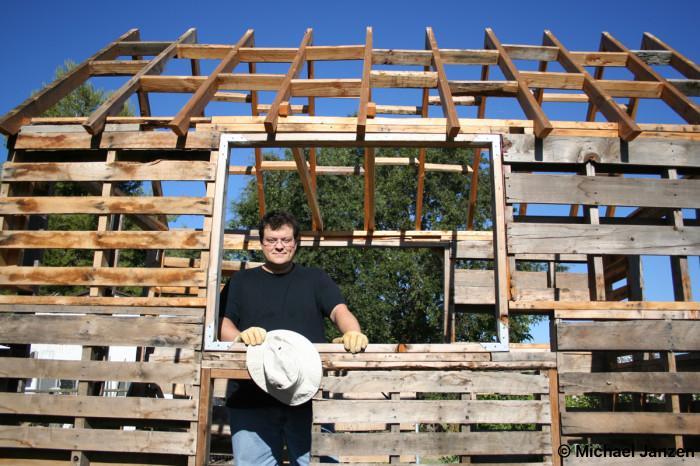
    • Best Use of Reclaimed Materials

    The overall winner will be crowned Best Tiny House and honored as the overall winner of the competition. Winners in each category will also receive a Unique Tiny Trophy designed by tiny house designer, Michael Janzen.

    Pictured here is the 2016 Winner, Ms. Gypsy Soul’s Urban Chic & Fabulous Tiny House.

  • Want to be on Tiny House Nation?

    Emma Appel, a casting associate for the television show Tiny House Nation reached out to me today. She’s looking for folk to cast for their next season. Applicants should have an allotted, available budget and should be planning their build/move-in within the next several months (June to November). Reach out directly to Emma if you have any questions. Her email address is emma.appel@itv-creative.com.

    Here’s what they say about the show:

    Produced by Loud Television, Tiny House Nation features renovation experts John Weisbarth and Zack Giffin as they travel across America to profile ingenious, small spaces and the inspiring, everyday people who live in them, as well as help new families design and construct their own mini-dream home. This series celebrates the exploding movement of tiny homes from the ultra luxurious to the budget-friendly. Tiny House Nation is not a typical build show but one that proves size doesn’t always matter – it’s creativity that counts.

    For more information on the show please visit: http://www.fyi.tv/shows/tiny-house-nation


  • Pete & Taylor at Always the Road

    Meet Pete & Taylor – vanlife nomads and explorers. They blog at alwaystheroad.com and have even written a 100+ page ebook on how to build a van conversion. Now they’ve embarked on building their second van.

    A little thing happened while they were in school, they skipped class and hit the trail for nine months to backpack Southeast Asia. That rip did the trick – they were hooked on the nomadic lifestyle.

    They have a lot of learning to share, with the van build and with living on the road. If this lifestyle speaks, sings, or shouts to you head on over to alwaystheroad.com and follow them on instagram at @alwaystheroad for the latest photos.

    That there is Sedona, Arizona near Oak Creek Crossing. I know that without them even having to say because I went to high school just down the road from there. Beautiful place Sedona.

    Oh and this is Snoop. He’s a 90-pound lapdog who snores when he’s awake, crushes you while cuddling, and has not one vicious bone in his body. He loves the #vanlife too. Woof!

    Photo credit to Pete & Taylor.

  • This Tiny House is a Showcase of Off-Grid Technology

    Bryce Langston visits Paul and Annett in Australia in a remote spot near Byron Bay. Their tiny house is totally off-grid but is like a case study or showcase of a variety of off-grid technologies including:

    • The essential 1.86 kW photovoltaic electric power system with a 20 kWh battery system
    • A biogas system that makes methane for cooking. It converts 1 to 6 liters of table scraps and clippings into methane.
    • An evacuated tube solar hot water heater is their only source of hot water
    • Rain water collection and 10,000 liters of storage
    • Humanure composting toilet

    Before the tiny house they lived in Sydney in an apartment, but they wanted to had a strong desire to live off-grid in a rural area. Inspired by Bryce’s videos online, they decided to build their own 8 meter (~26′) long tiny house.

    In Australia the total maximum weight of the house is limited to 4.5 tonnes (~9,900 pounds), so they used all lightweight materials like steel for the home’s framing. It gives the house a slightly industrial look. The exterior is cypress and cedar. Pine is used for the windows and doors. The interior is lightweight plywood.

    Through frugal choices and by doing a lot of the work themselves they kept the cost down. The total cost with all the high-tech off-grid features was just 65,000 Australian (~$50,000 USD).

    To read more visit Living Big In A Tiny House. For more videos like this follow Living Big In A Tiny House on YouTube. Images are screenshots from the video by Living Big In A Tiny House including the selfie made by Paul and Annett. Also be sure to visit Paul and Annett’s website Living Tiny and Green.

    Below & Above: The exterior of their tiny home where you can see most of the off-grid technologies. The tiny greenhouse looking thing is the biogas generator.

    Below: A view inside their tiny home.